Casein Intolerance: Symptoms, Test, What to Eat
Lactose-free is often not enough: if dairy still causes complaints, the milk protein casein deserves a closer look. Here you read which symptoms are typical, which test really has meaning and what you eat instead.

A casein intolerance is a reaction to casein, the main protein in cow's milk. The reaction has nothing to do with milk sugar, which is why lactose-free dairy products change nothing about the symptoms. The story is a familiar one in training: the post-workout shake sits heavy in the stomach, lactose-free dairy has not helped, and the hard cheese in the evening still causes bloating. At that point the milk protein deserves a closer look. This article cleanly separates casein intolerance, milk protein allergy and lactose intolerance from one another and shows you the symptoms. It explains which test is meaningful, which foods and dairy products work, how to adjust your diet and which protein powder suits your situation.
Key takeaways
- Casein makes up around 80 % of the total protein in cow's milk, whey proteins the rest. It is found in all dairy products: milk, yoghurt, quark, cheese, cream, in many processed foods and in milk-based protein powders.
- Lactose-free does not help: in lactose-free dairy products only the milk sugar has been split, the casein is still fully present.
- Three different things: lactose intolerance (enzyme deficiency), milk protein allergy (immune system, antibodies) and non-allergic casein intolerance (digestive complaints without proof of an allergy). The symptoms look alike, the causes and treatment differ.
- The reliable test does not come from the internet: IgG tests are considered meaningless in allergology. What counts: a medical history, IgE diagnostics if an allergy is suspected, an elimination diet with reintroduction.
- Protein works without casein too: for lactose intolerance a whey isolate with under 1 % lactose fits, for a true casein allergy a vegan protein powder. We stock both.
What is a casein intolerance? Casein, milk allergy and lactose intolerance compared
A casein intolerance means that your body reacts to the milk protein casein with digestive complaints, without a classic allergy being detectable. Casein curdles in the stomach into a firm gel and is digested slowly; that makes it popular as a night-time protein in sport and causes problems for sensitive people. Casein occurs in cow's milk as well as in sheep's, goat's and buffalo milk, and even breast milk contains casein, just in a different composition. The difference to the two conditions casein intolerance is constantly confused with lies in the mechanism, not in the dairy products:
- Lactose intolerance (milk sugar intolerance): the small intestine lacks the enzyme lactase, the milk sugar lactose is not split and is fermented by gut bacteria. The result: bloating, diarrhoea, stomach pain. Worldwide this affects around two thirds of adults, in Northern Europe considerably fewer5. Lactose-free dairy products and lactase supplements solve the problem, because casein is not the trigger here.
- Milk protein allergy (cow's milk allergy): the immune system forms IgE antibodies against milk protein, above all against casein and beta-lactoglobulin. The allergic reaction comes quickly: itching, hives, swelling of the mouth and lips, vomiting, in the worst case shortness of breath or anaphylactic shock. This food allergy affects around 2 to 3 % of infants and toddlers, most of whom develop tolerance by school age. In adults the prevalence is around 0.5 %2. Casein is also heat-stable, while whey proteins lose their allergenicity during baking: those who react only to whey proteins often tolerate baked milk, those who react to casein usually do not2.
- Non-allergic casein intolerance: digestive complaints after eating dairy products, but neither lactase deficiency nor IgE evidence. The mechanisms are not fully understood; an irritated gut lining and accompanying intolerances are under discussion. Research is focused on the peptide beta-casomorphin-7, which forms during the digestion of A1 beta-casein and can slow down gut transit. Human studies are still thin8, and in 2009 the EFSA saw no proven link to disease. A2 milk is therefore an experiment, not evidence.
| Feature | Lactose intolerance | Casein intolerance | Milk protein allergy |
| Trigger | milk sugar (lactose) | milk protein casein | milk proteins (casein, whey proteins) |
| Mechanism | enzyme deficiency (lactase) | unclear, not immunologically detectable | immune reaction (IgE antibodies) |
| Time to reaction | 30 minutes to a few hours | hours, sometimes delayed | minutes to 2 hours |
| Does lactose-free help? | yes | no | no |
| Test | hydrogen breath test | elimination diet + reintroduction | IgE blood test, skin prick test, food challenge |
| Treatment | dose lactose, lactase | reduce or avoid casein | avoid strictly, emergency plan |
The basics on casein as a nutrient, on micellar casein, caseinate and hydrolysate are covered in the guide What is casein? Here it is only about the case where your body does not like it.
Symptoms of a casein intolerance: digestive complaints, skin, joints, fatigue
The typical symptoms of a casein intolerance are bloating, stomach pain, diarrhoea and a feeling of fullness a few hours after dairy products. Because the reaction is delayed, many people blame the wrong food for a long time, especially when dairy is part of almost every meal. This is how a casein intolerance usually shows up in adults:

- Digestive complaints: bloating, cramping stomach pain, colic, diarrhoea or changing stool consistency, occasionally constipation, nausea, typically a few hours after dairy products.
- General symptoms: tiredness after eating, headaches, trouble concentrating. These symptoms are unspecific and often have other causes, such as histamine intolerance, fructose intolerance or coeliac disease.
- Skin: itching, redness, rashes and eczema are typical of a true milk protein allergy, but rare with the non-allergic intolerance. A rash or a runny nose shortly after eating points to an allergy, not an intolerance.
- Joints and muscles: joint pain is frequently reported by those affected, but a proven link to casein is missing. Anyone with persistent joint pain should have it checked independently of diet.
One clear signal needs no interpretation: sudden shortness of breath, swelling of the lips, tongue or throat and circulatory problems after milk are signs of an acute allergic reaction. Then it is a call to the emergency services, not a food diary.
Lactose or casein? Your symptom check
The table is no substitute for a diagnosis, but it sorts your observations and names the next sensible step.
| What you observe | Points more towards | Next step |
| Symptoms disappear with lactose-free milk | lactose intolerance | hydrogen breath test at the doctor, dose lactose, lactase supplements |
| Lactose-free dairy products cause problems too | casein (or milk protein) | eat casein-free for 2 to 4 weeks, food diary, then reintroduction |
| Aged hard cheese (almost lactose-free, 0.1 to 0.9 g lactose per 30 g6) causes problems | casein | elimination diet, medical assessment |
| Whey isolate with under 1 % lactose is tolerated, milk and whey concentrate are not | lactose | keep the isolate, reduce lactose in your diet |
| Reaction only to large amounts | lactose (tolerance threshold usually 12 to 15 g per day6) | smaller portions, spread over the day |
| Itching, wheals, swelling within minutes to 2 hours | milk protein allergy | see an allergist, allergy test, avoid dairy until then |
| Shortness of breath, circulatory problems | anaphylaxis | emergency services |
Testing for casein intolerance: doctor, blood test or elimination diet?
The most meaningful test for a casein intolerance is a medically supervised elimination diet with subsequent reintroduction, not a self-test from the internet. There is as yet no single laboratory test that proves the non-allergic intolerance; for a suspected allergy, however, there are clear tools.

What the doctor does: the assessment starts with the medical history: which foods, what quantities, how quickly the reaction comes, whether allergies run in the family. If an allergy is suspected, a skin prick test and a blood test for specific IgE against cow's milk and casein follow. A positive value shows sensitisation, not yet an allergy. Proof only comes with a food challenge under medical supervision, the gold standard of the guidelines4. At the same time the doctor rules out other causes: lactose intolerance via hydrogen breath test, coeliac disease (gluten) via blood and tissue sample, fructose intolerance, histamine intolerance and irritable bowel syndrome. The people to see are your GP, allergists and gastroenterologists, for children the paediatrician.
Beware of IgG tests: many intolerance tests offered online measure IgG or IgG4 antibodies against dozens of foods. European allergology (EAACI) and the German specialist societies, including the DGAKI, reject these allergy tests as a diagnostic tool. IgG against foods only shows that you eat them, not that you do not tolerate them3. The lists from such tests lead to needless avoidance of entire food groups and to nutrient gaps.
How the elimination diet works:
- Run-up: two weeks of food diary: meals, time, symptoms, training.
- Weeks 1 to 4: consistently leave out all foods containing casein, including hidden sources (caseinates in sausages, milk powder in baked goods, protein bars). Cover protein through meat, fish, eggs, legumes and casein-free protein powders. Four weeks is the usual timeframe for digestive complaints10.
- Reintroduction: one dairy product in a small amount, observe for two days, increase the amount. This is how you find your tolerance threshold. With a proven allergy this step belongs exclusively in the doctor's practice.
- Evaluation: if the symptoms improve without casein and return with casein, the suspicion stands. If nothing changes, casein was not the cause, and dairy products belong back on the menu, without any restriction.
What can I eat and what not? Casein in butter, cheese and milk
With a casein intolerance you avoid milk, dairy products and all foods with milk ingredients: fresh milk, UHT milk, lactose-free milk, yoghurt, quark, skyr, cottage cheese, cream, ice cream, every cheese made from animal milk, chocolate with milk powder and milk-based protein powders. Casein-free alternatives exist for almost all dairy products: plant drinks made from oats, soy, almond, rice or pea, plant-based yoghurt and cheese alternatives, meat, fish, eggs, legumes, tofu, nuts, grains, potatoes, sweet potatoes, vegetables and fruit. With plant milk, the unsweetened, calcium-fortified version is worth choosing. How much casein individual foods and dairy products contain is shown in the casein food table with amounts per 100 g.
Is there casein in butter? Yes, but little. Butter consists of milk fat and contains under 1 g of protein per 100 g, of which a remainder is casein. People with a casein intolerance therefore often tolerate butter, and ghee and clarified butter with their practically protein-free fat even better. With a milk protein allergy even traces count, and there the doctor decides. Margarine is only casein-free if the ingredients list no milk components.
Which cheese with a casein intolerance? None made from animal milk. Cheese is essentially curdled casein; the harder and more mature, the more protein per 100 g, with Parmesan at the top. Ricotta made from whey contains less casein, but not zero. Goat's and sheep's milk are no solution: in one study 24 of 26 children with cow's milk allergy also reacted to goat's milk7, because the caseins of cow, goat and sheep are very similar. Cheese alternatives based on cashew, almond or coconut from the supermarket are casein-free.
Read the ingredients: in the EU, milk must be highlighted as an allergen in the ingredients list. Casein hides behind terms such as milk protein, casein, caseinates (sodium caseinate, calcium caseinate), milk powder, skimmed milk powder, cream powder, whey and whey protein. Typical hiding places: sausages, baked goods, ready meals, sauces, dressings, cheese-flavoured crisps, spice mixes, sweets, protein bars. The note "may contain traces of milk" matters to allergy sufferers, but usually not to people with an intolerance; such products are generally tolerated by them. A list of fixed casein-free staples makes a dairy-free diet workable in everyday life.
Keep an eye on nutrients: anyone who cuts dairy needs to replace calcium and protein above all. Broccoli, kale, sesame, almonds, fortified plant drinks and calcium-rich mineral water cover the calcium requirement, supplemented with calcium and vitamin D supplements if needed. With a dairy-free diet lasting months, an appointment with a dietitian experienced in intolerances is worthwhile.
Casein intolerance and weight: does casein make you fat?
No, a casein intolerance does not directly make you fat. There is no proven link between casein and body fat in the case of intolerance.
What people with an intolerance experience has other causes: bloating and water retention make the belly look fuller and let the scales swing by one or two kilos. Anyone who feels drained by the symptoms trains less and reaches for ready meals more often, and that shifts the energy balance. Conversely, some people unintentionally lose weight in the casein-free weeks because cheese, yoghurt and shakes drop out. In both cases the rule is: replace protein deliberately and plan your calories across the day, then your weight stays where you want it.
Protein powder with a casein intolerance: whey isolate, vegan or nothing with milk at all?
The answer depends on what exactly your body does not tolerate, which is why a diagnosis before shopping pays off. For milk-based products there are two routes:
Route A: lactose intolerance. Then casein is not your problem, but milk sugar is. A whey isolate is largely freed of lactose and fat by CFM filtration and usually contains under 1 % lactose. Most people with lactose intolerance tolerate up to 12 to 15 g of lactose per day6; one serving of isolate is far below that. Whey hydrolysate or a powder with added lactase are alternatives; whey concentrate contains considerably more lactose.
From our range: the 100% Dairy Whey Protein Isolate by GN Laboratories delivers 24 g of protein per serving with only 0.8 g of carbohydrates and under 1 % lactose, CFM-filtered. Further low-lactose isolates, such as Iso Whey Zero by Biotech USA, can be found in the whey protein isolate collection.
Route B: casein intolerance or milk protein allergy. Then no milk protein goes into the shaker, not even whey isolate, because whey contains whey proteins and traces of casein. The alternatives are vegan, dairy-free protein powders made from pea, rice, faba bean, hemp or soy, ideally as a combination so that the amino acid profile is complete. Casein powder, multi-component protein and whey blends are out; the casein products stay on the shelf in this case.
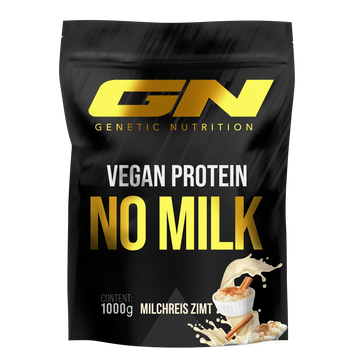
From our range: the No Milk Vegan Protein Powder by GN Laboratories combines faba bean, pea and rice with six free amino acids, delivers 23 g of protein per serving, is lactose-free, soy-free and made in Germany. Further casein-free products, such as the Vegan Protein Isolate by PEAK, can be found in the vegan protein collection.
The amount stays the same whichever route you take: for strength and endurance athletes the International Society of Sports Nutrition recommends 1.4 to 2.0 g of protein per kilogram of body weight per day9. Without casein you cover that through meals with meat, fish, eggs and legumes plus a casein-free shake after training. Test new products portion by portion and note the reaction in your training diary. How whey and casein differ in absorption and timing is explained in the guide Whey or casein?
Conclusion: clarify the cause first, then switch deliberately
You do not have to give up protein or training because of a casein intolerance, it only demands the right diagnosis and a consciously planned diet. Lactose-free is the first test, not the treatment: if the symptoms remain, an elimination diet and medical assessment lead the way, not an IgG test from the internet. After that the path is clear: with lactose intolerance whey isolate stays your shake, with casein intolerance or allergy you switch to a vegan protein powder. You can find both with us: the whey protein isolates for the lactose route and the vegan protein powders for the casein-free route.
Frequently asked questions about casein intolerance
Can a casein intolerance be cured?
Can I drink goat's or sheep's milk with a casein intolerance?
Can my GP detect the intolerance with a blood test?
Are joint pain and fatigue typical symptoms?
Which protein powder is right if I cannot tolerate milk?
Sources
- Haug A., Høstmark A. T., Harstad O. M., Lipids in Health and Disease (2007): Bovine milk in human nutrition, a review. pmc.ncbi.nlm.nih.gov/articles/PMC2039733/
- Flom J. D., Sicherer S. H., Nutrients (2019): Epidemiology of Cow's Milk Allergy. pmc.ncbi.nlm.nih.gov/articles/PMC6566637/
- Stapel S. O. et al., Allergy (2008): Testing for IgG4 against foods is not recommended as a diagnostic tool: EAACI Task Force Report. pubmed.ncbi.nlm.nih.gov/18489614/
- Worm M. et al., Allergologie select (2021): Update of the S2k guideline on the management of IgE-mediated food allergies (DGAKI). pmc.ncbi.nlm.nih.gov/articles/PMC8276640/
- Storhaug C. L., Fosse S. K., Fadnes L. T., The Lancet Gastroenterology and Hepatology (2017): Country, regional, and global estimates for lactose malabsorption in adults: a systematic review and meta-analysis. pubmed.ncbi.nlm.nih.gov/28690131/
- Szilagyi A., Ishayek N., Nutrients (2018): Lactose Intolerance, Dairy Avoidance, and Treatment Options. pmc.ncbi.nlm.nih.gov/articles/PMC6316316/
- Bellioni-Businco B. et al., Journal of Allergy and Clinical Immunology (1999): Allergenicity of goat's milk in children with cow's milk allergy. pubmed.ncbi.nlm.nih.gov/10359905/
- Brooke-Taylor S. et al., Advances in Nutrition (2017): Systematic review of the gastrointestinal effects of A1 compared with A2 beta-casein. pmc.ncbi.nlm.nih.gov/articles/PMC5593102/
- Journal of the International Society of Sports Nutrition (Jäger et al.) (2017): Position Stand: Protein and Exercise. pmc.ncbi.nlm.nih.gov/articles/PMC5477153/
- Koletzko S. et al., Journal of Pediatric Gastroenterology and Nutrition (2012): Diagnostic approach and management of cow's-milk protein allergy in infants and children: ESPGHAN GI Committee practical guidelines. pubmed.ncbi.nlm.nih.gov/22569527/