Whey or casein? Difference, timing and combination
Whey is the fast whey protein for the morning and after training, casein the slow milk fraction for the evening. Here you will read how the two differ, when which one fits and why the combination is often the smartest choice.

Whey or casein? The honest answer: both, depending on the time of day and your goal. Whey protein is the fast milk protein whose amino acids peak in the blood after about an hour; casein protein is the slow milk fraction that forms a gel in the stomach and supplies the body evenly for up to seven hours1. More important than the choice between the two types of protein is your total protein intake per day: meta-analyses show that daily protein intake determines muscle growth more than timing does2,3. This guide is the new edition of the article we published in 2018 on whey protein and casein, with the current state of research, a comparison of the protein powders we stock and a timing clock for your everyday life.
Key takeaways
- Whey = fast, casein = slow: whey, the milk serum protein, raises muscle protein synthesis briefly and strongly; casein supplies amino acids for hours and slows muscle breakdown. Both types of protein come from cow's milk, the differences lie in speed and structure.
- Total amount beats timing: 1.4 to 2.0 g of protein per kg of body weight per day is the nutritional basis for building and maintaining muscle. Only after that is fine-tuning by time of day worthwhile.
- Whey in the morning and after training, casein in the evening: 30 to 40 g of casein before bed increases overnight protein synthesis and, over 12 weeks, also strength and muscle cross-section.
- Combining is allowed: whey and casein in the same shake or as a multi-component protein extend the protein supply without losing the fast whey impulse.
- You will find both with us: whey protein with around 75 g of protein per 100 g and casein protein with 74 to 82 g per 100 g, depending on the variety.
What is the difference between casein and whey?
The difference lies in the speed of digestion, not in quality. Milk consists of about 80 % casein and 20 % whey protein. When cheese is made, the casein curdles with the cheese and the whey remains as a by-product; whey protein is produced from that whey by filtration and drying. Micellar casein is obtained by gentle microfiltration of milk, the micelle structure stays intact. These micelles are complexes of casein and calcium phosphate, which is why it naturally brings some of the mineral calcium with it.

The structure creates the differences in effect: the whey protein is water-soluble, leaves the stomach quickly and delivers amino acids to the bloodstream with a steep peak after about an hour. The slow milk protein, by contrast, flocculates into a gel, is digested and absorbed by the body much more slowly. In the study that coined the terms "fast" and "slow" protein, whey increased protein synthesis by 68 %, casein reduced protein breakdown by 34 %. The amino acid levels thus stayed elevated for up to seven hours1.
In their amino acid profile the two milk proteins are close together, above all in their BCAA content (leucine, isoleucine and valine). Whey contains slightly more leucine, the switch for muscle protein synthesis, casein slightly more glutamine; the nutrition tables of the GN Laboratories products list 9.8 g per 100 g of protein for the whey and 9.2 g for the casein. The biological value, meaning how well your body converts the protein into its own tissue, is high for both, as is the bioavailability. Whey is just ahead in the usual value tables, the slow protein makes up for it over the duration of the protein supply. Neither of the two is superior to the other across the board, the advantages depend on the use.
Comparison table: whey protein vs. casein protein
The figures in the comparison come from the nutrition tables of the protein powders from the manufacturer GN Laboratories that we stock (100% Dairy Whey Protein and 100% Casein Protein, as of August 2026). The absorption kinetics come from the research1,5.
| Feature | Whey protein | Casein protein |
|---|---|---|
| Protein content per 100 g of powder | 74.7 g (other varieties differ slightly) | 73.6 to 81.8 g depending on the variety |
| Protein per 30 g serving | 22.4 g at 115 kcal | 22.1 g at 107 kcal |
| Leucine per 100 g of protein | 9.8 g | 9.2 g |
| BCAA share and biological value | high; the reference protein among protein powders | slightly lower, more glutamine; high value over the duration |
| Absorption speed | fast, peak after about 1 hour | slow, plateau of up to 7 hours |
| Leucine peak | high and short: a strong impulse for protein synthesis | flat and long: slows muscle breakdown |
| Solubility and consistency | thin, dissolves easily in water | creamy to pudding-like, keeps you full longer |
| Typical time | in the morning, right after training | in the evening before bed, long gaps between meals |
| Main benefit | fast recovery, protein needs around training | muscle maintenance overnight and when dieting, feeling of fullness |
A tip for comparing when you buy: convert the price to 100 g of protein, not to the tub. That makes the price comparable, and you can see which protein powder performs best in terms of price and protein content.
When whey, when casein? The timing clock
The situation decides, not the label. The timing clock gives you an overview of which protein powder plays to its strengths at which time of day and which products we have in our range for it.

| Time | Whey or casein? | Why | Example from our range |
|---|---|---|---|
| In the morning after getting up | Whey | After the night your body needs quickly available amino acids; a protein shake or whey in your porridge provides them within minutes. | 100% Dairy Whey Protein from GN Laboratories, 22.4 g of protein per serving |
| Right after training | Whey | The fast leucine peak starts muscle recovery; whey and casein have a similarly anabolic effect here, whey is just lighter and faster8. | Viking Whey from Gods Rage, 22.2 g of protein per serving |
| Snack between meals or when dieting | Casein or a blend | The more slowly digested protein keeps you full longer and bridges four to six hours without solid food. | Multi-component protein or a casein pudding |
| In the evening before bed | Casein | 30 to 40 g of casein increase overnight protein synthesis by around 22 %5 and improve strength and muscle cross-section over 12 weeks6. | 100% Casein Protein from GN Laboratories, 22.1 g of protein at 107 kcal |
On dosage: 20 to 30 g of whey or casein is enough for most shakes, in the evening it can be a little more at 30 to 40 g4,5. Athletes who train late take whey after the session and a smaller serving of the night protein before bed. We explain what benefit casein before sleep has for you in the guide Is casein before sleep worthwhile?
From our range

GN Laboratories 1000 g
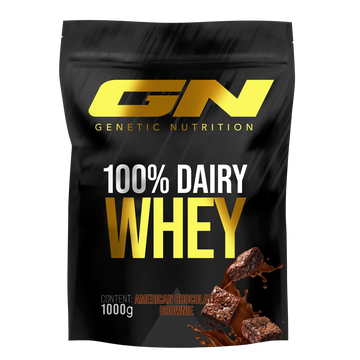
100% Dairy Whey Protein
Whey from GN Laboratories in 29 flavours, from Vanilla Creama to Cookies and Cream.
View productFor the morning and for the time after your session we stock the 100% Dairy Whey Protein from GN Laboratories in 29 varieties for every taste, from Vanilla Creama and Chocolate Crema to Cookies and Cream, with 74.7 g of protein per 100 g, produced by the manufacturer in Germany. If you want to stock up, reach for the 2 kg pack.
Is casein good for muscle growth?
Yes. Casein is a complete protein with all essential amino acids: protein contributes to a growth in muscle mass, and it also contributes to the maintenance of normal bones9. In a direct comparison after strength training, whey and casein produce a similar protein balance in the muscles8, and over the six hours that follow both types of protein are equivalent as long as the amount is right10. Taken before sleep, it gave strength athletes more muscle cross-section and strength than a placebo in a 12-week study6; whether it was taken during the day or in the evening made hardly any difference in another study, as long as the total amount was right11.
For you this means: work out your protein needs first. For athletes in strength sports it is 1.4 to 2.0 g per kg of body weight per day4, and the gain in muscle flattens out noticeably from about 1.6 g per kg3. At 80 kg that is 110 to 160 g of protein. What your diet does not cover, the supplement fills in: one or two shakes of protein powder, whey where it needs to be fast, the slow milk fraction where the next meal is far away. Bodybuilders and ambitious strength athletes with high needs are usually best served by both types of protein.
Can I combine casein and whey?
Yes, and the combination is often the smartest choice. Our old article from 2018 still advised against mixing whey and casein, because the gel in the stomach would slow down the fast whey impulse. The research now looks different: a blend of both types extends the rise in muscle protein synthesis after training instead of preventing it7. The whey share delivers the early peak, the casein share keeps the amino acids up afterwards; the advantages of both protein sources complement each other.
In practice you have two ways. First, your own casein-whey mix, which many bodybuilders use after a late session: half a serving each of whey and casein in the shaker when there is only one intake left before bed. Second, a ready-made multi-component protein, also called a 2-component protein, which combines both in one protein powder: the all-rounder for everyone who only wants one tub in the basket. The disadvantages of a ready-made mix only show in the two extreme cases, right after the session and right before sleep; there, pure whey and pure casein remain the more precise choice.
Does whey contain casein?
No. Whey is the serum fraction of milk: the component that is separated from the casein when cheese is made. A whey concentrate or whey isolate is made from whey and contains practically no casein, only traces from production; conversely, the pure night protein powder contains no whey protein. You will only find both milk components together in multi-component protein or in dairy products such as quark and yoghurt. If you want to compare concentrate and isolate more closely, our guide Whey protein or isolate? helps.
Micellar casein or calcium caseinate?
Micellar casein is the natural variant with an intact micelle structure and the slowest release; calcium caseinate is produced by precipitation, offers better solubility, but is digested a little faster. All three casein products we stock are micellar: the casein from GN Laboratories, the Micellar Casein from PEAK and the 100% Casein from Stacker2. A casein product with calcium caseinate has no advantage for the night; it only counts in very low-fat, low-carbohydrate diet plans.
Whey or casein for weight loss?
When dieting, casein plays to its strengths, whey stays around training. Thanks to its slow digestion the slow milk protein keeps you full longer, catches evening cravings and delivers a lot of protein for little energy at 107 kcal per serving; fat and carbohydrates stay low (2.8 g and 7.3 g per 100 g for the casein from GN Laboratories). Protein contributes to the maintenance of muscle mass9, and that is exactly what is otherwise quickly lost in a calorie deficit. Whey protein around the session supports muscle recovery without straining the calorie budget. Our guide Casein for weight loss shows how to use it specifically when dieting.
From our range

GN Laboratories 900 g
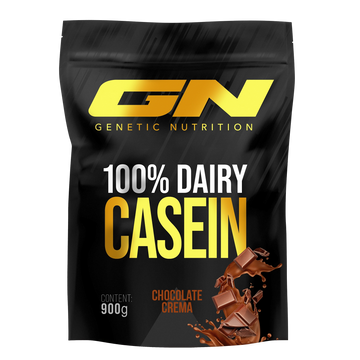
100% Casein Protein
Casein from GN Laboratories in Chocolate Crema and Vanilla Crema.
View productThe 100% Casein Protein from GN Laboratories is our bestseller in the category: 62 % of casein orders in the last 90 days went to this tub, rated 4.89 stars (both figures as of August 2026). The tub comes without added sugar (the nutrition table only shows the milk's own lactose), is produced in Germany and brings 73.6 to 81.8 g of protein per 100 g depending on the variety, as Chocolate Crema and Vanilla Crema. More flavours to choose from come with the Micellar Casein from PEAK with Cookies & Cream, Coconut and Strawberry, plus lactase.
What side effects can casein have?
Casein has two possible side effects: a reaction in the case of a milk protein allergy and complaints caused by the lactose it contains. Otherwise it does well in terms of tolerance, after all it is the main protein in milk. First: anyone who is allergic to milk protein avoids it entirely, because casein is exactly the milk protein the body then reacts to. The alternative is plant-based protein powders. Second, the lactose: the powders contain little of it, the 900 g tub from GN Laboratories comes to 3.5 g of sugar per 100 g. With the Micellar Casein from PEAK the ingredient list additionally shows the enzyme lactase. Anyone who only tolerates dairy products in small amounts starts with half a serving and increases slowly; with a pronounced intolerance a whey isolate is the option with the least lactose.
The creamy consistency can cause a feeling of fullness with very large servings; in that case take 20 to 30 g and mix with more water. A protein intake of 1.4 to 2.0 g per kg of body weight remained without drawbacks in healthy adults in the studies4.
Taste, consistency and recipes: whey in the shake, casein in the pudding
Taste, texture and solubility decide how a protein powder gets used every day. The uses differ: whey protein dissolves thinly in water or milk, shakes are drunk in 30 seconds. The Dairy Whey from GN Laboratories comes in 29 varieties, including vanilla (Vanilla Creama), chocolate (Chocolate Crema), banana (Banana Cream), hazelnut nougat, strawberry (Strawberry Crema) and blueberry (Blueberry Cheesecake). The night protein becomes creamy to firm when prepared, with a mouthfeel like dessert, and is the favourite for cooking and baking because it binds. Three recipes from practice:
- Casein pudding in the evening: stir 30 g of powder of your chosen flavour into 120 to 150 ml of cold water or milk, let it swell for ten minutes. Keeps you full overnight.
- Whey in porridge or yoghurt: stir 25 to 30 g of whey into warm oats after cooking or mix it with quark and yoghurt for breakfast; that way protein complements the carbohydrates of the meal.
- Baking with both: casein binds and keeps pancakes moist, whey tends to make baked goods dry; when baking, replace at most a quarter of the flour with protein powder.
Conclusion: whey or casein? Both, at the right time
Whey in the morning and after training, casein in the evening and before long gaps, in many cases both. Your total amount of protein in your diet remains the foundation, timing is the fine-tuning2,3. Athletes who only want one tub for their shakes take whey or a multi-component protein; athletes who prioritise muscle maintenance overnight or fullness when dieting add the night protein.
Frequently asked questions about whey and casein
Which is better for beginners: whey or casein?
How much casein should I take before sleep?
Can I take casein during the day as well?
Is casein or whey better if I tolerate lactose poorly?
Sources
- Boirie Y. et al., PNAS (1997): Slow and fast dietary proteins differently modulate postprandial protein accretion. pubmed.ncbi.nlm.nih.gov/9405716/
- Schoenfeld B. J. et al., Journal of the International Society of Sports Nutrition (2013): The effect of protein timing on muscle strength and hypertrophy: a meta-analysis. pubmed.ncbi.nlm.nih.gov/24299050/
- Morton R. W. et al., British Journal of Sports Medicine (2018): A systematic review, meta-analysis and meta-regression of the effect of protein supplementation on resistance training-induced gains in muscle mass and strength in healthy adults. pubmed.ncbi.nlm.nih.gov/28698222/
- Journal of the International Society of Sports Nutrition (Jäger et al.) (2017): Position Stand: Protein and Exercise. pmc.ncbi.nlm.nih.gov/articles/PMC5477153/
- Res P. T. et al., Medicine and Science in Sports and Exercise (2012): Protein ingestion before sleep improves postexercise overnight recovery. pubmed.ncbi.nlm.nih.gov/22330017/
- Snijders T. et al., Journal of Nutrition (2015): Protein ingestion before sleep increases muscle mass and strength gains during prolonged resistance-type exercise training in healthy young men. pubmed.ncbi.nlm.nih.gov/25926415/
- Reidy P. T. et al., Journal of Nutrition (2013): Protein blend ingestion following resistance exercise promotes human muscle protein synthesis. pubmed.ncbi.nlm.nih.gov/23343671/
- Tipton K. D. et al., Medicine and Science in Sports and Exercise (2004): Ingestion of casein and whey proteins result in muscle anabolism after resistance exercise. pubmed.ncbi.nlm.nih.gov/15570142/
- Europäische Kommission (2012): Verordnung (EU) Nr. 432/2012 (Liste zulässiger gesundheitsbezogener Angaben). eur-lex.europa.eu/eli/reg/2012/432/oj/eng
- Reitelseder S. et al., American Journal of Physiology, Endocrinology and Metabolism (2011): Whey and casein labeled with L-[1-13C]leucine and muscle protein synthesis: effect of resistance exercise and protein ingestion. pubmed.ncbi.nlm.nih.gov/21045172/
- Joy J. M. et al., Journal of the International Society of Sports Nutrition (2018): Daytime and nighttime casein supplements similarly increase muscle size and strength in response to resistance training earlier in the day. pubmed.ncbi.nlm.nih.gov/29764464/
More on choosing your protein
-
 Image: AI-generated
What is casein? Effect, intake, forms
What casein is and the forms it comes in.
Read article -

Protein Timing: When Should You Take Protein?
How to distribute your protein intake throughout the day.
Read article -
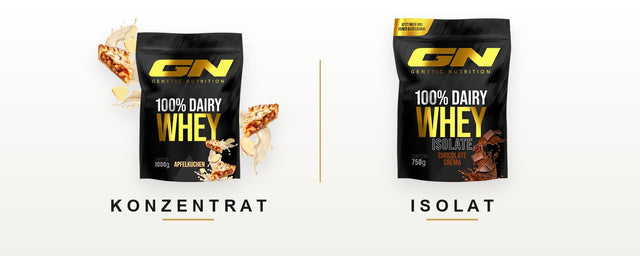
Whey Concentrate vs Isolate: Which Suits You?
A comparison of concentrate, isolate and clear whey.
Read article