Vegan Protein Isolate: the honest whey alternative
Vegan protein isolate from pea, rice and soy instead of whey: soy isolate gives 90 % protein. Learn to read the amino acid profile and choose right.

Let's be upfront, because hardly anyone says it out loud: whey isolate is not vegan. It is made from whey, and whey is a dairy product. Anyone searching for "vegan protein isolate", "vegan whey isolate" or simply vegan whey protein is really looking for a plant-based alternative that does the same job as whey: plenty of protein per serving, little ballast. That is exactly what this article is about. We show you which plant protein sources exist, why the amino acid profile is what matters with vegan protein, and how to find the right product without falling for an earthy taste or an incomplete profile.
The key points at a glance
- Whey isolate is not vegan because it comes from milk. The plant-based alternative comes from pea, rice, soy, faba bean or hemp.
- Soy protein isolate delivers around 90 % protein, pea protein isolate mostly 80 to 85 %; so true isolates exist in plant form too.
- Individual plant sources each have a weakest amino acid. The solution is combining several sources or deliberately adding free amino acids.
- Protein contributes to the growth and maintenance of muscle mass, plant-based just as much as animal-based.
- When buying, look at protein per 100 g, the source blend and a complete amino acid profile, not just the word "isolate".
What is vegan protein isolate?
Vegan protein isolate is a heavily refined protein powder from plant sources, stripped of accompanying substances like fibre, fat and starch so that it reaches a particularly high protein content. It is the plant-based answer to whey isolate, which comes from milk and is therefore off the table for a vegan diet.
One important point up front, one the market likes to blur: the word "isolate" is used more loosely for plant protein than for whey. With whey, isolate is a clearly defined purity grade of around 90 % protein. Real plant isolates do exist too, such as soy protein isolate at around 90 % protein or pea protein isolate at mostly 80 to 85 % (depending on the label you will find the terms written separately as soy protein isolate and pea protein isolate, or joined up), each in contrast to the less refined concentrate. Yet very often a "vegan protein isolate" on the label is really a blend of several sources, where the word isolate only refers to the single component. So do not rely on the term, but on the protein content per 100 grams and the ingredient list. How this logic works with whey is explained in detail in our Whey Isolate guide.
Which plant protein sources are there?
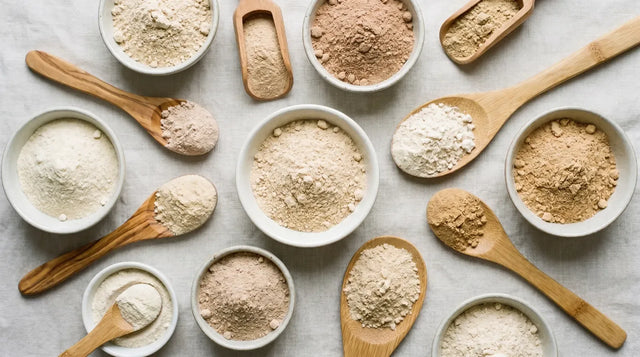
The most important sources for vegan protein powder are pea, rice, soy, faba bean and hemp. They differ in protein content, amino acid profile and taste, and it is precisely these differences that decide whether a source works on its own or is better combined.
| Plant source | Protein content (guide value) | Profile note | Taste, solubility |
|---|---|---|---|
| Soy protein isolate | approx. 90 % | almost complete amino acid profile | mostly good solubility, mild taste of its own |
| Pea protein isolate | approx. 80 to 85 % | high BCAA share, low methionine | binds water, can taste earthy |
| Rice protein | approx. 75 to 85 % | low lysine, complements pea well | mild, slightly gritty |
| Faba bean protein | approx. 60 to 80 % | good lysine supplier | neutral to slightly beany |
| Hemp protein | approx. 50 % | contains fibre and fat | nutty, coarse, harder to dissolve |
In practice, soy protein isolate is the plant source that comes closest to a whey isolate: high protein content, good solubility, largely complete profile. Pea protein and rice protein play to their strengths mainly in combination, more on that shortly. Hemp protein brings fibre and unsaturated fats on the side, but has the lowest protein content and, as a single source, often tastes strongly nutty. If you want to compare several plant protein sources, you will find the selection in the Plant protein category.
Why is the amino acid profile decisive for vegan protein?
With vegan protein the amino acid profile counts more than with whey, because individual plant sources each have a weakest essential amino acid, the so-called limiting amino acid. With pea this is typically methionine, with rice and grains it is lysine. A single source can therefore deliver a somewhat unbalanced profile.
The clever solution is no secret, it lies in good old nutritional science: combine sources that complement each other. Pea and rice are the prime example, because rice brings the methionine that pea lacks, and pea the lysine that is scarce in rice. Together this gives a much rounder, complete amino acid profile. This complementarity of plant proteins is well documented.1 That is exactly why most good vegan powders are multi-component proteins and not a single source.
A second route runs via added free amino acids. Some manufacturers deliberately add individual amino acids such as L-methionine or L-leucine to fill the gap in the profile. And here an important difference matters that almost no one explains: with whey, adding free amino acids would be a warning sign of amino spiking, the trick of artificially inflating the measured protein value. More on this in the Whey Isolate guide. With plant protein, by contrast, the targeted addition of individual amino acids is a sensible, transparent way to complete the profile, not a fraud. It turns a plant blend into a protein with a complete profile.
What to look for: a good vegan protein powder names its sources openly and shows that the profile is complete, whether through the combination or through declared added amino acids. Important for context: this is a question of protein quality, not a promise that a powder builds muscle on its own.
Vegan protein isolate or whey isolate: which suits you?
The choice does not depend on what is "better", but on your reason. Whey isolate has the naturally more complete profile and the slightly higher biological value per single source. Vegan protein is the right choice if one of these points applies to you:
- Vegan or plant-focused diet: you avoid animal sources for ethical or ecological reasons. Then vegan whey, as the alternative is often called, is simply the only way.
- Milk protein allergy: here is an important note for everyone who thinks a whey isolate is the solution. With a genuine milk protein allergy, even the purest whey isolate does not help, because the triggering milk proteins remain in the isolate, unlike the filtered-out lactose. Why low-lactose does not mean lactose-free, and lactose is not the same as milk protein, we explain in the comparison Whey protein or isolate. Anyone who reacts to the milk protein itself is clearly better served with a plant-based alternative.
- Intolerance or sensitive reaction to whey: some people simply do not get on well with whey and deliberately switch to plant protein.
- More fibre wanted: sources like hemp bring fibre along on the side.
And straight away a myth for reassurance: vegan protein powder is not automatically "healthier" than whey, and it is not "worse" either. It is a question of tolerance, ethics and taste. Comparison tests regularly show that good plant powders keep up with whey on protein content. On price the same logic applies as with whey: compare the price per gram of protein, not per pack. How to do that is in Whey protein or isolate.
Why does vegan protein sometimes taste earthy, and what helps?
The most common criticism of vegan protein powder is the taste: plant protein, especially from pea or hemp, can taste earthy or beany, and it binds more water than whey, so the shake becomes thicker and creamier. This comes from the natural plant compounds and is not a quality defect, but it puts many people off.
A few simple steps get this well under control:
- Mix in plant milk instead of water: oat or soy drink masks the earthy note far better than water and makes the consistency more pleasant.
- Choose multi-component over a single source: a blend of several sources tastes rounder and less one-sided than pure pea or hemp protein. Pure hemp protein as a solo source is often the weakest choice for a plain shake in both taste and solubility.
- Watch the sweetener: many vegan powders are sweetened with stevia, which advertises itself as "natural" but has a bitter aftertaste that strongly divides opinion. If you do not like stevia, look specifically for neutral or differently sweetened versions. This is a common, often underestimated reason why a powder ends up sitting in the cupboard after all.
- Use it for cooking and baking: vegan powders often work better in porridge, pancakes or a sauce than in a plain shake, because their own taste disappears there.
Among the plant sources, soy protein isolate usually has the best solubility and a comparatively mild taste of its own, so for the classic shake it is often the most straightforward option. If you prefer it clear and refreshing rather than creamy, you will know the principle from the Whey Isolate Drink; clear versions exist in vegan form too.
What should you look for when buying a vegan protein isolate?
When buying a vegan protein powder, five things count: the protein content per 100 grams, the source blend, a complete amino acid profile, the sweetening and whether it fits your tolerances. The word "isolate" on the front, by contrast, is the weakest criterion, because it is used inconsistently in plant form.
In concrete terms: look at the protein share per 100 grams, not at the flattered value per small serving. Prefer a multi-component protein that combines several plant protein sources or supplements missing amino acids, over a single source. Check whether the profile is fully declared. And if you want to avoid soy, for example because you are looking for a soy-free formula, pay specific attention to that, because not every vegan powder is soy-free.
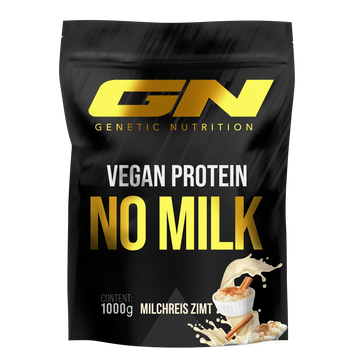
A product from our range shows well how this looks in practice: the No Milk vegan protein powder from GN Laboratories is built on three plant sources, faba bean, pea and rice, and adds six free amino acids, including L-methionine and L-leucine, for a complete profile. It delivers 23 g of protein per serving, is lactose-free and soy-free and is made in Germany. This illustrates exactly the two principles from above: combine several sources and deliberately complete the profile, rather than relying on a single source.

If you want to compare different plant options, you will find a curated selection in our vegan protein category. If you are looking specifically for a single source, you will find it in the Pea protein or Rice protein categories. And if in the end you would rather stick with whey, compare it all with our selection of Whey Protein Isolate.
How much vegan protein per day makes sense?
The amount depends on your total requirement, not on the protein source. The German Nutrition Society gives adults a reference value of 0.8 g of protein per kilogram of body weight per day.2 Physically active people are placed higher by expert bodies. This requirement can also be met purely on a plant basis, provided the sources vary and the total amount is right.
A vegan protein powder is a practical building block for reaching the daily protein amount, not a substitute for a balanced diet. One to two servings a day are common in practice. Because plant protein has a somewhat lower usability per single source than whey, you simply balance this out through the combination of sources and through the amount. Protein contributes to the growth and maintenance of muscle mass, and this effect of protein applies to plant protein just as much as to animal protein, as long as the food is a source of protein within the meaning of the requirements.3
Frequently asked questions about vegan protein isolate
What is the difference between vegan protein isolate and whey isolate?
Which is the best plant protein?
Does vegan protein replace whey for building muscle?
Why does vegan protein powder often taste earthy?
Is there vegan protein powder without soy?
Is vegan protein powder worth it?
Sources
- Fachgesellschaft für Ernährungstherapie und Prävention (FETeV): Proteine und Aminosäuren. fet-ev.eu/proteine-aminosaeuren/
- Deutsche Gesellschaft für Ernährung (DGE): Referenzwerte Protein. dge.de/wissenschaft/referenzwerte/protein/
- Europäische Kommission (2012): Verordnung (EU) Nr. 432/2012 (Liste zulässiger gesundheitsbezogener Angaben). eur-lex.europa.eu/eli/reg/2012/432/oj/eng