
Filter
-11%
-11%
-11%
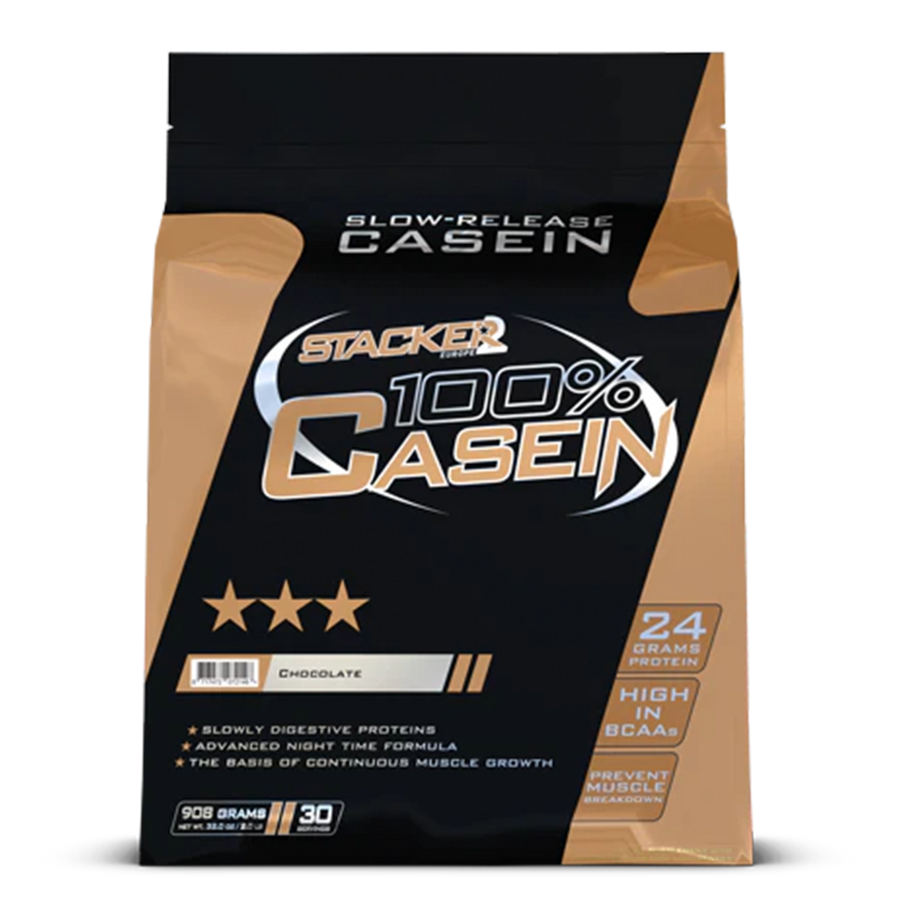


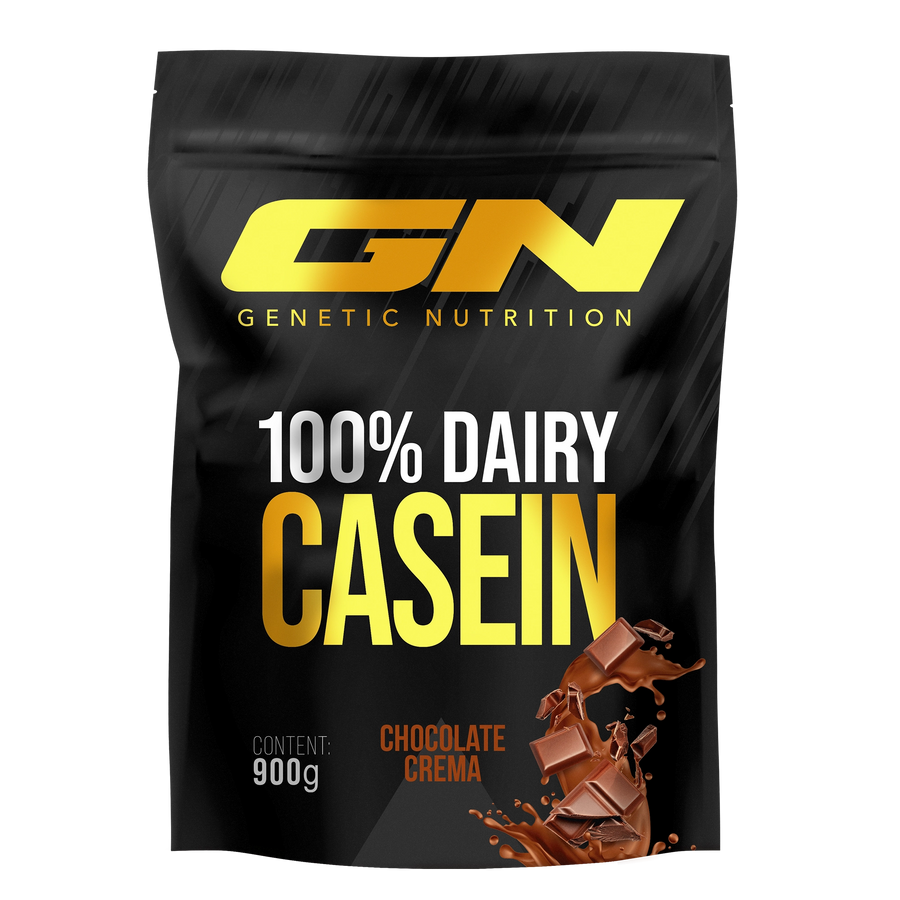
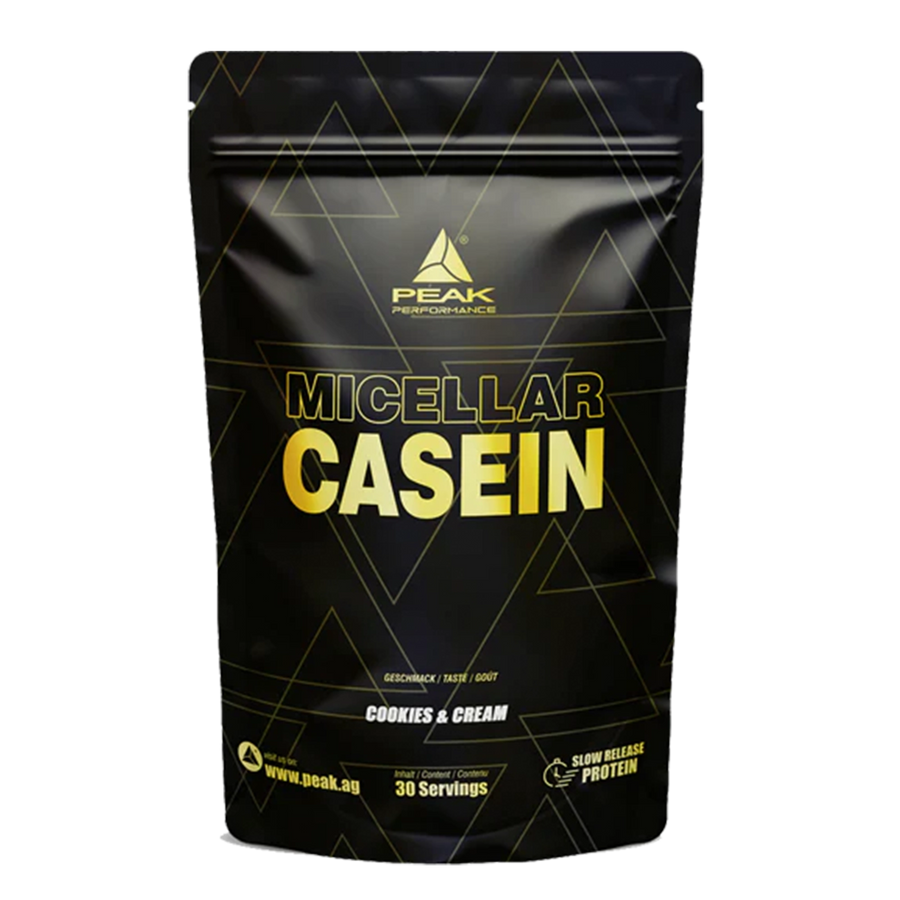
Casein protein is the slowly digested milk protein. It makes up around 80 % of the protein in cow's milk, curdles into a gel in the stomach and releases its amino acids over several hours [2]. With us you will find three micellar casein protein powders that we deliberately selected for our range: 100% Casein Protein from GN Laboratories, Micellar Casein from PEAK and 100% Casein from Stacker2. All three deliver 74 to 82 g of protein per 100 g, depending on the flavour, and mix with water into a creamy shake. On this page you will find the differences, how to take it and a selection guide so you find the casein powder that is right for you.
Casein suits you if you want a protein source in the evening that supplies you through the night: for athletes focused on muscle growth and muscle maintenance, just as much as for dieting, where you want a protein-rich shake with little sugar. Right after training you still reach for whey protein; the two complement each other instead of replacing one another.
All three powders with us are micellar casein. The differences lie in origin, taste and additives. In the last 90 days (as of August 2026), 62 % of our casein orders went to the tub from GN Laboratories, with Chocolate Crema the most chosen flavour.
| Product | Protein per 100 g | Flavours | Special feature |
| 100% Casein Protein from GN Laboratories | 73.6 to 81.8 g depending on flavour (22 to 24.5 g per 30 g) | Chocolate Crema, Vanilla Crema | Our bestseller, made in Germany, without added sugar and colourings, 4.89 stars in our reviews |
| Micellar Casein from PEAK | 76 to 80 g depending on flavour (23 to 24 g per 30 g) | Vanilla, Chocolate, Cookies & Cream, Strawberry, Coconut | 90 % milk protein, with lactase (350 ALU per 100 g), 104 kcal per serving |
| 100% Casein from Stacker2 | 75 to 79 g depending on flavour (23 to 24 g per 30 g) | Vanilla, Chocolate, Strawberry | Micellar casein from milk protein concentrate and isolate, dissolves easily, lump-free |
In short: if you want the most bought variant, take the GN bestseller. If you are sensitive to dairy products, take PEAK with lactase. If you like switching between chocolate, vanilla and strawberry, take Stacker2. How to find the flavour that suits you is covered in our guide Choosing the right casein.
Whey protein is digested fast, casein slowly. Whey protein arrives in the blood after 40 to 60 minutes, casein releases its amino acids over about seven hours [2]. That is why whey counts as the protein for the time around training. Casein is the protein for the evening and for long gaps between meals.
The amino acids are complete in both, the biological value is high in both, the amount per serving similar. The difference is the release, not the quality. That is why our recommendation is whey and casein instead of whey or casein: a fast whey protein during the day, the slow shake in the evening. What the combination looks like in everyday training is shown in the article Combining whey and casein properly.
Most often in the evening, 30 to 60 minutes before going to bed. Taking it is simple: 30 g of powder (one scoop) in 250 ml of water or low-fat milk. With milk the shakes become even creamier and additionally provide calcium. The powder thickens as you stir it, so use a little more liquid than for a whey shake.
One serving a day is enough for most. Two servings make sense if more than five hours lie between two meals, for example with shift work or long office days. Then one in the afternoon, one in the evening. A 900 g tub lasts about a month at one serving and two weeks at two.
Protein contributes to a growth in muscle mass, to the maintenance of muscle mass and to the maintenance of normal bones [1]. As a guideline for protein requirements in training, 1.4 to 2.0 g of protein per kg of body weight per day applies [4]; a casein shake covers around 22 to 24 g of that. More important than the exact timing is the total amount per day [4]; the evening shake is simply the easiest way to complete it. In one study with strength athletes, overnight muscle protein synthesis was higher after 40 g of casein before sleep than after a placebo [3]. Whether the evening shake makes sense for you is discussed in the article Casein before sleep.
First, the form of the casein. Micellar casein is casein in its natural structure, gently obtained from milk by microfiltration. Calcium caseinate is casein dissolved by acid precipitation; this caseinate dissolves thinner and releases its amino acids somewhat faster. Hydrolysate is pre-digested casein, quickly available, but not meant for the night. All three products in this collection are micellar casein. The term caseins stands for the whole group of milk proteins (alpha, beta and kappa casein) contained together in the micellar powder.
After that, five values count: protein content per 100 g, sugar and fat per serving, solubility and consistency. Across the three products these values are close together. 74 to 82 g of protein per 100 g is a very good range here, because the raw material naturally brings calcium and some milk sugar with it. A good casein powder turns creamy in the shaker and does not clump. If you tolerate milk sugar poorly, look for added lactase as with PEAK; it improves tolerability. And if you compare prices, calculate per 100 g of protein, not per tub.
More about the varieties, their strengths and dosages is in the casein expert guide.
Goes well with it: 100% Dairy Whey Protein from GN Laboratories for the time after training and the GN Wave Shaker 700 ml, in which 30 g of casein and 300 ml of water mix lump-free.
[1] Regulation (EU) No 432/2012, authorised health claims on protein: "Protein contributes to a growth in muscle mass", "Protein contributes to the maintenance of muscle mass". https://eur-lex.europa.eu/legal-content/EN/TXT/?uri=CELEX%3A32012R0432
[2] Boirie Y et al. Slow and fast dietary proteins differently modulate postprandial protein accretion. PNAS 1997. https://pubmed.ncbi.nlm.nih.gov/9405716/
[3] Res PT et al. Protein ingestion before sleep improves postexercise overnight recovery. Med Sci Sports Exerc 2012. https://pubmed.ncbi.nlm.nih.gov/22330017/
[4] Jäger R et al. International Society of Sports Nutrition Position Stand: protein and exercise. J Int Soc Sports Nutr 2017. https://pubmed.ncbi.nlm.nih.gov/28642676/