Whey Concentrate vs Isolate: Which Suits You?
The difference between an ingredient and a finished powder, a same-flavour comparison and the key criteria for your choice.

As a raw ingredient, whey isolate contains more protein and less lactose and fat than whey concentrate. Whether it is worth choosing depends on the finished powder: its nutrition facts, how well you tolerate it and the price for the amount of protein it actually contains. If your current whey suits you and helps you meet your protein needs, being on a diet is not in itself a reason to switch to isolate.
Key takeaways
Concentrate or a blend: a practical choice when the formula, flavour and price fit your everyday needs.
Isolate: worth considering if you want more protein and less fat and carbohydrate in the same amount of powder. For lactose intolerance, check the specific product information.
Compare fairly: choose the same flavour and amount of powder. When comparing prices, also calculate the cost for the amount of protein supplied.
What is the difference between whey concentrate and whey isolate?
Both are whey protein, a protein derived from milk. Whey is produced as a by-product of processes such as cheesemaking. Processing and drying turn it into a protein-rich ingredient. The terms concentrate and isolate describe how much the protein has been concentrated relative to the other components.
Whey protein concentrate, or WPC, retains more components such as lactose and fat. Whey protein isolate, or WPI, contains less of these. Production uses membrane processes such as ultrafiltration and microfiltration; isolate can also be produced using ion exchange.1 2 In crossflow microfiltration, the liquid flows parallel to the membrane.6 The process alone does not tell you what the finished shake will taste like or how well you will tolerate it.
Why isolate does not automatically mean 90% protein in your shaker
The commonly quoted figures of 80% for WPC 80 and at least 90% for WPI refer to the protein ingredient, on a dry-matter basis when comparing these specifications. A flavoured protein powder contains additional ingredients. Cocoa, flavourings and other parts of the formula change the protein content of the finished product.1 2
An ingredient percentage is also different from a nutritional value. If the ingredient list says “whey protein isolate (90%)”, that ingredient makes up 90% of the formula. It does not mean that 100 g of the finished powder contains 90 g of protein. For your comparison, use the “protein per 100 g” entry in the nutrition table.
GN Dairy Whey and Dairy Isolate: nutrition per serving
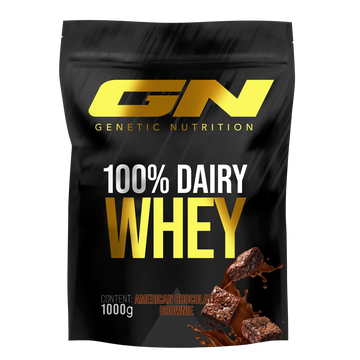
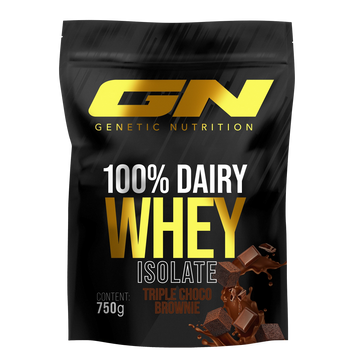
In GN Dairy Whey, the protein source is a blend of concentrate and isolate. GN Dairy Whey Isolate uses whey protein isolate. Both sets of figures below are for the Chocolate Crema flavour.
| Nutrition | Dairy Whey, blend | Dairy Whey Isolate |
|---|---|---|
| Protein per 100 g of powder | 72 g | 79 g |
| Protein per serving, 30 g of powder | 21.6 g | 24 g |
| Energy per serving | 114 kcal | 105 kcal |
| Fat per serving | 1.9 g | 0.6 g |
| Carbohydrate per serving | 2.1 g | 0.8 g |
| Of which sugars per serving | 1.4 g | 0.3 g |
Serving values are rounded as shown in the respective nutrition tables and refer to the powder without milk or other additions. Other flavours may differ.
In this comparison, a 30 g serving of isolate provides 2.4 g more protein and 9 fewer kcal. You can weigh that difference against the price. It is not a universal difference between all concentrates and isolates: these are two specific formulas, one of which is a blend.

Muscle growth, dieting and absorption: do you need isolate?
Protein contributes to the growth and maintenance of muscle mass. Both concentrate and isolate can serve as protein sources. Whey contains all the essential amino acids, including the BCAAs leucine, isoleucine and valine. A higher protein percentage in isolate initially means more protein per gram of powder, not automatically more muscle growth when total protein intake is the same.3
For people who train, a key priority is getting an appropriate amount of protein through their diet. A shake can help fill a gap; someone already getting enough protein from meals does not need to add protein powder. Total daily intake also takes priority over the timing of any single shake.3
Whey is a comparatively fast-digesting protein. That does not establish a fixed number of minutes after which your isolate works better than a concentrate. Do not choose a powder on the strength of a promised absorption advantage.
During a diet, the lower fat and carbohydrate values of a particular isolate may be useful. The difference of 9 kcal in the GN example also shows why your overall diet matters. Concentrate is not inherently a bulking product, and isolate is not a fat burner. Flavour, budget and consistent use remain useful criteria during a cutting phase too.
Lactose and tolerance: check the specific product
As an ingredient, whey isolate usually contains less lactose than concentrate. How much lactose is in your finished powder and how much you tolerate are separate questions. Lactose intolerance varies between individuals: many people tolerate small amounts, while larger amounts can cause symptoms.4
“Isolate” does not guarantee a lactose-free product. Look for an explicit statement about the particular product and flavour. The “of which sugars” entry does not reveal the exact lactose content, because it includes different sugars. Preparation matters too: ordinary milk adds lactose to the shake.
A milk protein allergy is different from lactose intolerance. Concentrate, isolate and clear whey still contain milk protein and are therefore not suitable alternatives for someone with a milk protein allergy.5 Symptoms after a shake do not automatically establish lactose as the cause. Other ingredients and serving size also need to be considered when investigating the cause.
Understanding blends, clear whey and hydrolysate
A blend combines concentrate and isolate
A concentrate-isolate blend combines both protein sources. In Dairy Whey Chocolate Crema, they appear together as a whey protein blend in the ingredients. An exact isolate percentage is not stated. The name “blend” therefore tells you neither a fixed ratio nor a specific absorption rate.
Texture also depends on the whole formula. Isolate need not make a thin drink: Dairy Isolate, for example, contains xanthan gum as a thickener. Alongside the protein form, the other ingredients and amount of water affect how creamy a shake is.

Clear whey describes a different kind of drink
Clear whey is an option if you prefer a fruity drink to a creamy milkshake. GN HydroClear is an example based on isolate. A clear appearance does not mean milk-free or automatically better tolerated. Flavour and drinking experience help you choose between a clear and a creamy shake; compare the nutrition facts as well.
Whey hydrolysate: protein chains broken into smaller pieces
Hydrolysis breaks proteins into smaller peptides. “Hydrolysate” describes processing of the protein chains; “isolate” describes the concentration of protein. These terms are not three successive quality levels. In particular, a hydrolysed sports protein is not a substitute for a medically suitable product for someone with a milk allergy.3 5
How do you compare prices fairly?
Isolate is not more expensive than concentrate or a blend in every offer. Compare the price for the same amount of protein. The number of scoops or servings on a pack can be misleading when serving sizes differ. A low price per kilogram of powder alone does not tell you how much protein you get.
Price per 100 g of protein = pack price ÷ grams of protein in the pack × 100.
A 1,000 g pack of Dairy Whey Chocolate Crema with 72 g of protein per 100 g contains a calculated 720 g of protein. A 750 g pack of Dairy Isolate Chocolate Crema with 79 g per 100 g contains 592.5 g. Insert the current pack prices to compare both offers on the same basis.
A higher price may be worth paying if the isolate's specific composition helps you or you prefer that flavour. A blend may remain the right choice if you tolerate it well and are happy with its value. Judge the finished product instead of paying more for the word “isolate” alone.
How to make your choice
First check how much protein you want to add to your diet. Then compare nutrition for the same serving size and the ingredients of your chosen flavour. If you have lactose intolerance, you also need reliable information about the product's lactose content. Once those points fit, consider flavour, preparation and price.
To explore the different formulas, compare the whey proteins in our range. The right form is the one whose actual properties fit your everyday needs.
Frequently asked questions about whey concentrate and isolate
Does “100% whey” mean the powder is 100% protein?
Can I use the same scoop when switching products?
Do these nutrition values also apply to a shake made with milk?
Sources
- American Dairy Products Institute: Whey Protein Concentrate. adpi.org/ingredient-resources/whey-protein-concentrate/
- American Dairy Products Institute: Whey Protein Isolate. adpi.org/ingredient-resources/whey-protein-isolate/
- Jäger et al. (2017): International Society of Sports Nutrition Position Stand: protein and exercise. pmc.ncbi.nlm.nih.gov/articles/PMC5477153/
- IQWiG: Ernährung bei Laktoseintoleranz. gesundheitsinformation.de/ernaehrung-bei-laktoseinto...
- gesund.bund.de: Laktoseintoleranz. gesund.bund.de/laktoseintoleranz
- Tetra Pak: Dairy Processing Handbook: Membrane technology. dairyprocessinghandbook.tetrapak.com/chapter/membran...
More on choosing your protein
-

Whey Isolate: The Complete Guide to Benefits & Buying
The basics, production and selection of whey isolate.
Read article -
Whey Isolate Test: How to Spot a Good Isolate
Which details help you compare whey isolates.
Read article -

Whey Isolate Drink: the clear protein drink guide
Taste, preparation and choosing clear whey.
Read article