Casein protein for weight loss: what it delivers
Casein does not make you slim, but it is the protein powder for the evening in a diet: around 23 g of protein for about 110 kcal, slowly digested. Here you will read what the evening shake delivers, how much you need and which recipes fit into your deficit.

Key takeaways
- Weight loss comes down to your calorie deficit, not the protein powder. Casein protein is still a smart protein source while dieting: 22 to 24.5 g of protein for 104 to 118 kcal per shake.
- Losing weight is about enough protein as well as the deficit: lose fat, keep muscle. In one study, the group eating more protein kept more muscle mass and lost more fat.
- Casein is digested slowly and releases its amino acids over a longer period. That is why it is the protein powder for the evening.
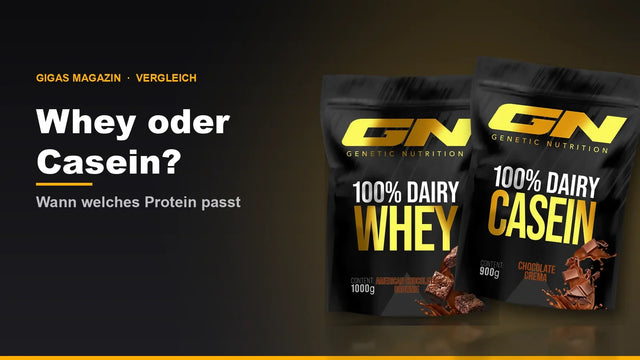
- Casein or whey protein for weight loss? Each has its moment: whey after training, casein in the evening and during long gaps. Most of our casein customers choose the 100% Casein Protein from GN Laboratories.
Can you lose weight with casein? What casein protein really does when dieting
Yes, but not because casein burns fat. Weight loss is decided by your calorie deficit: your body takes in less energy than it uses. In that equation, the milk protein is a protein powder that costs few calories and delivers a lot of protein. No serious article promises more, and it does not need to.

Casein protein is the slowly digested milk protein. Four out of five grams of protein in cow's milk are casein. In the stomach it clots into a gel and releases its amino acids over several hours2. Whey protein, the protein from the whey fraction, needs only 40 to 60 minutes to reach the blood. Both protein powders bring all the amino acids, including L-leucine and the other BCAAs; the difference lies in the speed, not the quality.
Why is protein so important in a calorie deficit? Protein contributes to the maintenance and growth of muscle mass1; anyone who eats too little of it in a deficit loses muscle along with body fat. Protein is also considered the most satiating macronutrient: a review sees benefits for satiety and weight management at 1.2 to 1.6 g per kilogram of body weight3. And in a study with strength athletes in a deficit, the group eating 2.4 g per kilogram built muscle protein and lost more fat than the group eating 1.2 g4. Casein protein powder gives you this protein in a form that lasts: one shake delivers around 23 g of protein for a good 100 kcal, a little more or less depending on product and flavour.
Casein or whey protein for weight loss? Why the answer is usually whey and casein
Both protein powders are equally good in a diet, just for different moments. Whey protein is digested quickly and fits after training or into breakfast. The slow milk protein belongs to the evening and to long gaps between meals. If you use both, you cover the whole day.
One myth needs clearing up: casein does not automatically keep you fuller than whey. In a comparison study, participants actually ate slightly less at the next meal after a whey drink than after a casein drink5. Its benefit lies elsewhere: the amino acids arrive over hours, which is why it fits best before bed and in the periods when you eat nothing for a long time. For that gap it is the right protein powder.
| Comparison | Whey protein | Casein protein |
|---|---|---|
| Digestion | fast, 40 to 60 minutes | slow, over several hours2 |
| Best time when dieting | after training, in the morning | evening, before bed, long gaps |
| Protein per 30 g | around 22 to 25 g | around 23 g (depending on flavour in our shop) |
| Consistency | thin | creamy to pudding-like |
| Biological value | around 104 | around 77 |
| Calcium | less | naturally more; calcium is needed for the maintenance of normal bones1 |
The biological value sounds like a big difference but hardly matters: both proteins are complete, and for your body the total amount per day counts more than the value of a single shake6. You can read the full comparison in the article Whey or casein.

If you do not tolerate lactose well: The Micellar Casein by PEAK delivers 76 to 80 g of protein per 100 g, contains added lactase and comes to 104 kcal per shake. After training, the 100% Dairy Whey Protein from GN Laboratories takes over.
Casein in the evening while dieting: why the evening shake is the most important one for many
The evening is the critical time in a deficit: the day's deficit has built up, dinner is behind you, and the craving for snacks is at its peak. Your evening shake then replaces sweets or crisps with a protein-rich portion for around 110 kcal. Not because it melts fat, but because it is a filling meal that fits into any deficit and supplies your body with amino acids overnight.

For athletes in a cutting phase there is a second benefit. In a study with strength athletes, overnight muscle protein synthesis was higher after 40 g of casein before sleep than after a placebo7. A twelve-week training study with 27.5 g of protein before sleep showed more muscle growth and strength than without8. The sports nutrition society ISSN therefore recommends 30 to 40 g of it before bed6. For that you stir one scoop (30 g) into 250 to 300 ml of liquid and drink the shake half an hour to an hour before you go to bed. Whether the evening shake suits your training is covered in the article Casein before sleep.

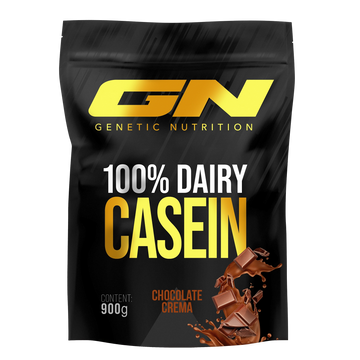
The bestseller for the evening: The 100% Casein Protein from GN Laboratories is produced in Germany with no added sugar; depending on the flavour, 100 g contain 73.6 to 81.8 g of protein. With one shake per evening, the 900 g tub lasts a month.
How much casein protein powder per day? Your protein needs per kilogram
Work out your protein needs first, then your protein powder. In sports nutrition, 1.4 to 2.0 g of protein per kilogram of body weight per day serves as a guide6. In a deficit and with strength training, the need sits at the upper end. For already lean strength athletes in a cutting phase, a review names 2.3 to 3.1 g per kilogram of fat-free mass9. At 80 kg that is roughly 130 to 180 g of protein per day.
One shake covers about 23 g of that, two accordingly twice as much. The rest comes from your diet: low-fat quark, cheese, fish, eggs, legumes. Most people manage with the one shake in the evening. A second one belongs in the plan when shift work or a late workout stretches the gap between two meals to more than five hours. With the calculator you can see your range in seconds.
Diet protein calculator: how much protein do you need per day, and how much of it does casein cover?
Enter your body weight and situation and you get your daily range in grams and the share your casein shakes cover.
Guide values from sports nutrition recommendations3,6,9, shown as a range. The values do not replace individual advice and are no promise of results: weight loss is decided by the calorie deficit.
Casein shake for weight loss: low-calorie recipes with water, milk and quark
The best way is to mix your protein powder with water: that is the lowest-calorie version, about 110 kcal per shake. The powder thickens as you stir: add a splash more and shake vigorously in a shaker or blender. With 250 ml of low-fat milk it becomes creamier and adds 8 g of protein and about 115 kcal. In a weight-loss phase, water is the rule and milk the exception for days with calorie headroom. Three tips for preparation:
Casein pudding: stir one scoop into 120 to 150 ml of liquid and let it stand for five minutes. Eating with a spoon instead of drinking keeps many people noticeably fuller for longer.
Quark version: stir 15 g of powder into 150 g of low-fat quark or natural yoghurt, with cinnamon or fruit. Protein from two ingredients, low in carbohydrates, no sugar.
Protein porridge for breakfast: stir 20 g of casein into 40 g of oats after cooking. It binds liquid, the porridge turns creamy and keeps you going until lunch; the same works in the batter for protein pancakes or as vanilla casein in cold coffee in the afternoon.
The table shows how the shake compares with typical evening snacks (values rounded, foods based on standard nutrition data).
| Evening snack | Protein | Calories | When dieting |
|---|---|---|---|
| Casein shake, 30 g powder with water | 22 to 24.5 g | 104 to 118 kcal | most protein per calorie, slowly digested |
| Casein shake, 30 g powder with 250 ml low-fat milk | around 31 to 33 g | around 220 to 235 kcal | creamier, more calcium, for days with headroom |
| Low-fat quark, 250 g | around 30 g | around 170 kcal | very good, brings lactose with it |
| Protein bar, 60 g | around 20 g | around 200 to 230 kcal | practical on the go, but less protein per calorie |
What are the downsides of casein when dieting? Side effects put in perspective
Casein is a food, not a miracle cure. It still has three limits. First: it is milk protein. If you do not tolerate lactose well, a protein powder with added lactase or smaller amounts is the better choice; micellar casein contains little lactose anyway. With a milk protein allergy it is not suitable, then rice or pea protein are the right choice. Second, the calories count: a shake on top of your normal food makes your deficit smaller, so you count it as a meal or snack. Third, in the long run it does not replace a meal; fibre, vegetables and healthy fats come from real food, supplements are the addition.
Side effects are rare in healthy people. Some notice a feeling of fullness at first because the gel sits in the stomach for a long time; then more liquid or a smaller amount helps until your body gets used to it. Anyone with a kidney condition should clarify high protein intakes with a doctor. For everyone else: the 1.4 to 2.4 g per kilogram of body weight used in studies is a safe range for healthy adults6.
Casein for weight loss: the experience from our shop in numbers
We cannot tell you how many kilos individual customers have lost with casein, and we would not claim it either: weight loss is decided by the deficit, not the tub. What we do see are numbers from our shop. 156 tubs in 90 days (as of August 2026): that is what casein demand looks like for us right now. 62 % of those were the tub from GN Laboratories; Chocolate Crema came ahead of Vanilla Crema. In the shop reviews the tub sits at 4.89 stars. Behind it follow the Micellar Casein by PEAK, where vanilla is the favourite, and the 100% Casein by Stacker2. Not a weight-loss statistic, but a good pointer if you are still undecided about the protein powder for the evening.
| Product | Protein per 100 g | Protein per 30 g | Flavours | Special feature |
|---|---|---|---|---|
| 100% Casein Protein from GN Laboratories | 73.6 to 81.8 g depending on flavour | 22 to 24.5 g | Chocolate Crema, Vanilla Crema | our bestseller, made in Germany, no added sugar |
| Micellar Casein by PEAK | 76 to 80 g depending on flavour | 23 to 24 g | Vanilla, Chocolate, Cookies & Cream, Strawberry, Coconut | with lactase, 104 kcal per shake |
| 100% Casein by Stacker2 | 75 to 79 g depending on flavour | 23 to 24 g | Chocolate, Vanilla, Strawberry | micellar casein, dissolves easily, no lumps |
Conclusion: casein protein when dieting is the evening shake, not the weight-loss trick
Anyone who wants to lose weight needs a calorie deficit, enough protein and strength training so that the muscle stays and the gains of recent months are not lost. Casein protein powder has one clear job in your plan: in the evening and during long gaps, a portion of protein for about 110 kcal, slowly digested, creamy, without added sugar. Whey covers the time after training, casein the rest of the day.
You will find all three micellar casein protein powders we deliberately chose for our range in the collection Casein protein. More on types, benefits and dosages is in the casein expert guide.

For variety in the cutting phase: The 100% Casein by Stacker2 comes in Chocolate, Vanilla and Strawberry, with 75 to 79 g of protein per 100 g and lump-free solubility. If you would rather stick with the bestseller, take the GN casein in Chocolate Crema.
Goes well with it: the 100% Dairy Whey Protein from GN Laboratories as the fast counterpart for training and the GN Wave Shaker 700 ml, big enough to shake the thickening powder vigorously.
Frequently asked questions about casein protein for weight loss
Which protein helps against belly fat?
Can I lose weight with casein in the evening?
How many casein shakes per day make sense when dieting?
Do you gain weight from casein protein powder?
Sources
- Europäische Kommission (2012): Verordnung (EU) Nr. 432/2012 (Liste zulässiger gesundheitsbezogener Angaben). eur-lex.europa.eu/eli/reg/2012/432/oj/eng
- Boirie Y. et al., PNAS (1997): Slow and fast dietary proteins differently modulate postprandial protein accretion. pubmed.ncbi.nlm.nih.gov/9405716/
- Leidy H. J. et al., American Journal of Clinical Nutrition (2015): The role of protein in weight loss and maintenance. pubmed.ncbi.nlm.nih.gov/25926512/
- Longland T. M. et al., American Journal of Clinical Nutrition (2016): Higher compared with lower dietary protein during an energy deficit combined with intense exercise promotes greater lean mass gain and fat mass loss. pubmed.ncbi.nlm.nih.gov/26817506/
- Hall W. L. et al., British Journal of Nutrition (2003): Casein and whey exert different effects on plasma amino acid profiles, gastrointestinal hormone secretion and appetite. pubmed.ncbi.nlm.nih.gov/12575908/
- Journal of the International Society of Sports Nutrition (Jäger et al.) (2017): Position Stand: Protein and Exercise. pmc.ncbi.nlm.nih.gov/articles/PMC5477153/
- Res P. T. et al., Medicine and Science in Sports and Exercise (2012): Protein ingestion before sleep improves postexercise overnight recovery. pubmed.ncbi.nlm.nih.gov/22330017/
- Snijders T. et al., Journal of Nutrition (2015): Protein ingestion before sleep increases muscle mass and strength gains during prolonged resistance-type exercise training in healthy young men. pubmed.ncbi.nlm.nih.gov/25926415/
- Helms E. R. et al., International Journal of Sport Nutrition and Exercise Metabolism (2014): A systematic review of dietary protein during caloric restriction in resistance trained lean athletes: a case for higher intakes. pubmed.ncbi.nlm.nih.gov/24092765/