


Protein shake before bed: worth it or not?
A casein shake before bed bridges the longest break without protein: 30 to 40 g about 30 minutes before going to bed, as measured in the studies. Here you will read when the evening shake pays off, how much you need, whether casein or whey fits and how to calculate your serving.

A protein shake before bed is the simplest way to bridge the seven to ten hours without a meal with amino acids. In the studies on this, casein was almost always in the shaker, usually 30 to 40 g, drunk about 30 minutes before going to sleep1,2. Whether you need it is decided not by the time of day but by your protein intake over the whole day4. Here you will read when casein before bed makes sense, how much belongs in the shaker and how whey and quark compare.
Key takeaways
- Protein before bed: worthwhile when there are more than three hours between your last meal and bedtime, after an evening workout, or when your daily protein intake stays below 1.4 to 2.0 g per kilogram of body weight.
- Casein is the protein for the night: slowly digested, amino acids over around seven hours. Whey protein works fast and belongs around training.
- Proven: 40 g of casein before sleep increased muscle protein synthesis during the night; 27.5 g of protein every night for 12 weeks brought more strength and muscle cross-section.
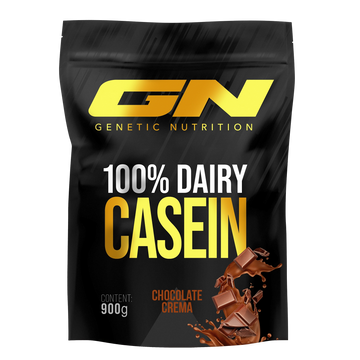
- With us, 30 g of casein powder deliver 22 to 24 g of protein at 104 to 118 kcal; the bestseller is the 100% Casein Protein from GN Laboratories.
Is casein before bed worthwhile?
Yes, for everyone who trains for muscle growth and does not want to leave the night unused as the longest phase without protein. During sleep the body repairs the muscle tissue you stressed in strength training; for that, the muscles need amino acids as building blocks. If nothing comes in for seven to ten hours, the body falls back on its own protein (muscle breakdown). Casein before sleep secures the supply for hours: the milk protein flocculates in the stomach and is digested slowly5, the level in the blood stays elevated all night1. What casein exactly is and which types exist is explained in the casein guide.
Some perspective belongs here: total protein intake spread over the day counts more than the timing of a single intake4. Spreading it over three to five meals is the second factor. Anyone who already reaches 1.6 g per kg of protein intake with three protein-rich meals gets an extra from the shake before sleep, not a leap; anyone below that collects the missing rest in the evening. That is why casein before bedtime makes sense for most athletes and is a must for no one.
Is protein before bed good? This is what the studies show
Yes. Protein before bed is digested during sleep, the uptake of amino acids runs all night, and the muscles make use of them. In Res et al., 16 young men trained in the evening and drank 40 g of casein or a placebo 30 minutes before sleep: protein synthesis in the body rose, the protein balance became positive, and muscle protein synthesis was around 22 % above placebo1. The same research group around van Loon tested the effect over a longer period in 2015: 44 young men trained for 12 weeks, one group received 27.5 g of protein with 15 g of carbohydrates every night, the other a placebo. The participants in the protein group gained more strength (+164 kg compared with +130 kg). The cross-section of the thigh muscle grew almost twice as much, in other words: more muscle growth2.
The 2019 review by the same researchers sums it up: protein before sleep does not change resting energy expenditure and enhances the adaptation to strength training3. A protein shake before sleep is therefore no miracle cure, but a reliable building block for recovery and muscle growth. Protein contributes to a growth in muscle mass and to the maintenance of muscle mass6, and the night is the longest period in which you otherwise take in nothing. Milk protein also supplies tryptophan, the amino acid from which the body forms serotonin and melatonin.
How much casein before bed?
Grams of powder and grams of protein are not the same. The studies used different protein amounts, including 40 g of casein and 27.5 g of protein.1,2 These amounts are not a serving recommendation for every casein powder. If a product provides 23 g of protein per 30 g of powder, one and a half servings contain 34.5 g of protein, not 40 g. Follow your product’s nutrition information and serving instructions, and include the shake in your daily protein intake.

Which protein before bed: casein or whey protein?
Casein. Whey protein reaches the blood after 40 to 60 minutes and is used up after two to three hours; the night shake keeps delivering for around seven hours5. For a night of seven or eight hours, the slowly digested milk protein is the right tool for recovery and protein synthesis. That is why it appears in almost all studies on pre-sleep protein3. It is a question of speed, not quality: whey remains the protein right after training, the combination of both covers training and night. The guide Whey or casein shows the advantages in detail.
One example of whey protein is 100% Dairy Whey from GN Laboratories. Check the nutrition information and ingredients against your dietary needs.

| Casein | Whey protein | Low-fat quark (250 g) | |
|---|---|---|---|
| Release of amino acids | slow, around 7 hours5 | fast, peak after 40 to 60 min. | slow, 80 % casein |
| Best time | 30 to 60 min. before going to bed | right after training | as dinner or a late meal |
| Protein | 22 to 24 g per 30 g of powder (with us) | depends on the product, see nutrition table | around 30 g |
| Lactose | low; PEAK additionally with lactase | isolate: very low | around 10 g |
| For the night | first choice | second choice | good alternative |
From our range

GN Laboratories 900 g
100% Casein Protein
Casein from GN Laboratories in Chocolate Crema and Vanilla Crema.
View productCasein for your shake: 100% Casein Protein from GN Laboratories comes in a 900 g tub. The product page lists its nutrition information and preparation instructions. Compare other options in our casein powder range.
Should you still drink a protein shake in the evening?
Yes in three cases, no in one. Taking it pays off when more than three hours lie between your last meal and bedtime. The same applies if you trained in the evening and your body recovers during the night, or if your protein intake for the day stayed below 1.4 to 2.0 g per kg4. It then replaces the snack in front of the TV and delivers protein instead of crisps. You can skip it if you had a protein-rich meal at 9 pm and sleep at 11 pm; the casein from that meal is still on its way anyway. A protein shake in the evening is not a question of right or wrong, but of gap or no gap in your diet. With shift work and long office days you do best with two servings: one in the afternoon, one before sleep. That split also covers a 16-hour day.
What should you eat before bed for muscle growth?
Ideally something with 25 to 40 g of slowly digestible protein and little fat, so the night stays calm. The food for that is almost always a dairy product: a casein shake (about 23 g of protein), 250 g of low-fat quark (30 g), 300 g of skyr or Greek yoghurt (27 to 33 g) or 200 g of cottage cheese (24 g). All of them contain mainly casein; cow's milk delivers 80 % of its protein in this form. Cheese has it too, but with far more fat; eggs, meat and fish are good protein sources, but are digested faster and sit heavier as a late meal. Shake or cottage cheese is a matter of taste, not of effect: in active women, cottage cheese and a casein shake with 30 g of protein each before sleep differed neither in resting energy expenditure nor in appetite the next morning7. The advantages of the shake are practical: ready in a minute, without the lactose of quark.
Casein before bed and weight loss
A shake before sleep does not make you fat, and it does not make you slim; both are decided by your calorie balance at the end of the day. The worry that late protein adds fat does not stand up to the studies: in active women the night shake had no effect on resting energy expenditure (the metabolism at rest) or on appetite7. The 2019 review reaches the same conclusion3. When dieting, the phase with a calorie deficit, casein in the evening above all plays a role as a protein supplier: around 23 g of protein for about 110 kcal, plus the slow digestion that keeps the stomach busy for hours. Protein contributes to the maintenance of muscle mass6, and that is exactly the goal in a deficit: lose fat, keep the muscle. Plan the shake into the day's diet, not on top of it. How the evening shake fits into a diet is covered in the article Casein for weight loss.
How to make the night shake
30 g of casein powder in 250 to 300 ml of water or low-fat milk, 20 seconds in the shaker, done. The powder thickens when mixed, so use a little more liquid than with whey protein; with milk it becomes creamier and additionally delivers calcium. If you like it firmer, mix the amount with 100 ml into a casein pudding and eat it with a spoon. Drink it ideally half an hour to an hour before going to bed, not in bed itself, then it sits lightly in the stomach. A 900 g tub lasts a month at one serving a day.
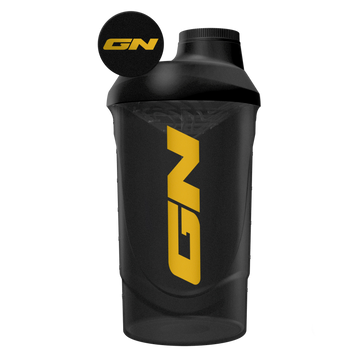
For mixing, one option is the 700 ml GN Wave Shaker. Follow the preparation instructions on your casein product.
Conclusion: casein before sleep is the easiest protein win of the day
Casein before bed is not a must, but it makes sense as soon as it closes a gap: a long break after dinner, an evening workout or a protein intake below the daily target4. Casein is the right protein for it, 30 g of powder the right amount, the last hour before going to bed the right time. Whey stays reserved for training. Anyone who keeps this up for four weeks knows why the evening shake has become a ritual for many athletes and why good nutrition in sport is above all a habit. You will find the right tub in the casein powder overview; at the very front is the 100% Casein from GN Laboratories.
Frequently asked questions about the protein shake before bed
Does a protein shake before bed make you fat?
How long before bed should you drink casein?
Is casein protein before bed worthwhile even without training?
Casein in the evening with lactose intolerance?
Does a late shake disturb sleep?
Sources
- Res P. T. et al., Medicine and Science in Sports and Exercise (2012): Protein ingestion before sleep improves postexercise overnight recovery. pubmed.ncbi.nlm.nih.gov/22330017/
- Snijders T. et al., Journal of Nutrition (2015): Protein ingestion before sleep increases muscle mass and strength gains during prolonged resistance-type exercise training in healthy young men. pubmed.ncbi.nlm.nih.gov/25926415/
- Snijders T. et al., Frontiers in Nutrition (2019): The Impact of Pre-sleep Protein Ingestion on the Skeletal Muscle Adaptive Response to Exercise in Humans: An Update. pmc.ncbi.nlm.nih.gov/articles/PMC6415027/
- Journal of the International Society of Sports Nutrition (Jäger et al.) (2017): Position Stand: Protein and Exercise. pmc.ncbi.nlm.nih.gov/articles/PMC5477153/
- Boirie Y. et al., PNAS (1997): Slow and fast dietary proteins differently modulate postprandial protein accretion. pubmed.ncbi.nlm.nih.gov/9405716/
- Europäische Kommission (2012): Verordnung (EU) Nr. 432/2012 (Liste zulässiger gesundheitsbezogener Angaben). eur-lex.europa.eu/eli/reg/2012/432/oj/eng
- Leyh S. M. et al., British Journal of Nutrition (2018): Pre-sleep protein in casein supplement or whole-food form has no impact on resting energy expenditure or hunger in women. pubmed.ncbi.nlm.nih.gov/30249314/


Leave a comment