Whey Isolate Test: How to Spot a Good Isolate
Whey isolate test: how to spot a good isolate. 5 buying criteria, the honest price per 100 g of protein and our curated isolate selection.

If you are searching for "whey isolate test", you really only want to know one thing: which isolate is worth your money, and how can you tell without a lab coat? Instead of serving up an invented brand comparison, we give you a transparent checklist of five buying criteria, show you how to calculate the honest price per 100 g of protein yourself, and present our curated selection at the end. That way you can test any isolate yourself, no matter the brand.
Key takeaways
- You can recognize a good isolate by five criteria: protein content, purity, solubility, taste and verifiable quality.
- The most honest benchmark is the price per 100 g of protein, not the price per tub: protein content times package size gives you the pure protein, then you divide the price.
- Independent tests mainly check for contaminants and correct labeling, not your personal goal; that part you have to judge yourself.
- Foam on clear isolates is not a quality defect, and more expensive does not automatically mean better.
- Our selection ranges from a creamy shake to a clear drink, each with over 90% protein in the dry matter.
Which whey isolate is the best?
The best whey isolate depends on your goal, not on a one-size-fits-all ranking. For most people, what matters is a combination of five buying criteria: a high protein content, clean filtration, good solubility, a flavor you enjoy every day, and verifiable quality through an openly published amino acid profile and lab results. Someone who likes it creamy shops differently from someone who wants a light, clear drink.
One important note up front: we are not claiming a "test winner" from our own lab test. What we deliver is the checklist you can use to assess any isolate, plus our experience as a retailer with a range of many protein powders. You can find the basics on production and purity in our whey isolate guide.
The 5 buying criteria for a good whey isolate
A good isolate can be pinned down to five points, all of which you can verify on any reputable product page. The following overview is your checklist for every purchase.
| Criterion | What to look for | Good sign |
|---|---|---|
| Protein content | Protein per 100 g, not per flattering serving size | around 90% in the dry matter |
| Purity / filtration | Process and residual components | gentle cross-flow microfiltration, low fat and lactose |
| Amino acid profile / no spiking | openly published profile, no added free amino acids | complete amino acid profile available |
| Solubility | lump-free in the shaker, realistic expectations | dissolves quickly, clear isolates foam at first |
| Taste and price per 100 g of protein | everyday usability and an honest benchmark | a flavor you enjoy drinking, a fair price per gram of protein |
Protein content: look at 100 g, not the serving
The first criterion is the protein content per 100 g, because it is the only figure you can compare. A small scoop makes any tub look cheap and protein-rich, which is why the per-serving figure is misleading. A true isolate delivers around 90% protein in the dry matter; if the value drops well below that, there is often more flavoring or filler inside than the name suggests. You will always find the exact figure in the nutrition table on the product page.
Purity and filtration: the process says more than the number
Purity comes from filtration, and the process determines how gently the protein is treated. Cross-flow microfiltration works cold and without acid and preserves the natural whey fractions, while harsher methods can alter the profile more strongly. We take a closer look at how the individual processes work in our article CFM Whey Isolate. When buying, it is enough to check whether the manufacturer names the process at all: transparency alone is a good sign here.
Amino acid profile and no spiking: the trust criterion
The most important trust signal is an openly published amino acid profile with no added free amino acids. So-called amino spiking is a trick used to artificially inflate the measured protein value without delivering more real whey protein; how this works in detail is explained in the whey isolate guide. For your checklist, one simple question is enough: does the manufacturer publish the complete amino acid profile, and is whey protein isolate the sole protein source? Anyone who discloses that has nothing to hide.
Solubility: foam is not a defect
The fourth criterion is solubility, and this is where a stubborn myth circulates in forums. Pure isolate generally dissolves well; a shaker or a quick blend is enough. Clear isolates, on the other hand, foam noticeably at first and settle after standing briefly. That can look like a flaw at first glance, but it is completely normal. And no, heavy foaming is not proof of quality either, as some claim; it is purely a matter of processing and consistency. Just wait a moment or give it a stir, and you are good to go.
Taste and price per 100 g of protein: what counts in everyday life
The fifth criterion sounds trivial but decides everything: taste determines whether a powder actually gets used every day or ends up forgotten in the cupboard. Creamy flavors taste rich and full like a milkshake, clear drinks fruity and light; our article Whey Isolate Drink shows which variant suits you. The second part of this criterion is the honest price per 100 g of protein, and that is exactly what we will calculate now.
How to calculate the honest price per 100 g of protein
The honest benchmark is not the price per tub but the price per 100 g of pure protein, and you can calculate it in three steps. This is exactly the figure that reveals whether a cheap-looking powder is really cheap or just comes with a small scoop.
Here is how to do it:
- Determine the pure protein: protein content per 100 g times package size. A powder with 80 g of protein per 100 g in a 750 g tub therefore contains 600 g of pure protein (0.80 times 750).
- Convert the price: price per tub divided by the pure protein, times 100. This gives you the price per 100 g of protein, regardless of package size.
- Compare: only this figure makes two powders comparable. An isolate with a higher protein content claws back part of its higher tub price here, because more protein is packed into the same amount.
This small calculation is the most honest test you can run without a lab. It also debunks the myth that more expensive means better: a high price can be brand positioning, but the protein content per 100 g does not lie. Whether the premium for an isolate over a concentrate is worth it at all is something we cover in detail in the comparison Whey Protein or Isolate; in short, it pays off mainly during a diet and for sensitive lactose tolerance.
What do independent tests actually check?
Independent product tests mainly check for contaminants, banned substances and correct labeling, not whether a powder fits your personal goal. Stiftung Warentest, for example, examined 21 protein powders for benefit, quality, contaminants and taste, and advised recreational athletes that such products are not strictly necessary if their diet is adequate.1 That is an important piece of context, but not a buying recommendation for your specific training goal.
A useful insight follows from this: a "test winner" from a contaminant and labeling test tells you that a powder is clean and honestly labeled, but not whether you will like the taste, whether it dissolves well or whether it fits your diet. Only your own checklist covers those personal criteria. That is why the best approach combines both: the safety of a clean product and the five buying criteria for your everyday routine.
How to test a whey isolate yourself
You can put any isolate through its paces yourself in just a few minutes, without ever entering a lab. This short checklist turns the buying criteria into practical steps.
- Read the product page: are the protein content per 100 g, the filtration process and a complete amino acid profile openly listed? A missing amino acid profile is a warning sign.
- Calculate the price per 100 g of protein: apply the three steps above and compare with a second product.
- Test the solubility: shake one serving in water. A creamy isolate should be lump-free, a clear isolate may foam at first.
- Check the taste over several days: a flavor that thrills you on day one can get annoying after a week. Daily use is the deciding factor.
- Watch how well you tolerate it: if you react to regular whey, you should know that not every intolerance is down to lactose; sometimes switching the specific product helps more than switching the form.
Our recommendations: a curated isolate selection
From our range, we highlight three isolates that meet the checklist well: one creamy, two clear. This is a curated selection for orientation, not a lab ranking, and it shows what the five criteria look like in practice.
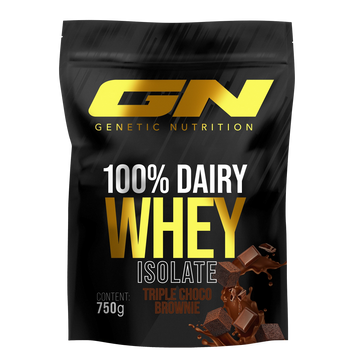
Creamy: the 100% Dairy Whey Isolate from GN Laboratories. One of our most popular isolates relies on gentle cross-flow microfiltration and delivers a high protein content with very little fat and lactose. Whey protein isolate is the sole protein source, so there is no amino spiking, and the complete amino acid profile is openly available on the product page. The manufacturer also has it microbiologically tested by an accredited food laboratory, with the analysis available as a download; that makes the "verifiable quality" criterion tangible. At under 1 percent it is very low in lactose, a plus for anyone with sensitive milk sugar tolerance. The GN Dairy Whey Isolate is our creamy all-rounder for anyone who wants a classic shake.
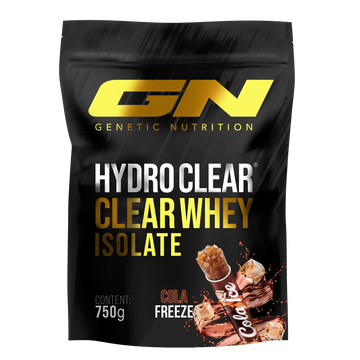
Clear and light: GN Hydro Clear Whey Isolate and Viking Clear Isolate from Gods Rage. If you would rather skip the heavy milkshake and enjoy a refreshing drink instead, a clear isolate is the way to go. The Hydro Clear Whey Isolate from GN Laboratories and the Viking Clear Isolate from Gods Rage drink fruity and sit light in the stomach, especially in hot weather or after intense sessions. Both foam slightly at first, which is normal for clear isolates and not a defect.
Want to compare right away? You can find the complete curated selection of pure isolates in the Whey Protein Isolate category. Which clear flavor fits which moment is something we show in our article Whey Isolate Drink.
Sources
- Stiftung Warentest, "Eiweißpulver im Test", issue 04/2020, retrieved 2026-06-21 (in German). test.de. ↩
- Journal of the International Society of Sports Nutrition, Jäger et al., "Position Stand: Protein and Exercise", 2017, retrieved 2026-06-21. ncbi.nlm.nih.gov.
- European Commission, Regulation (EU) No 432/2012 (list of permitted health claims), 2012, retrieved 2026-06-21. eur-lex.europa.eu.