Make Your Own Intra-Workout Drink: Ingredients and Recipe
Make your own intra-workout drink: a 500 ml recipe, ingredients and mixing instructions. Calculate carbohydrates and salt and avoid common mistakes.

Want to make your own intra-workout drink and choose ingredients that suit your training? This guide helps you adjust carbohydrates, sodium and flavour separately. It is for healthy adults who want to mix their own sports drink for longer sessions. You will find a basic recipe for 500 ml, step-by-step instructions and calculations for alternative ingredients. Amino acids are an optional addition, not an essential ingredient.
Key points at a glance
- You can adapt homemade intra-workout drinks to your training duration, intensity and tolerance. Choose your own ingredients and compare the cost per serving.
- Not every session calls for carbohydrates in your drink. Water is often enough for shorter workouts after a meal.
- Grams of powder are not necessarily grams of carbohydrate, and salt is not the same as sodium. Accurate calculations help you avoid mixing errors.
Intra-workout drink: a basic recipe for 500 ml
This example is for healthy adults who want to include carbohydrates in a drink for prolonged exercise. It is not a requirement for a short workout. You need a clean drinking bottle, kitchen scales for the powder and precision scales that can reliably weigh 1 g of salt.
Ingredients for 500 ml of finished drink:
1 g of ordinary table salt, not reduced-sodium salt
Still water, topped up to a final drink volume of 500 ml
Optional: a few drops of lemon juice for flavour

How to mix it:
Pour about 300 ml of still water into the bottle.
Weigh 30 g of powder and add it to the water.
Weigh 1 g of table salt and add it.
Top up with water to a final volume of 500 ml.
Close the bottle and shake thoroughly.
Try a new mixture during training first. This lets you check its flavour and how well you tolerate it before using it for an important event or session.
What does the calculation tell you?
The powder contains 96 g of carbohydrate per 100 g. 30 g of powder therefore provides 28.8 g, or approximately 29 g, of carbohydrate. In 500 ml, that is about 5.8 g per 100 ml. The table salt provides approximately 400 mg of sodium per bottle, equivalent to 800 mg per litre. Sodium from the water or any additional ingredients adds to this amount.
The German Nutrition Society (DGE) gives a range of 4 to 8% carbohydrate and 400 to 1,100 mg of sodium per litre for sports drinks.1 Our example uses these ranges as a guide. They do not establish your ideal fluid intake or guarantee that every mixture is isotonic or well tolerated by everyone.
A larger bottle, the same serving of powder: If you use the same 30 g of powder and top up with water to 750 ml, the total still contains about 29 g of carbohydrate. Only the concentration drops, to roughly 3.8 g per 100 ml. More water does not mean more carbohydrate. The product used in this recipe has a recommended daily serving of 30 g of powder; a larger bottle is not a reason to automatically use more.
Which mixture suits your training?
Intra-workout nutrition means nutrition during exercise. The nutrients you choose depend on the duration and intensity of your session and your meals. Not every workout needs the same drink.
Your body stores carbohydrate as glycogen in the liver and muscles. These stores are limited; how quickly they are depleted depends partly on the demands of exercise and how full they were at the start.2 That makes duration and intensity more useful starting points than a fixed carbohydrate amount for every workout.
Shorter strength sessions after a meal
Water is often sufficient. Training duration, intensity and what you eat before exercise all help determine whether additional carbohydrates are useful.
Long, intense endurance exercise
For exercise lasting around 1 to 2.5 hours, the DGE gives a range of 30 to 60 g of carbohydrate per hour.2 This includes drinks, gels and solid food combined. A bottle containing about 29 g is therefore not automatically a complete hourly supply.
Long strength sessions or combined strength and endurance training
These call for an individual assessment. Amounts intended for intense endurance exercise do not automatically apply to every gym session.
Do not drink more than you need simply to reach a particular carbohydrate target. Thirst and sweat loss help you assess your fluid intake.1
Once you have decided on an appropriate carbohydrate amount, choose a source and then check the sodium content of your mixture.
Which ingredients do you actually need?
An intra-workout drink is a drink consumed during exercise. A typical mixture contains water, carbohydrates and electrolytes, particularly sodium; amino acids can also be added. These components have different roles. You can choose them individually rather than automatically putting all of them in your bottle.
Carbohydrates: maltodextrin, Cluster Dextrin or food?
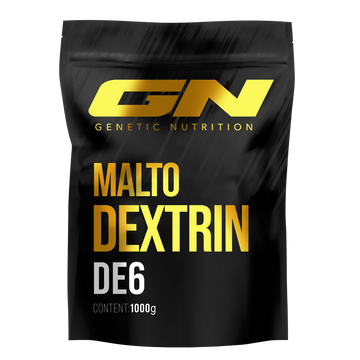
Maltodextrin is a water-soluble mixture of carbohydrates made from starch. It provides readily available energy and has a mildly sweet taste.4 Our basic recipe uses a product containing only this ingredient. You can compare available products in our maltodextrin range. Use the carbohydrate amount in the nutrition table for your calculations. How well you tolerate the drink also depends on its concentration, how much you drink and the demands of exercise.
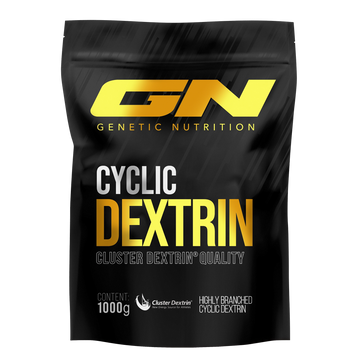
Cluster Dextrin, also known as Highly Branched Cyclic Dextrin, is another carbohydrate source. Whether you use it depends on your choice of product and your experience with the drink. The name alone does not guarantee better digestive tolerance.
Sugar or fruit juice can also serve as carbohydrate sources. Juice adds flavour and acidity, so check its nutritional information and test how well you tolerate the mixture during exercise. A small splash of lemon juice is used here for flavour only; it does not replace the carbohydrate serving.
How to calculate amounts for another powder: Amount of powder × carbohydrate per 100 g ÷ 100 = carbohydrate in your serving. Read the “carbohydrate” line, not just “of which sugars”. For dextrose or a ready-made blend, follow that product's nutritional information and directions for use.

Measure sodium and avoid counting electrolytes twice
You lose water and sodium through sweat. Sodium loss depends on both the amount of sweat and its sodium concentration. Carbohydrate and sodium content also affect water absorption in the intestine.1 Both therefore matter when planning your mixture; more salt is not automatically better.
Salt and sodium are different measurements. Sodium is a component of table salt. As an approximate conversion, divide the salt amount by 2.5 to get the sodium amount. So 1 g of salt corresponds to approximately 0.4 g, or 400 mg, of sodium. Check whether a label lists grams of salt or milligrams of sodium.
If you already use an electrolyte blend, check its sodium content before adding more salt. The same applies to an EAA powder containing added electrolytes. You do not need to add potassium, magnesium or calcium separately for this basic recipe. Adding salt by eye or using a “pinch” is too imprecise for a reproducible mixture.
EAA, BCAA and whey protein are optional ingredients
EAA stands for essential amino acids, which your body must obtain from food. BCAA are three of these: leucine, isoleucine and valine. Whey protein supplies protein and also contains essential amino acids. These terms describe different ingredients; you do not automatically need to combine all of them.
Proteins provide amino acids for muscle protein synthesis, the process of building new muscle proteins. Their intake in relation to strength training has been widely studied.3 However, this does not establish a general recommendation to take 6 to 12 g of EAA during every session. Your other protein sources and meals also matter.
It is possible to meet your protein needs through food.3 Before adding amino acids to your workout shake, consider how you spread your protein intake throughout the day. They are not needed for the basic recipe of water, carbohydrates and salt.
Four mixing mistakes you can easily avoid
Using a random scoop to measure ingredients. Scoop sizes and fill levels vary. Weigh your ingredients; suitable precision scales are particularly useful for the small amount of salt.
Treating one bottle as your hourly intake. Include other drinks, gels and snacks in your calculations. A recipe alone does not determine how much you need per hour.
Adding electrolytes twice. Check every ingredient before adding extra salt to the bottle.
Changing several ingredients at once. Change only one amount or ingredient when testing a recipe. This makes it easier to identify what has affected the flavour or your tolerance.
Mix your own or choose a ready-made blend?
Mixing your own lets you adjust amounts and flavour separately. You control each ingredient, but you need scales and a little preparation. Whether it is cheaper depends on the ingredients and quantities you use. For a fair comparison: use the pack size and price to calculate the cost of the portion you actually use. Compare drinks with similar carbohydrate and sodium amounts instead of looking only at the price per tub.
A ready-made intra-workout blend saves you some preparation. The recipe, serving size and flavours are set. Not every supplement contains carbohydrates, EAA and electrolytes together, so check the ingredients. Some focus on amino acids, others on carbohydrates for energy, and others combine both.
If you prefer a ready-made recipe, compare formulations in our intra-workout range. In particular, check whether a product provides carbohydrates or focuses on amino acids and electrolytes.
Frequently asked questions about mixing your own drink
Can I prepare the drink the night before?
Can I make an intra-workout drink without supplement powder?
Can I make the drink without carbohydrates?
Do I also need pre-workout or post-workout supplements?
Sources
- Mosler et al. / Deutsche Gesellschaft für Ernährung (2019): Flüssigkeitsmanagement im Sport. dge.de/fileadmin/dok/gesunde-ernaehrung/gezielte-ern...
- König et al. / Deutsche Gesellschaft für Ernährung (2019): Kohlenhydrate in der Sporternährung. dge.de/fileadmin/dok/gesunde-ernaehrung/gezielte-ern...
- König et al. / Deutsche Gesellschaft für Ernährung (2020): Proteinzufuhr im Sport. dge.de/wissenschaft/stellungnahmen-und-positionspapi...
- Verband der Getreide-, Mühlen- und Stärkewirtschaft (VGMS): Maltodextrine. vgms.de/staerkeindustrie/lebensmittel/maltodextrine