


Is intra-workout nutrition useful? What you really need during training
When water is enough and when carbohydrates or electrolytes suit your session. With a decision guide and three formulas compared.

Intra workout means nutrition during exercise: taking in fluid and nutrients while you train. It becomes relevant mainly when long or intense workouts call for extra energy, or when you lose a lot of fluid and sodium. What a drink can offer depends on your sport, the duration and what you ate beforehand.
Three questions help you choose: Have you eaten beforehand? How long and how much will you train? How heavily do you sweat? The answers are a better guide than the number of ingredients on a tub.
Pre workout refers to the period before training, intra workout to nutrition during it, and post workout to the period afterwards. A pre-workout booster and an intra-workout drink therefore do not automatically serve the same purpose. These stages do not mean you need three different supplements. A normal meal before or after training can be part of your nutrition too.
The key points
- For many regular strength workouts after a meal, water is enough. A special intra-workout drink is not a basic requirement for muscle growth or performance.
- Carbohydrates and electrolytes during exercise become relevant particularly during longer, intense endurance sessions, heavy sweating or multiple training sessions in one day.
- Adequate energy and protein across the day form the foundation. A drink during training is an addition, not a replacement.
- Tolerance and composition determine practical usefulness. Try new mixtures in training, rather than for the first time in a competition.
When is water enough, and when might an intra-workout drink help?
Consider your next session in terms of the exercise, your previous meal and sweat loss:
| Situation | What matters first | Suitable nutrition |
|---|---|---|
| Regular strength training after a meal | Eat and drink enough beforehand | Water is enough in many cases. With heavy sweating, consider sodium loss too. |
| Long or very high-volume strength training | Many sets, previous meals and short recovery between two sessions | Extra carbohydrates may be an option depending on volume and your starting nutrition.1 |
| Intense endurance exercise lasting about 1 to 2.5 hours | Energy intake and an individual drinking plan | A guide is 30 to 60 g of carbohydrates per hour; sodium depends on the exercise and sweat loss.2 3 |
| Heat or heavy sweating | Fluid loss, breaks and temperature | Pay attention to fluid and sodium. Choose carbohydrates according to the type and duration of the session.3 |
| Training without a previous meal | Time since eating, training volume and your personal goal | Consider whether a meal beforehand is possible or energy during the session might help. An all-in-one product is not required.1 |

Which ingredients suit your training?
Fluid, carbohydrates and amino acids serve different purposes. The key is which ones your training session actually calls for.
Water and electrolytes
When you sweat, your body loses water and dissolved minerals, including sodium. How much you need to replace depends on factors such as the exercise, temperature and your individual sweat rate. A fixed drinking plan for every athlete would therefore be too imprecise.3
For many shorter sessions, water is a good starting point for hydration. Sodium also becomes relevant during long exercise or heavy sweating. A sports drink can combine both. When comparing products, check which electrolytes they contain and in what amounts. “With electrolytes” alone tells you little about the composition.3
Keep your drink within reach and use drinking breaks. Adjust the amount to your thirst, the conditions and your experience in training. For long endurance sessions, a drinking plan tested beforehand is useful. Drinking as much as possible is not a sensible goal.3
In warm conditions, choose an amount you tolerate well and consider breaks and the time of day you train. You can find more guidance in our article on exercise on hot days.
Magnesium and sodium are not interchangeable. If you want to replace sweat losses, do not focus only on a prominently advertised magnesium content.
Carbohydrates: distinguish strength training from endurance exercise
Carbohydrates provide energy. Your body stores them as glycogen in your muscles and liver. These glycogen stores are limited and are used to different degrees depending on intensity and volume. During longer, intense endurance exercise, additional carbohydrates can help maintain performance.2 In strength training, the possible benefit depends more on whether you have eaten beforehand and how much you train.
Endurance: For intense exercise lasting about 1 to 2.5 hours, the German Nutrition Society (DGE) gives 30 to 60 g of carbohydrates per hour as a guide.2 This can include longer runs or bike rides. The amount refers to carbohydrates from all drinks and foods consumed during that period combined.
Strength training: In a systematic review by Henselmans et al. (2022), extra carbohydrate intake showed no clear performance advantage in many of the sessions studied when participants had eaten beforehand. A benefit was more likely with fasted training or very high training volume.1 This does not establish a fixed minute threshold after which every strength athlete needs a drink.
The 30 to 60 g per hour used in endurance sport is therefore not a general instruction for every hour in the gym. Our article on carbohydrates during strength training explains the distinction further.
What does this mean for recovery? Providing energy during exercise and replenishing stores afterwards are different tasks. If two demanding sessions follow closely, carbohydrate intake between them matters too.2 An intra-workout drink does not replace that planning. Adequate protein and sufficient recovery also matter for muscular recovery.4
Typical ingredients include maltodextrin and highly branched cyclic dextrin, such as Cluster Dextrin®. Both are carbohydrate sources. When comparing them, consider carbohydrates per serving, preparation and your tolerance. A branded ingredient does not automatically make a mixture a better choice. Carbohydrate powders are also an option if you want to put your own drink together.
Protein, EAA and BCAA: overall nutrition matters
Before choosing amino acids for training, look at your meals: Do they cover your protein needs, and is protein spread across the day? This nutrition forms the foundation for muscle growth. The exact timing of a single drink is an additional question.4
If you train in the morning without breakfast, or long after your last meal, your planning may differ from training after a protein-rich meal. You can plan your nutrition before, during or after the session. That does not mean everyone needs protein or amino acids during every workout.
Your muscles continually build and break down protein. Muscle protein synthesis means the building of new muscle proteins. Exercise and adequate protein intake work together in this process.4 However, a short-term increase in synthesis is not the same as more muscle mass or strength over the long term. A single measurement therefore cannot establish a guaranteed benefit from a particular intra-workout supplement.
For context: the International Society of Sports Nutrition commonly gives 20 to 40 g of high-quality protein per serving as a guide for stimulating muscle protein synthesis in healthy, physically active adults.5 This refers to protein intake around exercise and across the day, not a mandatory amount in an intra-workout drink.
EAA stands for the nine essential amino acids your body needs from food. BCAA refers to three of them: leucine, isoleucine and valine. A BCAA powder therefore does not automatically contain all nine EAA. If you specifically want a complete EAA profile, check the ingredients list.
Whey protein also provides essential amino acids. Whether you prefer a normal meal, a protein shake or a drink with free amino acids also depends on what you tolerate around exercise.
How to mix and drink your drink
When mixing, the actual nutrient amounts and the amount of water matter. Check the serving and preparation together:
Grams of powder are not grams of carbohydrates. Epic Intra from PEAK in the Cherry flavour contains 30 g of carbohydrates and 0.8 g of salt per 50 g of powder. The full serving provides 174 kcal. Powder weight, carbohydrate content and energy are therefore three different figures. Salt and sodium are also different values: 1 g of salt corresponds to approximately 400 mg of sodium.
How to check tolerance:
- Test new products or mixtures in a normal workout first, rather than before a competition or an important heavy set.
- Use the stated amount of water with the powder. Very concentrated drinks can upset your stomach.
- Take small sips throughout the session rather than drinking it all at once.
- Do not exceed the manufacturer’s recommended intake on your own initiative.
Ready-made or mixed yourself? A ready-made powder makes measuring several ingredients easier. When mixing your own, for example using water, maltodextrin and a measured amount of salt, you determine the individual amounts. Note the powder and water quantities so you can prepare a well-tolerated mixture the same way next time.
Taste matters in practice too: you should find the drink pleasant at the intended dilution. If you add ingredients, keep the total amount in mind. Several separate powders can together make a much more concentrated drink than you originally planned.
Three formulas from our range compared

GN Laboratories · 1200 g
Infusion Intra powder
Blueberry

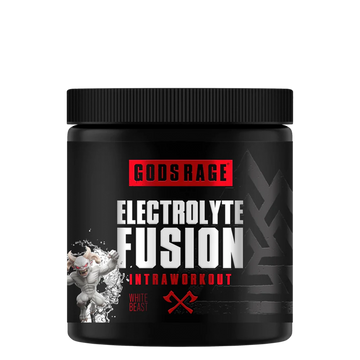
Gods Rage · 400 g
Electrolyte Fusion powder
White Beast

PEAK
Epic Intra
Orange
Carbohydrates with amino acids, or a mixture with minerals and other ingredients: these three products have different priorities.
| Product | What does it contain? | What to check when comparing |
|---|---|---|
| Infusion Intra from GN Laboratories | Highly branched cyclic dextrin (Cluster Dextrin®), free amino acids and mineral sources | Combines several components in one powder. Relevant if you want to mix carbohydrates and amino acids together. |
| Electrolyte Fusion from Gods Rage | Sources of sodium, potassium, calcium and magnesium, as well as citrulline malate and taurine, among other ingredients | Contains ingredients beyond minerals. Check the entire formula if you specifically want a simple electrolyte mixture or a calorie-free drink. |
| Epic Intra from PEAK (Cherry) | Cyclic dextrin, maltodextrin, amino acids and mineral sources. Per 50 g of powder: 30 g of carbohydrates and 0.8 g of salt. | For planning a serving with carbohydrates. These figures apply to Cherry; other flavours may differ. |
Choose according to your training situation first, then the formula. Compare carbohydrates and salt per prepared serving, together with any other ingredients you want. A longer ingredients list does not automatically mean more benefit. You can find further mixtures in our selection of intra-workout boosters.
Common questions about intra-workout nutrition
Can I use an intra-workout drink when dieting?
Does an intra-workout drink break a fast?
Do I need intra-workout nutrition on rest days too?
Is mixing my own intra-workout drink an alternative?
Sources
- Henselmans M, Bjørnsen T, Hedderman R, Vårvik FT (2022): The Effect of Carbohydrate Intake on Strength and Resistance Training Performance: A Systematic Review. pubmed.ncbi.nlm.nih.gov/35215506/
- König D et al. (2019): Kohlenhydrate in der Sporternährung. dge.de/wissenschaft/stellungnahmen-und-positionspapi...
- Mosler S et al. (2019): Flüssigkeitsmanagement im Sport. dge.de/wissenschaft/stellungnahmen-und-positionspapi...
- König D et al. (2020): Proteinzufuhr im Sport. dge.de/wissenschaft/stellungnahmen-und-positionspapi...
- Jäger R et al. (2017): International Society of Sports Nutrition Position Stand: protein and exercise. pubmed.ncbi.nlm.nih.gov/28642676/
Further reading: nutrition around training
-
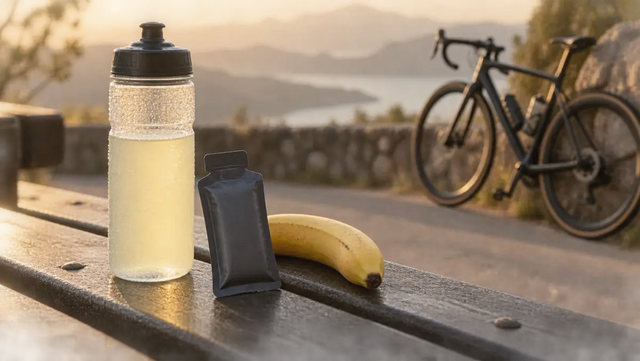 Image: AI-generated
Carbohydrates during exercise: when and how much makes sense
Assess your session and add up carbohydrates from drinks, gels and snacks.
Read article -
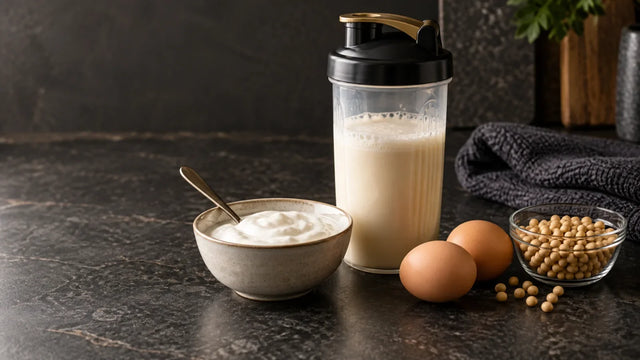 Image: AI-generated
EAA or BCAA: What suits your diet and training?
Nine amino acids or three: check your diet and compare grams per serving on the label.
Read article -

Protein Timing: When Should You Take Protein?
How to distribute your protein intake throughout the day.
Read article

Leave a comment