


Magnesium for athletes: when your diet is enough and when a supplement makes sense
Requirements, foods, cramps and labels: how to assess your magnesium intake alongside your training and recognise when a supplement fits.

Training regularly does not automatically mean you need extra magnesium. What matters is whether your diet covers your needs. If you have cramps or feel exhausted, it is also worth looking more closely: a supplement is not the right answer to every complaint. This guide helps you assess your intake and compare supplements by the amount of magnesium they actually contain.
The key points
- Regular exercise on its own is no reason to take extra magnesium. What counts is your diet, your individual intake and your overall situation. In many cases, a balanced diet can cover your magnesium requirement.
- A supplement is worth considering when there is a real gap in your intake, for example because of a very restricted food choice or a pronounced energy deficit. If your intake is adequate, extra magnesium tablets are generally not necessary.
- Magnesium contributes to normal muscle and nerve function, to normal energy-yielding metabolism and to the reduction of tiredness and fatigue. This does not mean a supplement guarantees better performance or reliably prevents muscle cramps.
Magnesium and exercise: why the mineral matters for muscles and nerves
Magnesium is involved in numerous enzymatic processes, including energy metabolism. It is important for reactions involving ATP, the central energy carrier of our cells. This also applies to muscle work during strength training, running or climbing.
Magnesium contributes to normal muscle function and to the normal functioning of the nervous system. This basic role does not mean, however, that extra magnesium automatically brings more strength, faster recovery or better endurance.
A large share of the body’s magnesium is stored in bones and soft tissue; less than 1 % is found in blood serum. A single blood value therefore only partly reflects the supply of the whole body. Symptoms, diet and, where relevant, lab values need to be assessed together. Interpreting every dip in training performance as a magnesium deficiency would be too simple.
How much magnesium do you need when you exercise?
For adults aged 19 and over, the German Nutrition Society (DGE) gives estimated values for an adequate total intake of 300 mg of magnesium per day for women and 350 mg for men.1 These values refer to the total intake from food and drinks. They are not supplement doses and not an individual deficiency diagnosis.
Magnesium is also lost through sweat. How much depends on duration, intensity and individual conditions, among other things. Neither a certain training frequency nor a running distance or heavy sweating automatically results in a specific additional dose. A general requirement of 1000 mg per day cannot be derived from this.
The key point: if you train a lot and at the same time eat little or a very one-sided diet, take a closer look at your magnesium intake. This applies, for example, to athletes in a diet phase. Recreational and competitive athletes cannot be given identical additional amounts. We explain the difference between total intake and supplementation in the section on dosage.
Magnesium from your diet: when is it enough?
Magnesium-rich foods include nuts, seeds, wholegrain products, pulses and green vegetables. Mineral water can also contribute. The following selection shows how much the contribution of one portion can vary:
Food | Portion | Magnesium, approx. |
|---|---|---|
Pumpkin seeds, roasted | approx. 28 g | 156 mg |
Almonds, dry roasted | approx. 28 g | 80 mg |
Cashews, dry roasted | approx. 28 g | 74 mg |
Banana | 1 medium | 32 mg |
Source: NIH Office of Dietary Supplements, Table 2.2 The portions of seeds and nuts each correspond to roughly one ounce. Variety and processing can change the values.
Practical combinations make the difference: oats with nuts for breakfast, wholegrain bread with hummus or a meal with pulses and green vegetables put magnesium on your plate. If you eat more because your energy requirement is higher, you often take in more magnesium as well, provided you choose the right foods.

A high-protein diet is not automatically a cause of deficiency. A one-sided choice of foods or a pronounced energy deficit can, however, make an adequate intake harder. Check the label of your mineral water too: with, for example, 50 mg of magnesium per litre, 1.5 litres provide 75 mg by calculation. This is a sample calculation, not a recommendation on how much to drink.
Typical gaps in intake: when can a supplement make sense?
Before you reach for a magnesium supplement, a practical sequence of questions helps: which foods are regularly on your plan? Are you already taking other supplements that contain magnesium? Can you improve your diet before you supplement?
These situations are a reason to check your intake more closely:
- a very restricted food choice or a clearly reduced energy intake during a diet phase
- difficulty eating magnesium-rich foods regularly, for example because of intolerances
- a high training volume combined with an inadequate diet
Training volume alone is no proof of a deficiency. Tiredness, muscle weakness or cramps can occur with magnesium deficiency, but they also have other possible causes. Such symptoms therefore do not allow self-diagnosis.
Recurring complaints, existing medical conditions or regular medication call for a medical assessment. A supplement can close a proven or plausible gap in intake. It is not an obligation for everyone who trains regularly.
Muscle cramps during exercise: what role does magnesium really play?
Equating “cramp” with “magnesium deficiency” is widespread, but too simple. With exercise-associated cramps, muscular fatigue and unaccustomed exertion, for example, can play a role. Fluid and electrolyte intake also needs to be considered depending on the situation. A cramp alone does not show which of these factors was decisive.
There is no convincing evidence that magnesium works against exercise-associated cramps. The Cochrane review from 2020 found no randomised controlled trials on exercise-associated cramps.3 This describes the state of research at the time: it is no proof that magnesium is ineffective under all circumstances, but it is also no evidence of a reliable effect.
Rather than relying on magnesium alone, look at load, fatigue and suitable fluid and electrolyte intake as starting points. Have frequent or severe muscle complaints checked by a doctor before you increase the dose of a supplement on your own.
Choosing and dosing magnesium supplements for sport
If you decide to supplement, look at the elemental magnesium per serving. The mass of a magnesium compound is not the same as the amount of magnesium it contains. What counts is the “magnesium” line in the nutrition table, not just a large number on the front of the pack.
The German Federal Institute for Risk Assessment (BfR) recommends a maximum of 250 mg of magnesium per recommended daily serving for food supplements, split into two or more portions.4 This is a maximum-level recommendation to limit risk, not an intake target and not a statutory limit. It does not apply to the magnesium naturally contained in ordinary foods. If you take several supplements, the additional magnesium adds up.
On the form of magnesium: citrate, oxide and bisglycinate are different compounds. In small comparative studies, citrate showed higher bioavailability than oxide. This implies neither guaranteed better athletic performance nor a general ranking for everyone. Compare the amount and tolerance first, then the form.
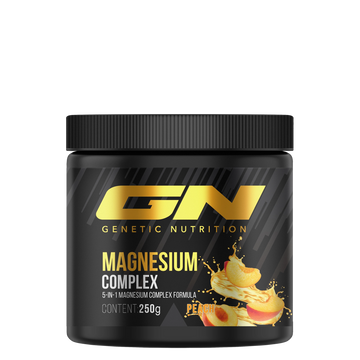
Practical selection criteria are the declared amount of magnesium per serving, the dosage form and individual tolerance. In our magnesium collection you will find supplements from GN Laboratories and Gods Rage, among others. Capsules are already portioned; with powder, the amount depends on the weighed serving. Also take magnesium from combination products into account instead of looking at each supplement separately.
How to read the declaration: The published nutrition table of the GN Laboratories Magnesium Citrate capsules lists 1000 mg of magnesium citrate per capsule, of which 150 mg is elemental magnesium. For your magnesium intake, the 150 mg is what counts. This example explains the declaration; it is not a personal intake recommendation.

Tolerance, side effects and interactions
Extra magnesium can cause diarrhoea, nausea and abdominal cramps. This depends on the amount and individual tolerance, among other things; 300 mg is not a fixed threshold below which such complaints cannot occur. A manufacturer’s recommendation does not guarantee freedom from complaints either. Splitting a justified daily amount can improve tolerance.
If your kidney function is impaired, have a supplement checked by a doctor beforehand, as excretion may be affected. Magnesium can also affect the absorption of certain medicines, such as some antibiotics or bisphosphonates. Observe the intake intervals stated in the package leaflet; your pharmacy or doctor can help with the specific combination. The NIH fact sheet describes these interactions and risks in more detail.2
Practical tips for taking magnesium alongside your training
If a supplement is justified, three things count: the right amount, tolerance and a routine you can stick to in the long term. Your body also needs magnesium on rest days for normal bodily functions. This does not mean you have to take a supplement every day.
Whether morning or evening suits you better depends on your personal tolerance and daily routine. Choose a time you can keep to regularly and take possible intervals to medication into account. The importance of magnesium for the muscles does not justify an additional large single dose shortly before training.
Common questions about magnesium and exercise
Do endurance athletes need more magnesium than strength athletes?
Can I take magnesium only on training days?
How quickly will I notice an effect?
Is a combination product better than pure magnesium?
Sources
- Deutsche Gesellschaft für Ernährung (DGE) (2021): Referenzwerte für Magnesium. dge.de/wissenschaft/referenzwerte/magnesium/
- NIH Office of Dietary Supplements: Magnesium: Fact Sheet for Health Professionals. ods.od.nih.gov/factsheets/Magnesium-HealthProfessional/
- Cochrane (2020): Magnesium for skeletal muscle cramps. cochrane.org/evidence/CD009402_magnesium-muscle-cramps
- Bundesinstitut für Risikobewertung (BfR) (2021): Höchstmengenvorschläge für Magnesium in Lebensmitteln inklusive Nahrungsergänzungsmitteln. bfr.bund.de/cm/343/hoechstmengenvorschlaege-fuer-mag...
More on magnesium and training
-
 Image: AI-generated
Magnesium in the morning or evening? Find your routine
Magnesium in the morning or evening: a practical guide to routine, tolerance, amounts and medicine intervals.
Read article -
 Image: AI-generated
Is intra-workout nutrition useful? What you really need during training
When water is enough and when carbohydrates or electrolytes suit your session. With a decision guide and three formulas compared.
Read article


Leave a comment