


Magnesium citrate or bisglycinate: which form suits you?
How the two forms differ, what studies on absorption show and how to compare magnesium content, tolerance and price on the label.

Magnesium citrate and magnesium bisglycinate both provide magnesium. What matters for your choice is the actual amount per capsule, tolerance and the right serving. A higher milligram figure on the front does not automatically mean more magnesium. Using two real products, we show you which information you should compare. The comparison helps you put the information on the tub into perspective for your everyday training.
The key points
- Citrate and bisglycinate both provide magnesium. What matters for your choice is the amount per capsule, tolerance and the right serving.
- In a 2003 study, citrate and an amino acid chelate performed better than oxide in measured magnesium excretion. It does not prove that bisglycinate is generally superior.
- Bisglycinate is often marketed as particularly gentle on the stomach. That is no guarantee that you will tolerate it better than citrate.
- On the label, the line “of which magnesium” is what counts. For food supplements, the BfR recommends no more than 250 mg of magnesium per daily recommended intake of a product.
Magnesium forms compared: citrate and bisglycinate
Magnesium citrate is a salt of citric acid. In magnesium bisglycinate, magnesium is bound to two molecules of the amino acid glycine. You will also see the term amino acid chelate for this. The binding partner differs; the mineral it contains is still magnesium.
Both count as organic magnesium compounds. “Organic” here describes the chemical compound, not an organic certification. The dosage form does not decide the comparison either: citrate is available in capsules just like bisglycinate.
Which magnesium is absorbed better?
Bioavailability means how much of an ingested substance is available to the body. The compound and its solubility play a role. However, this does not give a fixed ranking for every person and every product.3
A frequently cited study by Walker and colleagues compared magnesium citrate, an amino acid chelate and magnesium oxide in 46 healthy people over 60 days in 2003. Citrate and the chelate performed better than oxide in the measured urinary magnesium excretion; citrate also showed advantages in certain other measurements.4
That is a result for the products and measurements studied. The study tested neither of today’s two shop products nor any improvement in training performance. Nor does it prove that bisglycinate is generally superior. A fixed absorption percentage or the promise of faster recovery cannot be derived from it. Alongside absorption, tolerance therefore remains a separate decision criterion.
What matters if you have a sensitive stomach?
Magnesium from food supplements can cause diarrhoea and abdominal discomfort at higher amounts.3 Bisglycinate is often marketed as particularly gentle on the stomach. That is no guarantee that you will tolerate it better than citrate.
Why can this happen? Magnesium that is not absorbed can draw water into the gut. This osmotic effect explains why the amount matters for tolerance. It does not prove that one form causes problems for everyone or that another is fundamentally free of side effects.3
If you have problems, first look at the amount you take and any other supplements. The form alone does not explain every reaction. If the problems persist, have them checked. A different tub is no substitute for finding the cause.
Label comparison: how much magnesium is really inside?

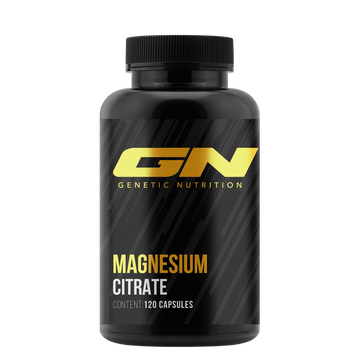
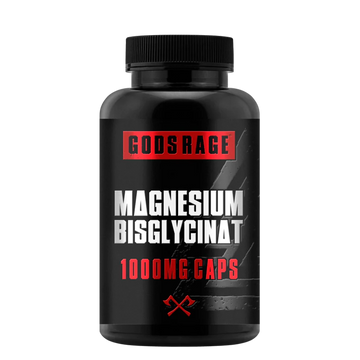
For the concrete comparison, we use the GN Laboratories Magnesium Citrate Capsules and the Gods Rage Magnesium Bisglycinate Capsules. Both tubs contain 120 capsules. Their serving information differs, however.
Feature | GN Laboratories Magnesium Citrate Capsules | Gods Rage Magnesium Bisglycinate Capsules |
|---|---|---|
Capsules per tub | 120 | 120 |
Comparison serving according to product information | 1 capsule | 2 capsules |
Magnesium compound per serving | 1000 mg magnesium citrate | 2000 mg magnesium bisglycinate |
Of which magnesium per serving | 150 mg (40% NRV) | 240 mg (64% NRV) |
Magnesium per capsule | 150 mg | 120 mg (calculated) |
Servings per tub | 120 | 60 |
Ingredients | Magnesium citrate, HPMC, microcrystalline cellulose | Magnesium bisglycinate, HPMC |
The decisive line is “of which magnesium”. For the Gods Rage product, 2000 mg of bisglycinate in two capsules provide 240 mg of magnesium. That works out at 120 mg per capsule. For the GN product, 1000 mg of citrate per capsule provide 150 mg of magnesium.
So you are comparing two different things if you read the weight of the compound on the front and the nutrient amount on the back. General percentages for a raw material therefore do not replace the specific nutrition table.
The table shows product information, not a personal intake plan. NRV stands for nutrient reference value for labelling; 40% and 64% are not an individually calculated supply. The current information on your pack remains decisive. HPMC refers to the plant-based capsule shell.
Total intake and supplements: which amount is meant?
Total intake from your diet
For adults aged 19 and over, the DGE gives estimated values of 350 mg of magnesium per day for men and 300 mg for women. This refers to total intake, not this amount on top from capsules. Wholegrain products, pulses, nuts and seeds contribute to your supply.2
Additional intake from food supplements
For food supplements, the BfR recommends no more than 250 mg of magnesium per daily recommended intake of a product. It also recommends splitting the daily amount into at least two servings. This proposed maximum is meant to limit undesirable effects; it is neither your total requirement nor a target you have to reach.1
Consider kidney function and medicines
If you have kidney disease or take medicines regularly, clarify supplementation with your doctor or pharmacy beforehand. Certain antibiotics and bisphosphonates can interact with magnesium; the necessary interval between them depends on the specific medicine.3
Which magnesium supplements fit your everyday life?
- Check the serving: How many capsules are intended, and how much elemental magnesium do they provide?
- Compare ingredients: Which magnesium compound and other substances does the product contain?
- Include other supplements: Is the same nutrient contained more than once? Then your additional magnesium intake is higher than a look at a single tub suggests.
With capsules, you can only change the serving in whole capsules. That is why the amount per capsule matters. A different compound alone does not solve this practical problem. The decision therefore concerns composition, serving and tolerance together.
How to compare capsule count and price sensibly
What does the stated serving cost?
Price per tub divided by servings per tub = price per serving. For the GN example you divide by 120, for Gods Rage by 60. However, this gives you a price for 150 mg and 240 mg of magnesium respectively. So the servings are not the same size.
How do you compare the same amount of magnesium?
As an additional calculation aid, you can relate the price to 100 mg of elemental magnesium. The GN tub contains a total of 18,000 mg of magnesium: 120 × 150 mg. For Gods Rage it is 14,400 mg: 60 × 240 mg.
The formula is: price per tub ÷ amount of magnesium in the whole tub × 100. Use the current price. The result is a comparison figure for cost, not a prompt to change how much you take.
For your decision, this means: if you tolerate citrate well, you do not need to switch just because of advertising for another form. If you do not tolerate it, check the amount and composition; an alternative may be an option without automatically being the better choice. A smaller or larger serving is first of all a different serving, not a verdict on quality.
You will find the current information on the linked products. You can compare other forms in our overview of magnesium products.
Frequently asked questions about citrate and bisglycinate
Are magnesium glycinate and bisglycinate the same?
Can I combine citrate and bisglycinate?
Does bisglycinate have to be taken in the evening?
Sources
- Bundesinstitut für Risikobewertung (BfR) (2021): Höchstmengenvorschläge für Magnesium in Lebensmitteln inklusive Nahrungsergänzungsmitteln. bfr.bund.de/cm/343/hoechstmengenvorschlaege-fuer-mag...
- Deutsche Gesellschaft für Ernährung (DGE): Referenzwerte für Magnesium. dge.de/wissenschaft/referenzwerte/magnesium/
- NIH Office of Dietary Supplements: Magnesium: Fact Sheet for Health Professionals. ods.od.nih.gov/factsheets/magnesium-healthProfessional/
- Walker AF, Marakis G, Christie S, Byng M, Magnesium Research 16(3) (2003): Mg citrate found more bioavailable than other Mg preparations in a randomised, double-blind study. pubmed.ncbi.nlm.nih.gov/14596323/
Further reading
-
 Image: AI-generated
Magnesium for athletes: when your diet is enough and when a supplement makes sense
Needs, foods, cramps and the magnesium content on the label, put into context.
Read article -
 Image: AI-generated
Magnesium in the morning or evening? Find your routine
Magnesium in the morning or evening: a practical guide to routine, tolerance, amounts and medicine intervals.
Read article
Leave a comment