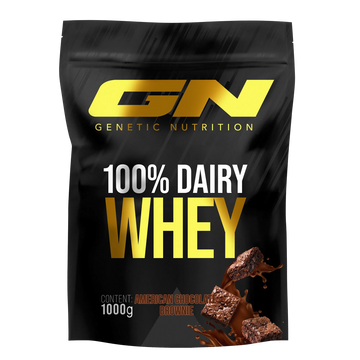
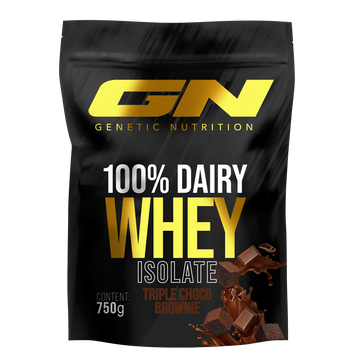
Protein shake with water or milk? Calories, protein and taste
Calories, protein, taste and tolerance: how to find the right base for your shake and work out the nutrients of your own mix.

Whether you make your protein shake with water or milk depends on the nutrients, taste and texture you want and on which ingredients you tolerate. Water adds neither calories nor protein; milk brings its own nutrients on top of the powder. With the same serving of GN Dairy Whey Chocolate Crema, you can work out the difference for your own mix.
The key points
- Water adds no calories, protein, fat or carbohydrates to your shake. The nutrients of the powder serving remain the basis for your calculation. If you do not want extra energy in your drink, water is the right choice.
- Cow's milk contributes protein, milk sugar and fat. How much depends on the type of milk and the amount you use. Milk suits you if you want these extra nutrients and a milky taste. There is no fixed calorie value for every shake made with milk.
- Plant-based drinks such as oat, soy or almond drink are further possible bases. Compare their nutrients on the specific label. Whether water, milk or another drink suits you also depends on your individual tolerance.
With the same amount of powder, the protein contributed by the powder stays the same. The extra liquid changes the total nutrients, not the amount of whey protein you stir in.

How many calories and how much protein does your shake have?
All worked examples use exactly 30 g of GN Dairy Whey Chocolate Crema. According to the current flavour table, this serving provides 114 kcal and 21.6 g of protein.2 The manufacturer recommends mixing 30 g of powder with 200 to 250 ml of water. The milk options below are explicitly alternative preparations.
The example milk is low-fat organic milk with 1.5% fat from Upländer Bauernmolkerei, which according to the producer provides 50 kcal and 3.5 g of protein per 100 ml.1 All three rows use 250 ml of liquid.
Option | Total calories | Total protein |
|---|---|---|
30 g powder + 250 ml water | approx. 114 kcal | 21.6 g |
30 g powder + 125 ml milk + 125 ml water | approx. 177 kcal | approx. 26.0 g |
30 g powder + 250 ml milk | approx. 239 kcal | approx. 30.4 g |
The results are calculated from the stated label values and rounded. 250 ml of this example milk add 125 kcal and 8.75 g of protein. Other milk products can have different values, so calculate with your own pack.

The formula for any combination:
- Total calories = powder calories + (amount of liquid in ml ÷ 100) × label value kcal per 100 ml
- Total protein = powder protein + (amount of liquid in ml ÷ 100) × label value protein per 100 ml
Fruit, oats or muesli are added separately. A scoop is not a universal gram measure either: weigh the powder if you want to compare servings exactly. The amount of liquid is not automatically the final volume of the finished shake.
Water or milk: try taste and texture
Milk can make a shake taste creamier and milkier, while water offers a more neutral base. How clearly you notice the difference also depends on the powder recipe and the amount of liquid. A protein powder with thickening ingredients can already make a creamy shake with water.
A mix of 125 ml water and 125 ml milk is one possible middle way. First try the same amount of powder with the same amount of liquid in water and in milk. Then adjust the ratio to your taste. The table shows where a 50:50 mix lands in numbers.
Choose the type of milk by fat content, nutrients and personal preference. Whole milk, low-fat milk and skimmed milk bring different amounts of fat and energy. A particular fat content is neither a requirement for a good shake nor a general sign of quality.
Protein shake with oat milk, almond drink or soy drink
Oat drink, often called oat milk, as well as almond and soy drink are further possible bases, provided the preparation instructions of your powder allow it. Their nutrients differ from product to product. You cannot reliably tell the protein content or the calories from the name alone.
Compare calories, protein, carbohydrates, sugar, fat and ingredients on the specific product. Unsweetened does not mean calorie-free; “no added sugar” does not automatically mean sugar-free either. Only count calcium or vitamins if the amounts are stated on the label you chose.
One important point: a plant-based drink plus whey protein is not vegan. Whey protein comes from whey, a dairy product. The drink does not change that. If you are looking for vegan protein shakes, you need a plant-based protein powder.
Tolerance: check powder and liquid separately
Lactose intolerance: check the milk and the powder
With lactose intolerance, dairy products containing lactose can cause bloating or stomach pain.3 Water contains no lactose, but it does not automatically make a whey made from whey protein concentrate and whey protein isolate lactose-free. The powder can also contain milk sugar.
You cannot calculate the remaining lactose content of the powder from its protein share or from the word isolate. Read the labelling of both products, the powder and the milk or plant-based drink.
Milk protein allergy: lactose-free is not enough
Lactose-free milk still contains milk proteins. That is why it is not a suitable solution for a milk protein allergy.3
If symptoms keep coming back, get professional advice instead of testing allergens on yourself.
Look at nutrients and tolerance together
The choice between water and milk does not give you a general advantage for muscle building. A claimed faster protein absorption alone is not a sufficient basis for the decision. What matters more is which nutrients, ingredients and drink volume fit your diet.
A protein shake is not automatically a complete meal replacement; the base you choose has to fit the rest of your food and your individual tolerance.
If you are still choosing between whey concentrate and isolate, the comparison of whey protein and isolate will help. That article is about the powder; this one is about the liquid in your shake.
How to prepare your shake
Stick to the manufacturer's serving. For GN Dairy Whey Chocolate Crema, that is 30 g of powder in 200 to 250 ml of water.2 Pour the liquid into the shaker first, then add the weighed powder. Close the shaker tightly and shake vigorously. If you get lumps, check whether you used enough liquid and whether your shaker has a sieve or a mixing ball.
On the go, you can carry the powder dry and add water just before drinking. A shake mixed with water is also a perishable food. Prepare it as fresh as possible. If you make it in advance, follow the manufacturer's storage and refrigeration instructions.
The practical choice in short: no extra energy wanted? Water. Extra milk nutrients and a milkshake taste wanted? A suitable milk chosen by fat content and label. A different base for personal reasons? A plant-based drink with a suitable nutrient profile.
Common questions about protein shakes with water or milk
Is a protein shake with water better for losing weight?
Can I mix whey protein with milk?
How many calories does a 500 ml protein shake have?
Water or milk straight after training?
Sources
- Upländer Bauernmolkerei: Fettarme Bio-Milch 1,5 %: Nährwerte pro 100 ml. bauernmolkerei.de/bio-produkte/bio-sortiment/detaila...
- GN Laboratories: 100% Dairy Whey Chocolate Crema: Variantennährwerte und Zubereitung. gigasnutrition.com/products/100-dairy-whey-1000g-gn
- National Institute of Diabetes and Digestive and Kidney Diseases (NIDDK): Symptoms & Causes of Lactose Intolerance. niddk.nih.gov/health-information/digestive-diseases/...
More on protein powder and shakes
-
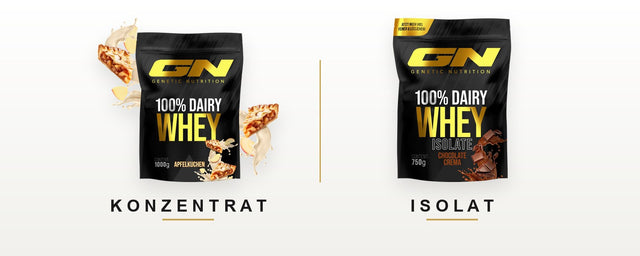
Whey Concentrate vs Isolate: Which Suits You?
A comparison of concentrate, isolate and clear whey.
Read article -
Vegan Protein Isolate: the honest whey alternative
Plant protein sources and their differences.
Read article -

Protein Timing: When Should You Take Protein?
How to distribute your protein intake throughout the day.
Read article