


Vitamin D in the morning or evening: when should you take it?
Why there is no best time of day, which meal works and how to read the amount and intake days on the label correctly.

There is no generally best time of day for vitamin D. If you take it, choose a meal you can rely on and stick to the amount and intake days of your product or medical plan. Fat in the meal can support absorption. Morning is therefore not automatically better than evening, and regularly does not mean daily for every supplement.
The key points
- There is no generally best time of day for vitamin D. Breakfast, lunch or dinner can all work if the meal fits reliably into your day.
- Vitamin D is fat-soluble. A normal meal with some fat is a practical starting point; you do not need an extra spoonful of oil.
- Regularly means following the intended intake schedule, not daily for every supplement. The amount per capsule and the intake frequency are different details.
- Do not make up for a missed dose with a double dose. A high-dose product such as the GN example with 5,000 IU every third day is intended only for use on medical advice.
Morning or evening: decide based on your daily routine
Depending on your intake plan, vitamin D can fit with breakfast, lunch or dinner. An expert consensus by El Miedany and colleagues finds no conclusive evidence for a time of day that is generally more effective.1 This is an assessment of the state of research, not a direct comparison test between breakfast and dinner.
In practice, what counts is a meal that fits into your daily routine. The British health service NHS recommends taking colecalciferol capsules and tablets with water with your main meal of the day.2 Colecalciferol is the medicine name for vitamin D3. Different instructions for your product take precedence.
Your routine | Possible time | What to watch for |
|---|---|---|
You reliably eat breakfast | With breakfast | A proper meal rather than just coffee. |
You do not eat in the morning | With lunch | You do not have to take it before your first meal. |
Dinner is your regular main meal | With dinner | You can link your intake to a meal in the evening too. |
All three options apply only on the intended intake days. The table is an aid for your routine, not a recommendation to take vitamin D every day.
Which meal should you take vitamin D with?
Vitamin D is fat-soluble. According to the US Office of Dietary Supplements, fat in the gut favours its absorption; some is absorbed even without fat.3 You therefore do not need an extra spoonful of oil. A normal meal with some fat is a practical starting point, for example:
- wholegrain bread with nut butter or cheese,
- yoghurt with nuts,
- a warm meal with some rapeseed or olive oil.
The examples show meals that contain fat. They are not a list of foods particularly rich in vitamin D. Nor can you conclude in general that an oil-based supplement works better than all other forms. What matters is the instructions for the product in question.
Regularly means: following the intended intake schedule

Amount, frequency and warnings
The pack shows three different details that you should read together:
- The amount per capsule or drop. Vitamin D is stated in micrograms or international units: 1 µg equals 40 IU.2
- The intake frequency. One capsule can be intended for one day or for a longer interval.
- The notes and warnings. They can concern medication, certain groups of people and medical supervision, among other things.
Take into account every product you get vitamin D from, for example a multivitamin alongside a separate supplement. If you are unsure, have the combination checked at your doctor’s practice or pharmacy.
The German Federal Institute for Risk Assessment (BfR) warns against large single doses taken at intervals of days or weeks with certain high-dose food supplements.4 Dividing a high single dose by the number of days does not prove that it is as safe as a lower daily dose. The BfR opinion is not a test of the GN product below.
The GN example: per capsule is not per day
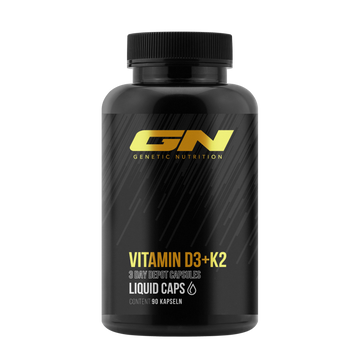
According to the current product information, the GN Laboratories Vitamin D3 K2 Liquid Caps contain 125 µg of vitamin D3 (5,000 IU) and 200 µg of vitamin K2 per capsule. The vitamin D3 is dissolved in MCT oil, and the plant-based capsule shell is made of HPMC.
The recommended intake is one capsule every third day. This high-dose product should only be used on medical advice and under medical supervision. The figure “5,000 IU per capsule” is therefore not a daily intake recommendation. The full details and warnings are on the product page.
In our vitamin D3 and K2 collection, you will find different supplements. Besides the amount per serving, always compare the recommended intake and the warnings.
How to turn the recommendation into a workable routine
- Set a reminder for the actual intake days and the meal you have chosen. Tick off each intake afterwards.
- Store the pack according to its storage instructions and out of the reach of children. The meal serves as your reminder; the tub does not have to stay on the dining table all the time.
- Do not make up for a missed dose with a double dose.2 Follow the label or package leaflet. If you have a medical plan or longer intervals, clarify the further schedule with your pharmacy or doctor’s practice.
Frequently asked questions about taking vitamin D
Can I take vitamin D before going to bed?
What applies when fasting or training early in the morning?
Do I need to take vitamin K2 with it?
Sources
- El Miedany Y, Toth M, El Gaafary M et al., Egyptian Rheumatology and Rehabilitation 52, 34 (2025): Vitamin D management update: evidence-based guidelines for vitamin D optimization by the Egyptian Academy for bone and muscle health. link.springer.com/article/10.1186/s43166-025-00330-8
- NHS: How and when to take colecalciferol. nhs.uk/medicines/colecalciferol/how-and-when-to-take...
- NIH Office of Dietary Supplements: Vitamin D: Fact Sheet for Health Professionals. ods.od.nih.gov/factsheets/VITAMIND/HealthProfessional/
- Bundesinstitut für Risikobewertung (BfR) (2025): Einnahme hoher Einzeldosen Vitamin D über Nahrungsergänzungsmittel im Abstand von Tagen oder Wochen birgt gesundheitliche Risiken (Stellungnahme 031/2025). bfr.bund.de/stellungnahme/einnahme-hoher-einzeldosen...
- Cleveland Clinic (2025): The Best Time of Day To Take Vitamin D. health.clevelandclinic.org/when-to-take-vitamin-d
Further reading
-
 Image: AI-generated
Vitamin D in winter: sunlight, diet and supplements
What sunlight and food contribute in winter and how to read vitamin D values on the label.
Read article -
 Image: AI-generated
Magnesium in the morning or evening? Find your routine
Magnesium in the morning or evening: a practical guide to routine, tolerance, amounts and medicine intervals.
Read article

Leave a comment