


Storing omega-3 correctly: do oil and capsules belong in the fridge?
Oil or capsules, before or after opening: what applies to storing omega-3, how to observe the use-by period and what to do in case of heat or a changed smell.

Liquid omega-3 oil often belongs in the fridge once opened. For omega-3 capsules, on the other hand, there is no general need to refrigerate. What matters is the storage information on your product. A cool, dry place out of direct sunlight suits many capsules; with oil, a fridge requirement and a limited use-by period often apply after opening.1
The key points
- Liquid omega-3 oil often belongs in the fridge once opened; there is no general need to refrigerate capsules.
- The storage information of your product is what counts. The use-by period after opening is stated on the pack or in the manufacturer's instructions.
- Write the opening date on the bottle, and check anything unusual, such as a changed smell, sticky capsules or a hot delivery, with the retailer or manufacturer before taking it.
Storing omega-3: oil and capsules compared
“Store in a cool place” does not automatically mean “put it in the fridge”. First distinguish the product form, then read the information for the unopened and the opened pack.
Product | Before opening | After opening |
|---|---|---|
Liquid fish oil or algae oil | Temperature and storage place as stated on the label; protect from light. | Manufacturers often state the fridge. Also observe the use-by period after opening. |
Omega-3 capsules | Store cool, dry and protected from light in the original packaging; specific temperature as stated on the label. | Close the tub after every use; keep dry. Fridge only if the product information says so. |
One manufacturer example shows the difference: NORSAN states cool, dry storage below 25 °C for its products and requires its oils to be kept in the fridge after opening. This temperature cannot simply be applied to every other brand.1
Where should omega-3 capsules be kept day to day?
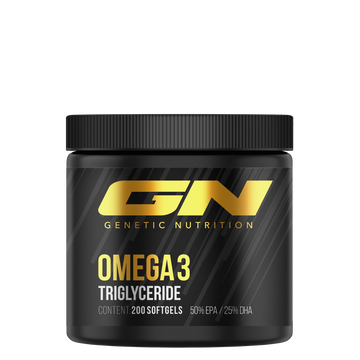
For the Omega-3 Triglyceride capsules from GN Laboratories, the storage note in our product data reads: “Store in a cool, dry place.” It does not state a general requirement to refrigerate at 4 to 8 °C. Also check the label on your pack, especially if the manufacturer has changed its information.
For your daily routine, this means: choose a dry cupboard away from the stove, heating and direct sun, as long as the temperature there matches the product information. The windowsill is not suitable as a permanent spot. A sports bag in a hot car is not a storage place either, even if you want to take the capsules on the go.
Keep the capsules in their original tub if possible. That way, the storage note, best-before date and batch number stay with the product. Take out your serving and close the lid again.
You choose the right form regardless of where you store it. In our omega-3 overview you can compare the products; for storage, the specific pack information is what counts afterwards.
Why are omega-3 fatty acids sensitive?
The fatty acids EPA and DHA can react with oxygen. This reaction is called oxidation and changes the quality of the oil. Heat and strong light promote such changes. That is why a closed container and a suitable storage place matter. It does not follow, however, that every capsule immediately loses its effect at room temperature.23
Packaging and product form make a difference: in a study on storage stability, the encapsulated omega-3 products tested were more stable than the liquid products examined. The result explains why capsules and opened oil bottles should be considered separately. It does not prove that every capsule is better protected under all conditions.2
A dark bottle does not replace a suitable spot either.
How long does omega-3 keep after opening?

The specific use-by period is stated on the product or in the manufacturer's instructions. A fixed rule such as “use up all omega-3 oils within 30 to 60 days” is too general. Formula, packaging and tested storage conditions differ.
Best-before date and use-by period are not the same
The best-before date refers to the unopened product stored correctly. For an opened bottle, what applies after opening also matters. The fridge does not reset this period and does not turn an old oil into a fresh one.4
Write the opening date on the bottle
Our practical tip: write the opening date on the bottle. If the manufacturer states a use-by period, note the resulting date next to it straight away. That way you do not have to wonder later whether you opened the bottle two or six weeks ago. Do not cover the label or the batch number.
With capsules, do not adopt a period that applies to an oil bottle. If there is no clear information or the pack and the website contradict each other, ask the manufacturer, giving the exact product name and batch.
Unusual smell, sticky capsules or a hot parcel?
A rancid or clearly changed smell can indicate quality problems. Conversely, an unremarkable smell is no reliable proof of the oil's quality. Research also assesses oxidation with chemical measures; a quick smell test at home does not replace this testing.2
You should not simply dismiss heavily stuck-together, deformed or leaking capsules as normal either. With gelatine capsules, heat can affect both the shell and the oil quality.3
If the delivery was hot or something looks unusual, photograph the pack, the batch and, if relevant, the capsules. Describe to the retailer or manufacturer how the product arrived or was stored, and clarify further use before taking it. Without a temperature history and product data, “two hours warm” does not allow a reliable all-clear or a diagnosis of spoilage.
More questions about storing omega-3
Does this also apply to vegan omega-3 from algae oil?
Can I freeze omega-3 as a precaution?
How do I take omega-3 with me when travelling?
Sources
- NORSAN: Häufige Fragen: Lagerung von Ölen und Kapseln. norsan.de/faq/
- Yenipazar H., Şahin-Yeşilçubuk N. (2023): Effect of packaging and encapsulation on the oxidative and sensory stability of omega-3 supplements. pubmed.ncbi.nlm.nih.gov/36911843/
- GOED (2021): Advice on proper storage and distribution conditions for omega-3 EPA/DHA dietary supplements. goedomega3.com/storage/app/media/Advocacy%20document...
- Ministerium für Ländlichen Raum Baden-Württemberg: Mindesthaltbarkeitsdatum. mlr.baden-wuerttemberg.de/de/unsere-themen/ernaehrun...


Leave a comment