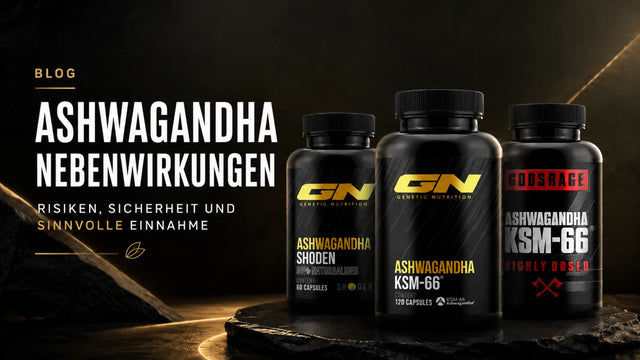
Ashwagandha Shoden vs. KSM-66: The Comparison
Shoden delivers maximum concentration in a small dose, KSM-66 the broadest research base. This comparison shows you which extract fits your goal.

Shoden and KSM-66 are the two most talked-about ashwagandha extracts on the market, yet they differ fundamentally in concentration, dosing and the state of research. Shoden® is standardised to 35% withanolide glycosides and already works at 60 to 240 mg per day, while KSM-66® is a full-spectrum root extract with around 5% withanolides that is usually dosed at 300 to 600 mg per day. The two are not interchangeable one to one, and the right choice depends on whether stress reduction, sleep or athletic performance is your priority.
The good news first: You can get both extracts from us. We wrote this article as a detailed comparison so that by the end you know exactly which extract fits your goal and your health.
Key takeaways
- Shoden® is standardised to 35% withanolide glycosides and already works at 60 to 240 mg per day, often a single capsule is enough
- KSM-66® is a full-spectrum root extract with around 5% withanolides, usually dosed at 300 to 600 mg per day
- KSM-66 has the broadest research base, especially for sport, testosterone and stress
- Shoden is considered more potent per milligram and showed first cortisol changes after about two weeks
- You can get both extracts from us, what matters is your goal, not the brand
Shoden vs. KSM-66: The key differences
The central difference lies in the active ingredient concentration and the plant material used.
- Shoden® contains over 35% withanolide glycosides and is obtained from a combination of root and leaf. The raw material comes from the manufacturer Arjuna Natural.
- KSM-66® is a full-spectrum root extract for daily use, produced by Ixoreal Biomed, standardised to at least 5% withanolides. Only the root is used as plant material.
- Shoden is clinically effective from as little as 60 to 120 mg per day, while KSM-66 is typically dosed between 300 and 600 mg per day.1
- The two have different effect profiles: Shoden is considered the more potent option per milligram, while KSM-66 has the more extensive research base.
The key differences at a glance:
| Feature | Shoden® | KSM-66® |
| Withanolides | 35% (glycosides) | around 5% (free) |
| Plant material | root and leaf | root only |
| Typical daily dose | 60 to 240 mg | 300 to 600 mg |
| Capsules per day | often just one | usually two |
| State of research | growing | very broad |
Ashwagandha, also known as Indian ginseng or winter cherry, is used above all as an adaptogen, helping the body adapt to strain and stress. Both extracts fulfil this role, but in different ways.
Concentration and active ingredient content
The withanolide concentration is the most important quality parameter when choosing an ashwagandha extract.

Withanolides compared
An ashwagandha extract must be standardised to withanolides to guarantee a reliable effect. However, Shoden and KSM-66 measure different compounds:
- Shoden contains 35% withanolide glycosides, sugar-bound molecules such as withanosides IV and VI, which are present in high concentration mainly thanks to the combination of root and leaves.
- KSM-66 has a withanolide concentration of 5% and measures free withanolides, not glycosides. This distinction is crucial in any direct comparison.
For comparison: Sensoril® ashwagandha, another branded extract, contains 10% withanolides but also withaferin A, a compound that creates a different effect profile than the two extracts compared here.
Bioavailability and absorption
Shoden has a higher bioavailability than KSM-66. Pharmacokinetic investigations show that in single-dose tests Shoden reaches a slightly higher peak value for withanolide A and a higher total absorption, despite the lower overall dose. This explains why a small portion of Shoden is enough, while plain ashwagandha powder would have to be dosed much higher.
Standardisation and quality control
Both branded extracts show low batch-to-batch variation in withanolide content, around 4 to 8%, well below the roughly 12 to 22% of non-branded 5% extracts. Quality is ensured through certified manufacturing and HPLC analysis.
Dosing and use
The recommended daily doses differ considerably between the two extracts. What matters is not the amount of raw material alone, but the withanolide content.

Shoden dosing
Shoden is clinically effective even in small amounts. Studies have examined various doses: 60 to 120 mg per day for stress and anxiety reduction over 60 days, 240 mg per day for stronger effects over 6 weeks and up to 480 mg per day in a safety review over 90 days, without clinically relevant side effects. In practice, the high concentration often means just one capsule a day, an advantage for anyone who dislikes swallowing many capsules.
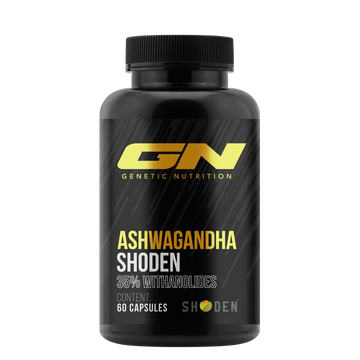
From our range: Our Ashwagandha Shoden® delivers 300 mg of Shoden per capsule with 105 mg of withanolides (35%). A highly dosed portion, vegan and lab-tested. One capsule is enough.
KSM-66 dosing
KSM-66 is typically dosed at 600 mg per day, often split into 300 mg in the morning and 300 mg in the evening. Studies show 300 mg per day for sleep support, 600 mg per day for stress, athletic performance and testosterone, and 675 mg per day in studies with men over 90 days.
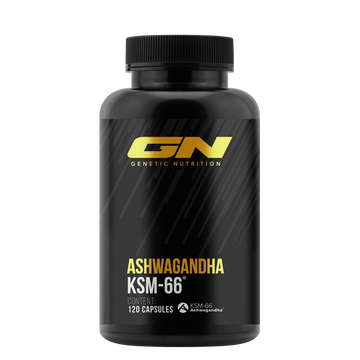
From our range: For the classic KSM-66 routine you will find our Ashwagandha KSM-66® with 120 capsules (300 mg per capsule) and the highly dosed Ashwagandha KSM-66® with 600 mg per serving.
Factors for the optimal dose
The right dose depends on your goal: stress and anxiety often respond to lower doses, while testosterone and performance goals frequently require higher amounts. Clinical effects usually appear after 4 to 8 weeks, although with Shoden the first measurable cortisol changes were observed after about two weeks. Age, baseline stress level, body weight and metabolism also influence the effect. For a detailed look at how to find the right amount for your goal, including timing and duration, read our guide to ashwagandha dosing.
Clinical studies and scientific evidence
The state of the evidence is one of the clearest differences between the two extracts.
KSM-66 has more clinical studies than Shoden, and considerably more. A systematic review evaluated 23 studies with standardised root extracts, 16 of them with KSM-66.1 Shoden has a growing but still more limited research base with smaller sample sizes. Both rely on randomised, placebo-controlled studies, with KSM-66 additionally backed by meta-analyses.
Effects on stress and cortisol
Ashwagandha can lower cortisol levels under chronic stress, one of the best-documented effects of this adaptogen.
- KSM-66: In the study by Chandrasekhar et al. (2012), a dose of 600 mg per day over 60 days lowered serum cortisol by around 27.9% from baseline, compared with about 7.9% in the placebo group.2
- Shoden: At daily doses of 60 and 120 mg over 60 days, a significant reduction in morning cortisol was seen, in part by more than 60% versus placebo.3
When it comes to speed, Shoden may have the edge: measurable cortisol reductions were observed after about two weeks, while the full effect on symptoms of anxiety and tension typically takes 30 to 60 days.
Effects on sleep and recovery
Ashwagandha can improve sleep quality, as a meta-analysis shows across different extracts.
- KSM-66: Studies with 300 mg per day over 10 weeks showed improvements in sleep onset, sleep duration and sleep quality in people with sleep problems.4 A 2021 meta-analysis confirms that doses from 600 mg per day over at least 8 weeks deliver the most robust sleep improvements.5
- Shoden: As little as 120 mg per day over 6 weeks improved sleep quality in adults with non-restorative sleep. Shoden is particularly suitable for stress-related sleep problems.
Both tend to shorten sleep onset and can reduce nighttime waking. The best time to take either for sleep is in the evening, with Shoden making the evening routine especially simple thanks to its small dose.
Effect profiles and areas of use
Despite their shared origin in the ashwagandha plant, the two extracts have different strengths, because the effect of ashwagandha always depends on extract, dose and goal.
Testosterone and athletic performance
KSM-66 has the more comprehensive data here:
- In young, healthy men, KSM-66 at 600 mg per day over 8 weeks increased total testosterone by around 15.3% versus placebo.6 In men trying to conceive, 675 mg per day over 90 days produced an increase of about 17.3%.
- KSM-66 supports performance and recovery in sport, with documented improvements in strength and muscle mass. For performance goals it is the obvious choice.
Shoden also shows positive effects on testosterone and well-being: in a study with overweight men, testosterone rose by around 16.6% at 240 mg per day over 8 weeks. However, extensive data on performance endpoints such as strength or muscle growth is still missing.

For training and testosterone: If sport and performance are your goal, the highly dosed Ashwagandha KSM-66® with 600 mg is the obvious choice, exactly the amount used in studies for these goals.
Cognitive function
KSM-66 has several studies on cognitive abilities, including improvements in memory, processing speed and reaction time under stress. For Shoden there is less data here, with early signals from sleep studies pointing to better morning alertness, mood and mental recovery.
Age groups and target groups
KSM-66 has been tested in a broader age range, from young athletes to stressed adults to older people. Shoden studies have so far focused mainly on adults with mild to moderate stress.
Tolerability and safety
Both extracts can cause similar, generally mild side effects.
Side effect profiles
- KSM-66: Across the studies, mild digestive complaints, headaches and mild tiredness were reported. No severe side effects occurred.
- Shoden: A 90-day safety study found no clinically relevant changes in liver values, kidney function or blood lipids.
Long-term safety
For both extracts, safety data is available from studies of up to about 12 weeks. Long-term data beyond three months is lacking for both, and ongoing research may bring more clarity here in the future.
Interactions and contraindications
Since ashwagandha can influence thyroid function, hormone levels and sedative effects, interactions with thyroid medication, hormone therapies and sedatives are possible. Pregnant and breastfeeding women, people with autoimmune diseases or serious chronic conditions should only take ashwagandha after consulting a doctor.
Value for money
Cost per effective dose
Since Shoden works even in small amounts, one pack often lasts longer. Highly concentrated branded extracts frequently cost more per gram, but what counts is not the price per capsule, it is the cost per effective daily dose. Here Shoden remains competitive despite the higher price per gram.
Availability and quality criteria
Both extracts are available from us. When buying, look out for these points:
- Certified manufacturing
- Precise declaration of the withanolide content (glycosides or free withanolides)
- Transparency about the plant material used (root, leaves or a combination)
- Independent lab analyses for heavy metals and microbiology
If you invest in high-quality ashwagandha supplementation, choose branded extracts. The considerably lower batch variation compared with no-name products is worth the reliability.
Shoden vs. KSM-66: Which one should you choose?
Choose Shoden if you want maximum potency in a small dose, appreciate relaxation that sets in quickly and prefer the simplicity of a single capsule. Our Ashwagandha Shoden® delivers 300 mg with 105 mg of withanolides per capsule for exactly that.
Choose KSM-66 if you want the extensively researched option, pursue testosterone or athletic goals and value a full-spectrum root extract. For the daily routine, our KSM-66® with 120 capsules is the fit, for the training context the highly dosed KSM-66® with 600 mg.
For stress management and anxiety reduction
- Shoden may work faster under acute stress, with first cortisol reductions seen after about two weeks.
- KSM-66 offers robust stress reduction, backed by considerably more study data across different groups.
For anyone under chronic stress, consistent intake over at least 4 to 8 weeks is what matters, not waiting for instant results.
For better sleep
- Shoden is especially practical for the evening routine in non-restorative sleep thanks to its small evening dose and high bioavailability.
- KSM-66 has the broader evidence for stress-related sleep problems, with improvements shown from as little as 300 mg per day.
For athletic performance and testosterone
- KSM-66 is considered the standard for training and testosterone, with 600 mg per day over 8 to 12 weeks increasing testosterone as well as strength and muscle mass.
- Shoden is better suited to recovery and stress reduction in a training context, less as a direct performance supplement.
Conclusion: Both are good, each for its own goal
Shoden and KSM-66 are both high-quality, patented ashwagandha extracts, they simply set different priorities. Shoden scores with maximum concentration and a single capsule per day, ideal for stress and sleep. KSM-66 scores with the broadest research base, ideal for sport, testosterone and daily all-round use. You do not have to commit to a brand, only to your goal. You will find both with us: the Ashwagandha Shoden®, the KSM-66® with 120 capsules and the highly dosed KSM-66® with 600 mg.
Frequently asked questions about Shoden and KSM-66
What is the difference between Shoden and KSM-66?
Which ashwagandha extract is stronger, Shoden or KSM-66?
Which extract is better for sport and testosterone?
Which extract is better for sleep?
How fast does Shoden work compared to KSM-66?
Are Shoden and KSM-66 well tolerated?
Sources
- Coope O. C. et al., Pharmaceuticals (2026): Back to the Roots: Safety and Tolerability of Standardised Ashwagandha (Withania somnifera) Root Extract in Healthy Adults. pmc.ncbi.nlm.nih.gov/articles/PMC13209861/
- Chandrasekhar K. et al., Indian Journal of Psychological Medicine (2012): A prospective, randomized double-blind, placebo-controlled study of safety and efficacy of a high-concentration full-spectrum extract of ashwagandha root in reducing stress and anxiety in adults. pmc.ncbi.nlm.nih.gov/articles/PMC3573577/
- Heliyon (2024): Shoden promotes relief from stress and anxiety: A randomized, double-blind, placebo-controlled study on healthy subjects with high stress levels. pmc.ncbi.nlm.nih.gov/articles/PMC11402924/
- Langade D. et al., Cureus (2019): Efficacy and Safety of Ashwagandha (Withania somnifera) Root Extract in Insomnia and Anxiety: A Double-Blind, Randomized, Placebo-Controlled Study. pmc.ncbi.nlm.nih.gov/articles/PMC6827862/
- Cheah K. L. et al., PLoS ONE (2021): Effect of Ashwagandha (Withania somnifera) extract on sleep: A systematic review and meta-analysis. pmc.ncbi.nlm.nih.gov/articles/PMC8462692/
- Smith S. J. et al., Advances in Nutrition (2020): Examining the Effects of Herbs on Testosterone Concentrations in Men: A Systematic Review. pmc.ncbi.nlm.nih.gov/articles/PMC8166567/