Omega 3 Triglyceride Capsules

Omega 3 Triglyceride Capsules

  • ✓ 500 mg EPA + 250 mg DHA per softgel
  • ✓ 1,000 mg high-dose fish oil
  • ✓ TOTOX value 3.1 (limit: 26)
Regular price €34,90 Sale price €31,06
200 softgels€115,04/kg · Tax included. Shipping calculated at checkout.

🚚 In stock – delivery time: 1–3 working days

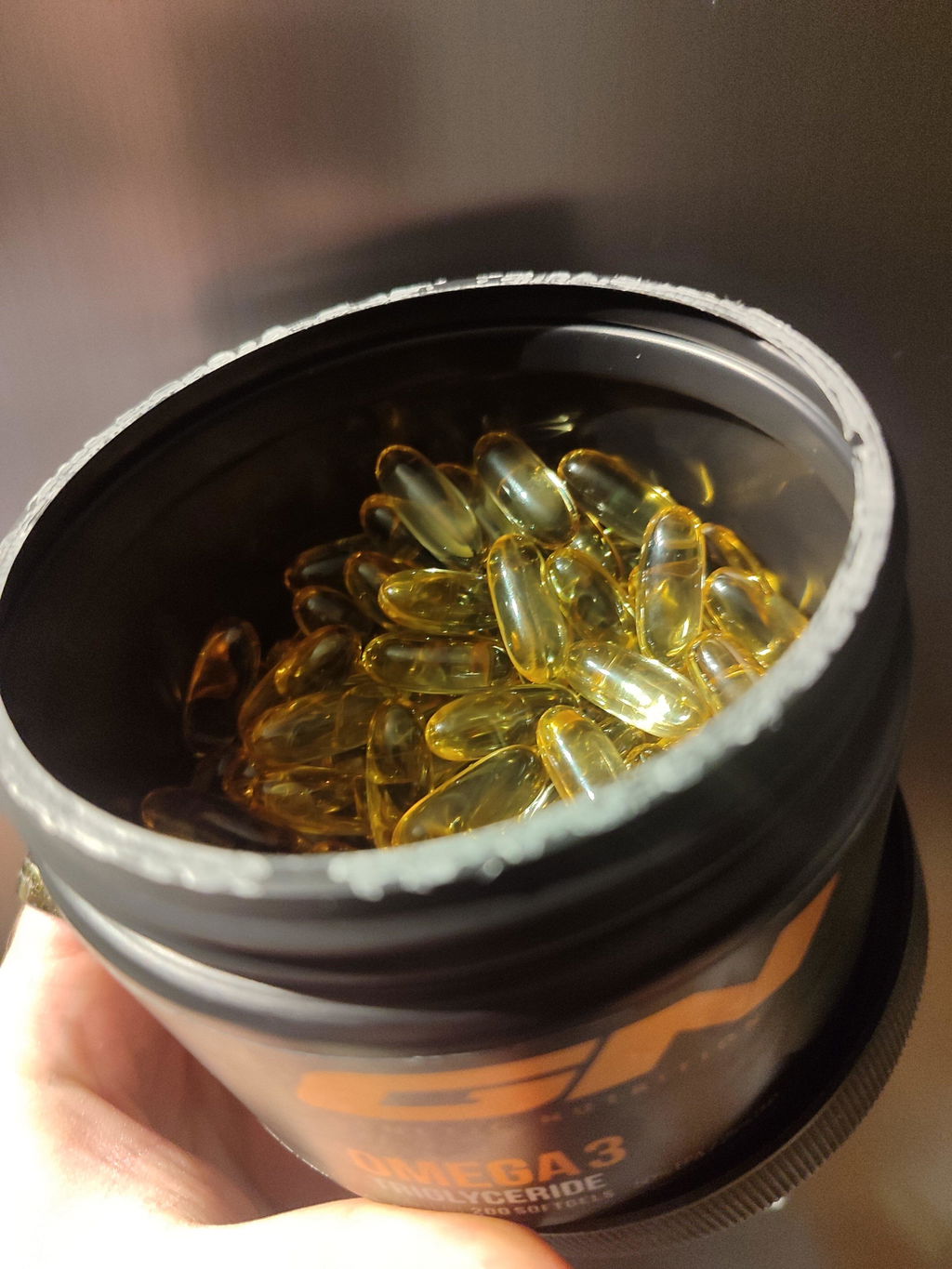
Triglyceride form, high dosage, no fishy burping. If that's on your checklist, you've come to the right place. These omega 3 triglyceride capsules are packed with 1000 mg of fish oil in natural form. 750 mg of which are pure fatty acids in a 2:1 ratio of EPA to DHA.

  • 75% omega-3 concentration in natural triglyceride form
  • 500 mg EPA + 250 mg DHA per softgel in a 2:1 ratio
  • 1,000 mg high-dose fish oil per capsule
  • 200 capsules per can
  • TOTOX value 3.1 (limit: 26), heavy metals not detectable
  • Without vitamin E, without unnecessary additives

Composition1 softgel4 softgels
Fish oil1000 mg4000 mg
Total omega-3 fatty acids750 mg3000 mg
thereof EPA500 mg2000 mg
thereof DHA250 mg1000 mg
Ingredients:
Fish oil (omega-3 fatty acids, of which EPA (elcosapentaenoic acid) and DHA (docosahexaenoic acid)), humectant: glycerine, purified water; coating agent: bovine gelatine.

Take 2 softgels daily with a fat-containing meal and sufficient liquid. Active athletes can increase the dose to 3 to 4 softgels. It is best to divide the intake between lunch and dinner, as omega-3 fatty acids are fat-soluble and are therefore better absorbed.

Manufacturer / Distributor

GN Laboratories Europe, London / United Kingdom

Nero Labs BV, Postbus 278, 5900AG Venlo, The Netherlands

Food supplement in capsule form with omega-3 fatty acids from fish oil. The recommended daily intake must not be exceeded. Food supplements are no substitute for a balanced and varied diet and a healthy lifestyle. Keep out of the reach of children. Store in a cool and dry place.

  1. Calder, P. C. (2015). Omega-3 fatty acids and inflammatory processes: from molecules to man. Biochemical Society Transactions, 43(5), 562-568.
  2. Simopoulos, A. P. (2002). Omega-3 fatty acids in inflammation and autoimmune diseases. Journal of the American College of Nutrition, 21(6), 495-505.
  3. Calder, P. C. (2013). Omega-3 fatty acids and inflammatory processes: from molecules to clinical relevance. Lipids, 48(10), 941-953.
  4. Tartibian, B., Maleki, B. H., & Abbasi, A. (2009). The effects of omega-3 supplementation on pulmonary function and exercise performance in athletes. Journal of Science and Medicine in Sport, 12(1), 475-479.
  5. Maroon, J. C., & Bost, J. W. (2006). Omega-3 fatty acids (fish oil) as an anti-inflammatory: an alternative to nonsteroidal anti-inflammatory drugs for discogenic pain. Surgical Neurology, 65(4), 326-331.
  6. Knott, L., Avery, N. C., Hollander, A. P., Tarlton, J. F., & Welsh, J. E. (2011). Regulation of osteoarthritis by omega-3 (n-3) polyunsaturated fatty acids in a naturally occurring model of disease. Osteoarthritis and Cartilage, 19(9), 1150-1157.
  7. Stillwell, W., & Wassall, S. R. (2003). Docosahexaenoic acid: membrane properties of a unique fatty acid. Chemistry and Physics of Lipids, 126(1), 1-27.
  8. Kaur, G., & Guo, X. (2013). Omega-3 fatty acids and human brain structure and function: building the case for a novel preventive intervention. Neural Regeneration Research, 8(10), 925.
  9. Delarue, J., Matzinger, O., & Binnert, C. (2003). Fish oil prevents the adrenal activation elicited by mental stress in healthy men. Diabetes and Metabolism, 29(3), 289-295.
  10. Mozaffarian, D., & Wu, J. H. (2011). Omega-3 fatty acids and cardiovascular disease: effects on risk factors, molecular pathways, and clinical events. Journal of the American College of Cardiology, 58(20), 2047-2067.
  11. Tartibian, B., Maleki, B. H., & Abbasi, A. (2011). The effects of omega-3 supplementation on rheumatoid arthritis patients' fatigue and quality of life. Complementary Therapies in Clinical Practice, 17(4), 226-230.
  12. Smith, G. I., Julliand, S., Reeds, D. N., Sinacore, D. R., Klein, S., & Mittendorfer, B. (2015). Fish oil-derived n-3 PUFA therapy increases muscle mass and function in healthy older adults. The American Journal of Clinical Nutrition, 102(1), 115-122.
  13. Hill AM, Buckley JD, Murphy KJ, Howe PR. Combining fish-oil supplements with regular aerobic exercise improves body composition and cardiovascular disease risk factors. Am J Clin Nutr. 2007 May;85(5):1267-74. doi: 10.1093/ajcn/85.5.1267. PMID: 17490962.
  14. Flachs P, Horakova O, Brauner P, Rossmeisl M, Pecina P, Franssen-van Hal N, Ruzickova J, Sponarova J, Drahota Z, Vlcek C, Keijer J, Hidalgo J, Kus V, Novak F, Kopecky J. Polyunsaturated fatty acids of marine origin upregulate mitochondrial biogenesis and induce beta-oxidation in white fat. Diabetologia. 2005 Jul;48(7):2365-75. doi: 10.1007/s00125-005-1877-4. Epub 2005 Jun 17. PMID: 15965467.
  15. Boelsma E, Hendriks HF. Roza L. Nutritional skin care: health effects of micronutrients and fatty acids. Am J Clin Nutr. 2001; 73(5):853-864.
Item no.: 6504

Why omega-3 fatty acids in triglyceride form?

You already know that the triglyceride form is better than ethyl esters. The numbers confirm it:

Triglyceride formEthyl ester form
Absorptionup to 69 %approx. 23 %
Structurenatural (as in fish)chemically modified
Uptakedirectly usableconversion required
Bioavailabilityup to 3x higherstandard

Your body recognizes the triglyceride form immediately because it is structured exactly like the fat in fresh fish. No chemical conversion needed, no loss of active ingredient along the way.

Highly dosed: 1000 mg of fish oil per capsule with EPA and DHA

GN Laboratories delivers 1000 mg of fish oil per capsule, of which 750 mg are pure fatty acids. Standard fish oil typically contains 300 mg. That sounds like marketing, but it's simple math: 75 % concentration instead of 30 %.

With us, you get 500 mg of EPA and 250 mg of DHA per softgel. The 2:1 ratio is no coincidence. EPA plays a role in inflammatory processes in the body, DHA is a building block of your brain cells. For athletes who need both, 2:1 is the ratio preferred in sports nutrition.

A single capsule already covers the minimum amount for heart function, brain function, and vision.¹⁾²⁾³⁾

Who are these fish oil capsules for?

Strength athletes: If you train heavy four to five times a week, you notice it first in your joints. Many only notice the difference when they stop taking omega-3 and the stiffness returns. EPA and DHA contribute to normal heart function¹⁾, and especially at high training intensity that's not a luxury but basic supply.

Endurance athletes: Long-distance runners, cyclists, swimmers. Your cardiovascular system works under constant load. DHA and EPA contribute to the maintenance of normal blood triglyceride levels⁴⁾, at a daily dose of 4 softgels.

Quality-conscious supplement users: You've already tried cheap fish oil capsules and know why you're here now. No fishy burps, no cheap ethyl esters, no 30 % concentration. DHA contributes to the maintenance of normal brain function and vision.²⁾³⁾ Two softgels a day are enough for your well-being.

How to dose your fish oil correctly

One capsule a day is not enough with most fish oil products because they contain only 300 mg of omega-3. This fish oil delivers 1000 mg per capsule with 750 mg of pure omega-3, so the math works out differently. For intake, the following applies:

  • Health maintenance: 2 softgels daily
  • Active athletes: 3-4 softgels daily
  • Intense training periods: up to 4 softgels daily

Take the softgels with a meal that contains fat. Omega-3 fatty acids are fat-soluble. With a high-fat meal, absorption increases significantly, and stomach discomfort stays away.

Best approach: one serving at lunch, one at dinner. That way, you distribute the daily dose evenly and your body has a continuous supply.

What's in your premium omega-3

The TOTOX value of this batch is 3.1. For comparison: the international limit is 26. The lower the value, the fresher the oil, the less oxidation, the less fishy aftertaste. At 3.1, you smell and taste nothing.

Heavy metals? Lead, cadmium, arsenic, mercury: not detectable in the current lab analysis. The certificate of analysis is linked on the product page. Purity you can read in black and white.

The ingredient list is deliberately kept short. The capsule shell is made of bovine gelatin. Inside is fish oil with omega-3 triglycerides (EPA and DHA), glycerin, and purified water. No flavors, no colors, no magnesium stearate, no added vitamin E.

GN Omega 3 is manufactured in Germany. 200 softgels per container.

Frequently asked questions about Omega 3 Triglyceride

What does Omega 3 in triglyceride form mean?

Triglycerides are the natural storage form of fatty acids found in fish. Your body absorbs this form better than synthetic ethyl esters because it can utilize them directly without having to convert them first.

Is 1000 mg omega 3 too much?

1000 mg is the amount of fish oil per capsule, not the amount of omega-3. Of the 1000 mg, 750 mg are pure omega-3 fatty acids. The daily upper limit according to the EFSA is 5,000 mg EPA and DHA combined. With 2 to 4 softgels per day you are well below this.

How many Omega 3 capsules should I take daily?

Two softgels per day are sufficient for basic care (heart, brain, eyesight). Active athletes take three to four. With a high-fat meal, divided between lunch and dinner.

Why is the EPA:DHA ratio of 2:1 important for athletes?

EPA (500 mg per capsule) plays a role in inflammatory processes in the body. The second fatty acid (250 mg) is a component of the cell membranes in the brain. The 2:1 ratio covers both areas and is considered optimal in sports nutrition.

What does the TOTOX value mean?

The TOTOX value measures how fresh and stable a fish oil is. The lower the better. The international limit value is 26 and this batch is 3.1. You can recognize oxidized fish oil by its fishy smell and belching.

How can I recognize high-quality omega 3 triglyceride capsules?

Three points: Triglyceride form instead of ethyl ester, omega-3 concentration over 70 % and independent laboratory testing with a visible certificate. Standard products have a concentration of 30 %.

Can I take the capsules without exercising?

Yes, both fatty acids contribute to normal heart function and support normal brain function and vision. This applies to all adults, not just athletes.

What is the difference between triglyceride and ethyl ester form?

In the triglyceride form, the fatty acids remain in their natural structure. Ethyl esters are chemically modified to achieve higher concentrations. The disadvantage: absorption is reduced. Studies show up to three times better absorption with the triglyceride form.

Our recommendations