


Filter
Antioxidants as a Dietary Supplement
Antioxidant supplements: your cell protection against free radicals
Here you will find antioxidants as a dietary supplement for your cell protection: from OPC out of grape seeds through turmeric and astaxanthin to resveratrol, plus proven adaptogens such as ashwagandha and shilajit. Antioxidants capture free radicals, those reactive molecules that arise from metabolic processes, sport, UV radiation and environmental influences and that can trigger oxidative stress.
What are antioxidants?
Antioxidants neutralise free radicals and thus help to maintain a balance in the body. Your body produces some of them itself; you take in the rest through your diet, above all through fruit, vegetables, nuts and tea.
Free radicals and oxidative stress
Free radicals are a normal part of metabolism. They also arise through UV radiation, environmental toxins, smoke and intense physical strain. If free radicals permanently predominate because of such influences, oxidative stress develops: a state in which free radicals can put strain on the cells. This is where antioxidants act as radical scavengers.
Vitamins, trace elements and secondary plant compounds
Antioxidants are not a uniform group. They include vitamins such as vitamin C, vitamin E and vitamin A, the trace elements selenium and zinc, as well as secondary plant compounds such as carotenoids (for example beta-carotene and astaxanthin), polyphenols and flavonoids. For some of these nutrients, cell protection is officially confirmed: vitamin C, vitamin E, selenium, zinc and riboflavin (vitamin B2) contribute to the protection of cells from oxidative stress.1 Vitamin C, selenium and zinc additionally contribute to the normal function of the immune system.1 The fat-soluble vitamin E sits above all in the cell membranes. Plant compounds such as astaxanthin, OPC or resveratrol we describe by their origin and substance class, because their value lies in their natural composition.
Antioxidants as capsules, tablets or powder: what suits you?
Antioxidant supplements come in several forms, and the choice is above all a practical question. Antioxidant capsules are the classic: precisely dosed, neutral in taste, easy on the go. Powder is a good fit if you stir larger amounts into a shake, for instance with an antioxidant complex made of berries and plant extracts. Tablets sit in between. Fat-soluble antioxidants such as astaxanthin are best taken with a meal containing some fat, because the body absorbs them better that way.
Which antioxidants are the most important?
Every antioxidant has its own profile. This overview shows you the best known at a glance, with the matching product in our shop:
| Antioxidant | Origin / substance class | In the shop |
| Astaxanthin | red carotenoid from the microalga Haematococcus pluvialis2 | Astaxanthin capsules |
| OPC (grape seed extract) | oligomeric proanthocyanidins from grape seeds, a plant compound | OPC 95 by GN Laboratories |
| Resveratrol | polyphenol, found naturally in grapes and berries | Resveratrol capsules |
| Curcumin | colouring compound of the turmeric root, often combined with piperine3 | Turmeric capsules by GN Laboratories |
| Coenzyme Q10 | fat-soluble substance made by the body itself (ubiquinone) | Coenzyme Q10 |
Manufacturers obtain astaxanthin from the blood rain algae and supply it in high doses, for example with 12 mg per capsule. OPC is concentrated in the grape seed extract by GN Laboratories, standardised by HPLC analysis. Resveratrol occurs naturally in the skins of red grapes and is concentrated into an extract for capsules. Curcumin is the yellow colouring compound of the turmeric root: piperine from black pepper can clearly improve its absorption,3 which is why good turmeric capsules combine the two.
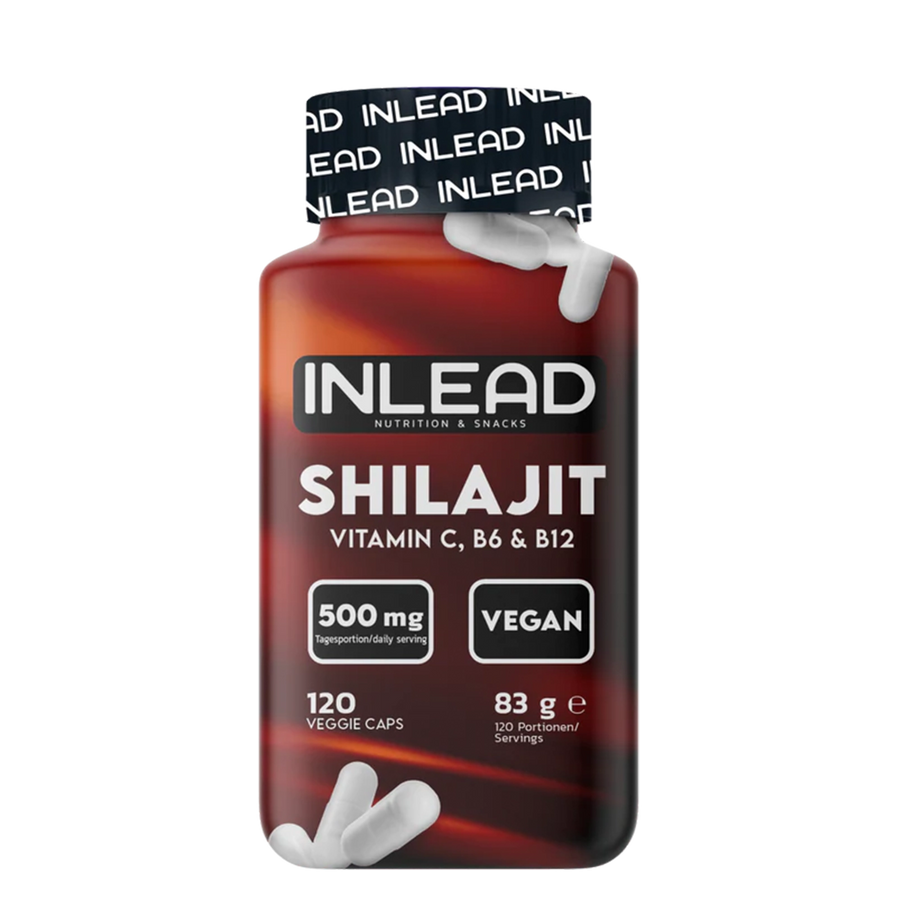
Beyond the classic antioxidants, this category also holds a wide selection of ashwagandha, from Shoden and KSM-66 through to Ashwa-Bol, the Shilajit Pro by GN Laboratories, the Natural Antioxidants complex made of berries and plant extracts, as well as NR300 as a vegan NAD+ precursor.
Which antioxidants for which need?
Which antioxidants make sense for you as a dietary supplement depends on your diet, your everyday life and your activity level. A few typical starting points:
Antioxidants for athletes
Anyone who trains intensively often reaches for astaxanthin, OPC or coenzyme Q10. One note from sports science: training itself briefly triggers oxidation, and that oxidation is part of the training stimulus. Very high doses around a session are therefore not automatically better; a moderate base is usually the wiser choice.
Antioxidants with environmental strain and stress
Anyone exposed to environmental influences and everyday stress likes to combine the classics with vitamin C and the trace elements zinc and selenium, for which cell protection is established.1 External influences such as UV radiation and city air also increase the burden of free radicals.
Antioxidants for a plant-based diet
Many antioxidants are plant-based by nature. Astaxanthin from algae, OPC from grapes and curcumin from turmeric fit into a vegan routine, and in our range they come as vegan capsules without animal ingredients.
Antioxidants in your diet: the best foundation
Foods high in antioxidants
The best foundation comes from an antioxidant mix of real foods. Particularly rich in antioxidant compounds are:
- Berries such as blueberries, aronia and pomegranate
- Dark chocolate with a high cocoa content
- Nuts such as walnuts and almonds
- Green vegetables such as kale and spinach
- Green tea, turmeric and herbs such as thyme
These foods deliver secondary plant compounds, bioflavonoids and micronutrients in a natural combination.
The ORAC value as a guide
As a rough reference point, some people use the ORAC value (Oxygen Radical Absorbance Capacity), a laboratory measure of the antioxidant capacity of a food. It is a guide, not an exact prediction for the body. A colourful, plant-focused diet remains the foundation. An antioxidant supplement comes in exactly where you want to add a single compound in a targeted way. In a concentrated amount, as a natural antioxidant source.
Buying antioxidants: what to look out for
With antioxidants, quality decides. These points will help you choose:
- Standardised content: a stated active content, with OPC ideally verified by HPLC, instead of vague amounts.
- Purity: without unnecessary additives and fillers, lab-tested for heavy metals and pesticides.
- Bioavailability: sensible combinations such as curcumin with piperine, or fat-soluble forms taken with a meal.
- Vegan capsule shell: a plant-based shell, free from artificial additives.
- Transparent declaration: all ingredients clearly stated per capsule or serving, without number games.
A good preparation gets by with few, clearly declared ingredients. Unnecessary additives have little place in it. That way you get the best out of your antioxidant.
Safety and sensible use
Antioxidants are not a miracle cure, and more is not automatically better. A few points so you use them sensibly:
- Diet first: the foundation remains a varied, plant-focused diet. A dietary supplement adds to it in a targeted way; it does not replace it.
- Dose moderately: very high doses of individual antioxidants bring no additional benefit. Stick to the recommended intake on the product.
Buying antioxidant supplements at Gigas Nutrition
In our shop you will find antioxidants from tested brands: high-dose OPC from grape seeds and turmeric with piperine by GN Laboratories, natural astaxanthin from the blood rain algae, resveratrol, and the Natural Antioxidants complex made of berries and plant extracts. Plus the wide selection of ashwagandha and shilajit. Every dietary supplement is clearly declared, of tested quality and mostly available as a vegan capsule. With us you order free of shipping costs from 75 euros, with fast delivery.
A good fit alongside: ashwagandha, OPC by GN Laboratories, turmeric with piperine and Shilajit Pro.
Sources
1 Commission Regulation (EU) No 432/2012 (list of permitted health claims, among others vitamin C, vitamin E, selenium, zinc, riboflavin: protection of cells from oxidative stress; vitamin C, selenium, zinc: normal function of the immune system). https://eur-lex.europa.eu/legal-content/EN/TXT/?uri=CELEX:32012R0432
2 Ambati R. R. et al. (2014): Astaxanthin: sources, extraction, stability, biological activities and its commercial applications, a review. Marine Drugs 12(1). https://pubmed.ncbi.nlm.nih.gov/24402174/
3 Shoba G. et al. (1998): Influence of piperine on the pharmacokinetics of curcumin in animals and human volunteers. Planta Medica 64(4). https://pubmed.ncbi.nlm.nih.gov/9619120/