
Filter
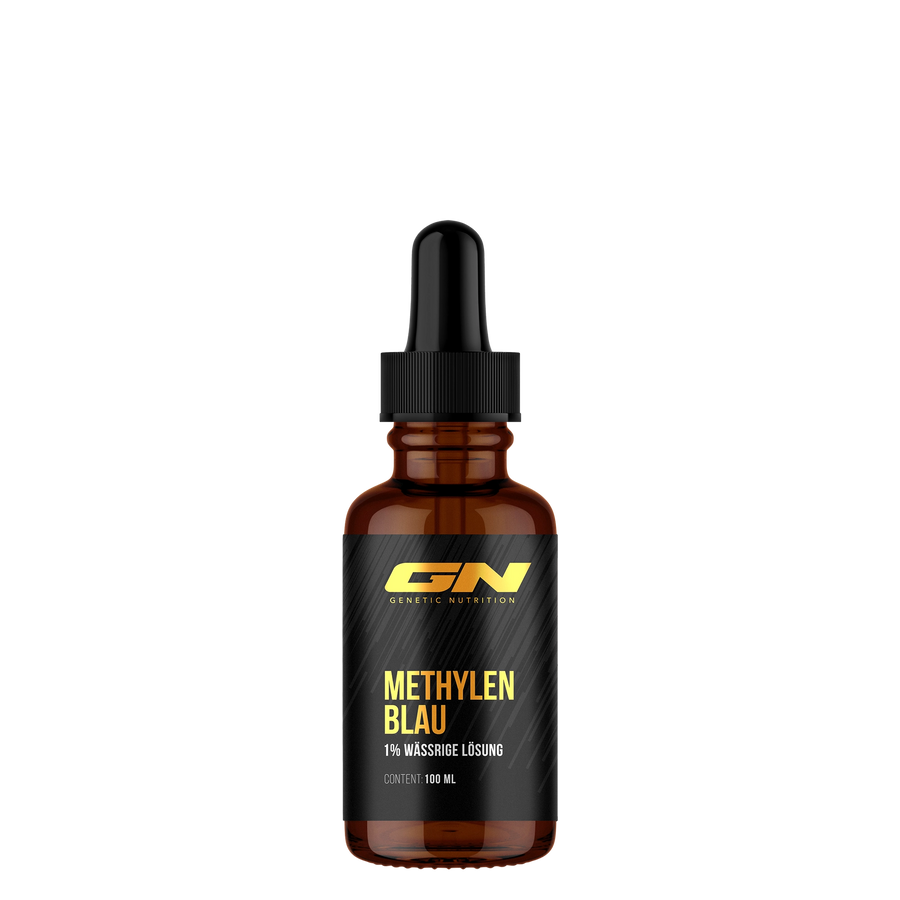
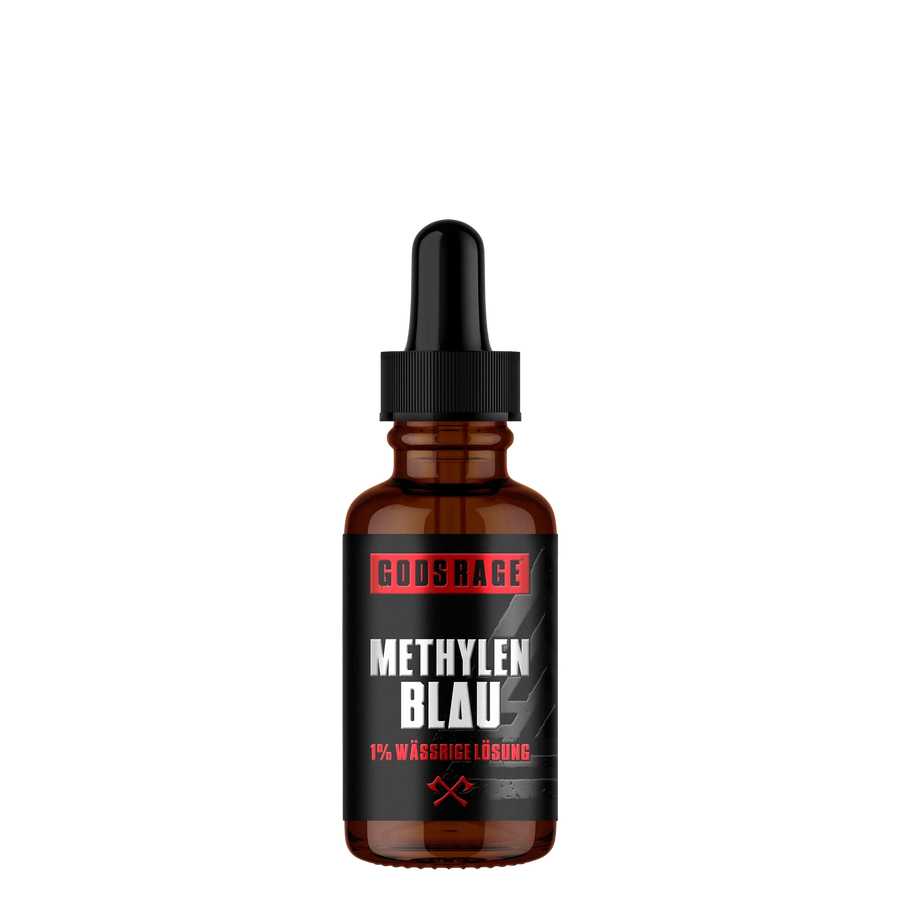


Methylene Blue (MB), chemically known as methylthioninium chloride, is a synthetic dye that was originally developed at the end of the 19th century. Initially used as a textile dye, Methylene Blue has developed over the decades into a versatile compound in medicine, biochemistry, and research. In recent years, it has received increasing attention as a potential nootropic and neuroprotective agent, and research on MB has also intensified significantly.
Methylene Blue is used therapeutically in different contexts and is linked by a large number of studies to numerous potential benefits. As always, however, these studies must be assessed critically, as their results are not readily transferable and do not allow any conclusive statements about the effects of Methylene Blue.
Medical applications: MB has been an agent for the treatment of methemoglobinemia for decades – a condition in which oxygen transport in the blood is impaired (1). This is the case, for example, with nitrite and aniline poisoning. These substances undermine the blood's ability to transport to the various organs.
Antimicrobial effect: MB has antimicrobial properties and is occasionally used to treat infections, especially in combination with light therapy (photodynamic therapy) (2,3,4). It is also used in aquaristics, where it is employed because of its antimicrobial properties.
Cognitive support: More recent studies indicate that, in low doses, Methylene Blue could possibly improve memory performance, mental clarity, and attention (5,6).
Neuroprotection: In animal studies, MB showed a possible protective effect on mitochondria and nerve structures, which makes it interesting for diseases such as Alzheimer's or Parkinson's. (7,8,9).
Anti-aging potential: Due to its ability to support mitochondrial respiration and reduce oxidative stress, the use of MB is being investigated in longevity research, where the compound is indeed credited with potential (2,10,11).
Anticarcinogenic effect: Various studies suggest that photodynamic therapies with Methylene Blue could help against various types of cancer, including colorectal tumors, carcinomas, and melanomas (12)
Methylene Blue is currently experiencing a scientific and popular comeback – above all in the biohacking and longevity scene. The reasons for this vary. On the one hand, studies show that, in low-dose form (microdosing), it could possibly bring about an increase in cellular energy production by improving mitochondrial function, and the fact that the compound could also be linked to a positive effect on neurodegenerative diseases is generating increasing attention in research. On the other hand, anecdotal reports are currently circulating according to which MB reportedly has a mood-lifting and focusing effect – which makes it interesting for people with depression, Brain Fog, or concentration problems. In addition, in the very well-known podcast by Joe Rogan an association was drawn between the compound and a positive effect on cancer, which triggered a large increase in public interest in the compound.
Judging by studies, Methylene Blue influences biochemical processes on several levels:
Mitochondria: It supports the function of the mitochondrial electron transport chain (especially complexes I and IV), which can lead to more efficient energy production (ATP) (2).
Antioxidant properties: Studies indicate that MB could act as a free radical scavenger and thus reduce oxidative cell damage (2,10,11,32).
Monoamine oxidase (MAO) inhibition: In higher doses, MB inhibits MAO-A, which could affect neurotransmitters such as serotonin (13,14).
Staining properties in diagnostics: In microscopy, MB is used to make cell structures visible, e.g., in blood smears or for bacterial staining (e.g., Ziehl-Neelsen staining for tuberculosis).
Despite the potential benefits, MB also carries some risks, as it can cause unwanted effects, particularly in higher doses:
Serotonin syndrome: When taken at the same time as SSRIs or MAO inhibitors, dangerous interactions can occur.
Blue discoloration of urine/stool: A harmless but frequently occurring accompanying effect.
Irritation: High doses can cause nausea, headaches, or high blood pressure.
Not suitable for everyone: Pregnant women, breastfeeding women, and people with certain liver or kidney conditions should avoid Methylene Blue.
Important information on dosage and toxicity
Methylene Blue is considered safe in studies at a therapeutic dose of less than 2 mg/kg; at a dose of more than 7 mg/kg, however, many unwanted side effects occurred in various investigations (15), especially when MB is combined with other active compounds or is used under special circumstances or in the case of specific health problems. It was found that serotonin syndrome can occur when serotonergic agents are combined with Methylene Blue at a dose of 5 mg/kg (16). Patients taking serotonergic medications such as SSRIs should therefore refrain from the administration of Methylene Blue due to the risk of serotonin syndrome. Methylene Blue is also problematic in patients with renal insufficiency, as it has been linked to reduced renal blood flow (15).
According to the current state of research, no antidote for the treatment of Methylene Blue toxicity is known to date. If anaphylaxis occurs, the administration of Methylene Blue should be stopped immediately and without delay, and supportive treatment should be provided. Severe anaphylactic shocks with Methylene Blue are, however, considered rare. Methylene Blue can be potentially fatal if it is used in combination with medications that contain or increase serotonin; this is due to its monoamine oxidase-inhibiting properties. At doses of more than 5 mg/kg, serotonin toxicity can occur (1,17).
Methylene Blue is a fascinating compound with a long history in medicine and great potential in research in various fields. The range of potential applications associated with Methylene Blue in studies extends from the treatment of rare blood disorders to the possible support of cognitive processes and mitochondrial health. Nevertheless, the following applies: significantly more research is needed in order to be able to make conclusive statements about the effects of Methylene Blue. In addition, statements that cannot be backed up with sources in particular should always be viewed critically, as anecdotal reports are no proof of a potentially existing effect.
Sources:
Bistas E, Sanghavi DK. Methylene Blue. [Updated 2023 Jun 26]. In: StatPearls [Internet]. Treasure Island (FL): StatPearls Publishing; 2025 Jan-. Available from: https://www.ncbi.nlm.nih.gov/books/NBK557593/
Xue H, Thaivalappil A, Cao K. The Potentials of Methylene Blue as an Anti-Aging Drug. Cells. 2021 Dec 1;10(12):3379. doi: 10.3390/cells10123379. PMID: 34943887; PMCID: PMC8699482.
Cardozo APM, da Silva DdFT, Fernandes KPS, et al. Antimicrobial photodynamic therapy with methylene blue and its derivatives in animal studies: Systematic review. Photodermatol Photoimmunol Photomed. 2024; 40:e12978. doi:
Thesnaar, L., Bezuidenhout, J. J., Petzer, A., Petzer, J. P., & Cloete, T. T. (2021). Methylene blue analogues: In vitro antimicrobial minimum inhibitory concentrations and in silico pharmacophore modelling. European Journal of Pharmaceutical Sciences, 157, 105603.
Rodriguez P, Singh AP, Malloy KE, Zhou W, Barrett DW, Franklin CG, Altmeyer WB, Gutierrez JE, Li J, Heyl BL, Lancaster JL, Gonzalez-Lima F, Duong TQ. Methylene blue modulates functional connectivity in the human brain. Brain Imaging Behav. 2017 Jun;11(3):640-648. doi: 10.1007/s11682-016-9541-6. PMID: 26961091; PMCID: PMC5018244
Auchter, A., Williams, J., Barksdale, B., Monfils, M. H., & Gonzalez-Lima, F. (2014). Therapeutic benefits of methylene blue on cognitive impairment during chronic cerebral hypoperfusion. Journal of Alzheimer's disease : JAD, 42 Suppl 4, S525–S535. https://doi.org/10.3233/JAD-141527
Lu Q, Tucker D, Dong Y, Zhao N, Zhang Q. Neuroprotective and Functional Improvement Effects of Methylene Blue in Global Cerebral Ischemia. Mol Neurobiol. 2016;53(8):5344–5355. doi: 10.1007/s12035-015-9455-0.
Johri A., Beal M.F. Mitochondrial dysfunction in neurodegenerative diseases. J. Pharmacol. Exp. Ther. 2012;342:619–630. doi: 10.1124/jpet.112.192138.
Tucker D, Lu Y, Zhang Q. From Mitochondrial Function to Neuroprotection-an Emerging Role for Methylene Blue. Mol Neurobiol. 2018 Jun;55(6):5137-5153. doi: 10.1007/s12035-017-0712-2. Epub 2017 Aug 24. PMID: 28840449; PMCID: PMC5826781.
Atamna H., Nguyen A., Schultz C., Boyle K., Newberry J., Kato H., Ames B.N. Methylene blue delays cellular senescence and enhances key mitochondrial biochemical pathways. FASEB J. 2008;22:703–712. doi: 10.1096/fj.07-9610com.
Paban V., Manrique C., Filali M., Maunoir-Regimbal S., Fauvelle F., Alescio-Lautier B. Therapeutic and preventive effects of methylene blue on Alzheimer’s disease pathology in a transgenic mouse model. Neuropharmacology. 2014;76:68–79. doi: 10.1016/j.neuropharm.2013.06.033.
Taldaev, A., Terekhov, R., Nikitin, I., Melnik, E., Kuzina, V., Klochko, M., Reshetov, I., Shiryaev, A., Loschenov, V., & Ramenskaya, G. (2023). Methylene blue in anticancer photodynamic therapy: systematic review of preclinical studies. Frontiers in pharmacology, 14, 1264961. https://doi.org/10.3389/fphar.2023.1264961
Aburel, OM., Brăescu, L., Buriman, D.G. et al. Methylene blue reduces monoamine oxidase expression and oxidative stress in human cardiovascular adipose tissue. Mol Cell Biochem 480, 2413–2421 (2025). https://doi.org/10.1007/s11010-024-05092-z
Delport, A., Harvey, B. H., Petzer, A., & Petzer, J. P. (2017). The monoamine oxidase inhibition properties of selected structural analogues of methylene blue. Toxicology and applied pharmacology, 325, 1–8. https://doi.org/10.1016/j.taap.2017.03.026
Ginimuge PR, Jyothi SD. Methylene blue: revisited. J Anaesthesiol Clin Pharmacol. 2010 Oct;26(4):517-20.
Gillman PK. Methylene blue implicated in potentially fatal serotonin toxicity. Anaesthesia. 2006 Oct;61(10):1013-4.
Drugs.com. (2024, May 18). Side effects of methylene blue.